



 March 1, 2023
 Phil Good, DVM
Corneal Ulcers in Dogs: Causes, Symptoms, Treatment
This content was prepared with AI assistance and reviewed by a licensed professional for accuracy.
Introduction
A corneal ulcer in dogs is an incredibly painful and potentially vision-threatening condition that ranks among the most common ophthalmic emergencies seen in veterinary medicine. The cornea, which serves as the clear, protective window at the front of the eye, is vital for proper vision and structural integrity. When a dog suffers from an eye injury, the delicate cellular layers of the cornea can be physically disrupted, leading to an open wound on the eye’s surface. Any eye problem caused by trauma, infectious agents, or underlying anatomical abnormalities can swiftly escalate from a minor superficial scratch to a severe, deep ulceration that risks the entire globe’s viability. Understanding the nuanced anatomy of the canine eye is absolutely essential for grasping the severity of this condition and the urgency of seeking professional veterinary intervention.[1]
To fully appreciate what happens during a corneal ulceration, one must first understand the microscopic architecture of the canine cornea. The cornea consists of four primary layers: the outermost stratified squamous epithelium, the thick middle collagenous stroma, the basement membrane known as Descemet’s membrane, and the innermost single-cell layer called the endothelium. A superficial corneal ulcer involves only the loss of the outermost epithelial cells, akin to a skinned knee. However, if the ulcer deepens and begins to erode the thick stromal layer, it becomes a significantly more critical medical emergency. When the stroma is fully penetrated, only the thin, fragile Descemet’s membrane prevents the eye’s fluid from leaking out—a perilous condition known as a descemetocele. If this final membrane ruptures, the eye is considered perforated, which can result in irreversible blindness and the loss of the eye itself.[2]
Given the immense density of pain receptors located within the superficial layers of the canine cornea, even the most microscopic abrasions can cause an extreme level of distress for your pet. The ophthalmic branch of the trigeminal nerve supplies the cornea, making it one of the most sensitive tissues in the entire canine body. Consequently, prompt identification and aggressive treatment are paramount. Leaving a suspected corneal ulcer untreated, or attempting home remedies, can allow secondary bacterial infections to take root, producing destructive enzymes called collagenases that rapidly melt the cornea. Timely and appropriate veterinary care is the only reliable way to halt this destructive process, manage your pet’s intense pain, and preserve their long-term visual health and quality of life.[3]
What Causes Corneal Ulcers in Canine?
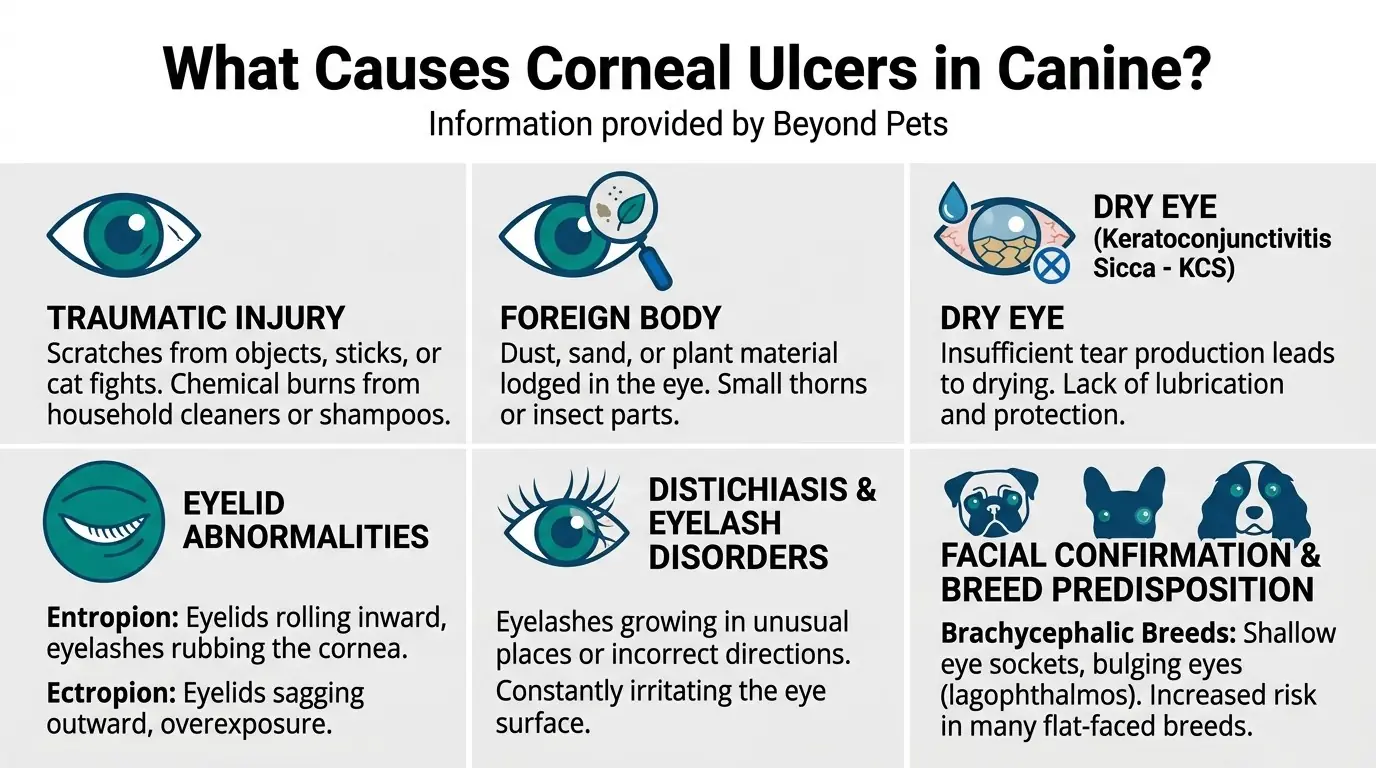
The etiology of corneal ulceration in dogs is vast and multifaceted, requiring a meticulous clinical investigation to determine the exact underlying trigger. Without identifying and eliminating the root cause, an ulcer is highly unlikely to heal and will persistently recur. Among the most frequent causes is direct physical trauma. Blunt or sharp force trauma to the eye can immediately sheer away the delicate corneal epithelium. This trauma frequently occurs during outdoor excursions where dogs are navigating through dense brush or playing rambunctiously with other animals. During these activities, dogs are highly susceptible to foreign bodies like grass seeds, sand, or debris becoming trapped beneath the eyelids. Once lodged, every time the dog blinks, the foreign material acts like sandpaper, continuously scraping and denuding the corneal surface until a pronounced ulcer forms.[4]
Beyond environmental trauma, anatomical and conformational abnormalities of the eyelids are primary culprits in the development of chronic corneal ulcers. Entropion is a condition where the eyelid margins roll inward, causing the eyelashes and facial hairs to persistently rub against the sensitive cornea. Conversely, ectropion involves a drooping eyelid that leaves the eye overly exposed to environmental desiccants and irritants. Additional hair-related abnormalities include distichiasis (extra eyelashes growing from abnormal sites along the eyelid margin) and ectopic cilia (hairs growing directly through the conjunctiva and pointing directly at the cornea). Certain breeds, particularly brachycephalic dogs like Pugs, Bulldogs, and Shih Tzus, are highly predisposed to these anatomical defects. Their shallow eye sockets and prominent eyes (macropalpebral fissures) not only expose a larger surface area of the cornea to potential trauma but also lead to incomplete blinking (lagophthalmos), which severely compromises the distribution of protective tear film.[5]
Another major physiological cause of corneal ulceration is a profound lack of tear production, medically termed keratoconjunctivitis sicca (KCS) or “dry eye.” Tears are not merely water; they are a complex three-layered film consisting of a lipid layer, an aqueous layer, and a mucin layer. This film provides vital lubrication, oxygen, and immune defense to the avascular cornea. In dogs with KCS, an immune-mediated destruction of the lacrimal glands results in an inability to produce the aqueous portion of the tears. Without this protective barrier, the cornea dries out rapidly, resulting in localized cell death, severe friction with every blink, and the inevitable formation of ulcers. KCS requires lifelong management to prevent recurrent, blinding ulcerations.[6]
Furthermore, metabolic, endocrine, and neurological disorders play a critical role in corneal health. Neurological deficits, such as facial nerve paralysis (affecting Cranial Nerve VII) or trigeminal nerve dysfunction (affecting Cranial Nerve V), can obliterate the blink reflex or eliminate corneal sensation entirely. If a dog cannot feel their eye drying out, or physically cannot close their eyelids, exposure keratitis and subsequent ulceration are guaranteed. Endocrine conditions like diabetes mellitus and Cushing’s disease (hyperadrenocorticism) can severely impair the body’s natural wound-healing capabilities, transforming minor abrasions into stubborn, non-healing ulcers. Finally, primary bacterial, viral, and fungal infections, though often secondary invaders, can act as primary causes in immunocompromised patients, releasing toxins that rapidly break down the corneal matrix and induce severe clinical disease.[7]
Symptoms of Canine Corneal Ulceration
Recognizing the early clinical signs of a corneal ulcer is vital for pet owners, as a delay of even 24 hours can result in devastating consequences for the eye. Because the cornea is densely innervated by pain fibers, the most immediate and profound symptom of a corneal ulcer is extreme ocular pain. In canine patients, this pain typically presents as blepharospasm, which is the medical term for severe squinting or tightly holding the eye shut. If your dog is experiencing any eye problems characterized by intense squinting, you should treat it as a medical emergency. Dogs may also forcefully rub their affected eye against furniture, carpets, or with their own paws in a desperate attempt to relieve the discomfort, a behavior that unfortunately exacerbates the tissue damage and introduces dangerous environmental bacteria into the wound.[8]
Excessive tearing, clinically known as epiphora, is another hallmark symptom. As the body attempts to wash away perceived irritants and soothe the damaged nerve endings, the lacrimal glands go into overdrive. This results in a constant flow of tears cascading down the dog’s face, often staining the facial fur. However, if a secondary bacterial infection has complicated the ulcer, this clear watery discharge will rapidly transition into a thick, opaque, yellow or green mucopurulent discharge. This colored discharge is a sign of an active immune response, filled with dead white blood cells and bacterial debris, indicating that the ulcer has become a highly concerning, infected wound.[9]
Changes in the appearance of the eye itself are also profoundly noticeable. The conjunctiva, which is the pink tissue lining the inside of the eyelids and the white part of the eye (sclera), will become intensely red and swollen, a condition known as conjunctival hyperemia. Furthermore, the normally crystal-clear cornea may take on a cloudy, blue-gray, or hazy appearance. This occurs due to corneal edema; when the protective epithelial barrier is broken, the aqueous fluid from the tear film rushes into the underlying stroma, causing the collagen fibers to swell and lose their precise optical arrangement. In chronic or particularly deep ulcers, you may also observe neovascularization, a process where deep red blood vessels grow from the sclera across the cornea in a physiological attempt to bring healing white blood cells and systemic nutrients to the avascular ulcer site. While these vessels aid in healing, their presence confirms significant, prolonged ocular distress.[10]
Diagnosis of Corneal Ulcer in Dogs
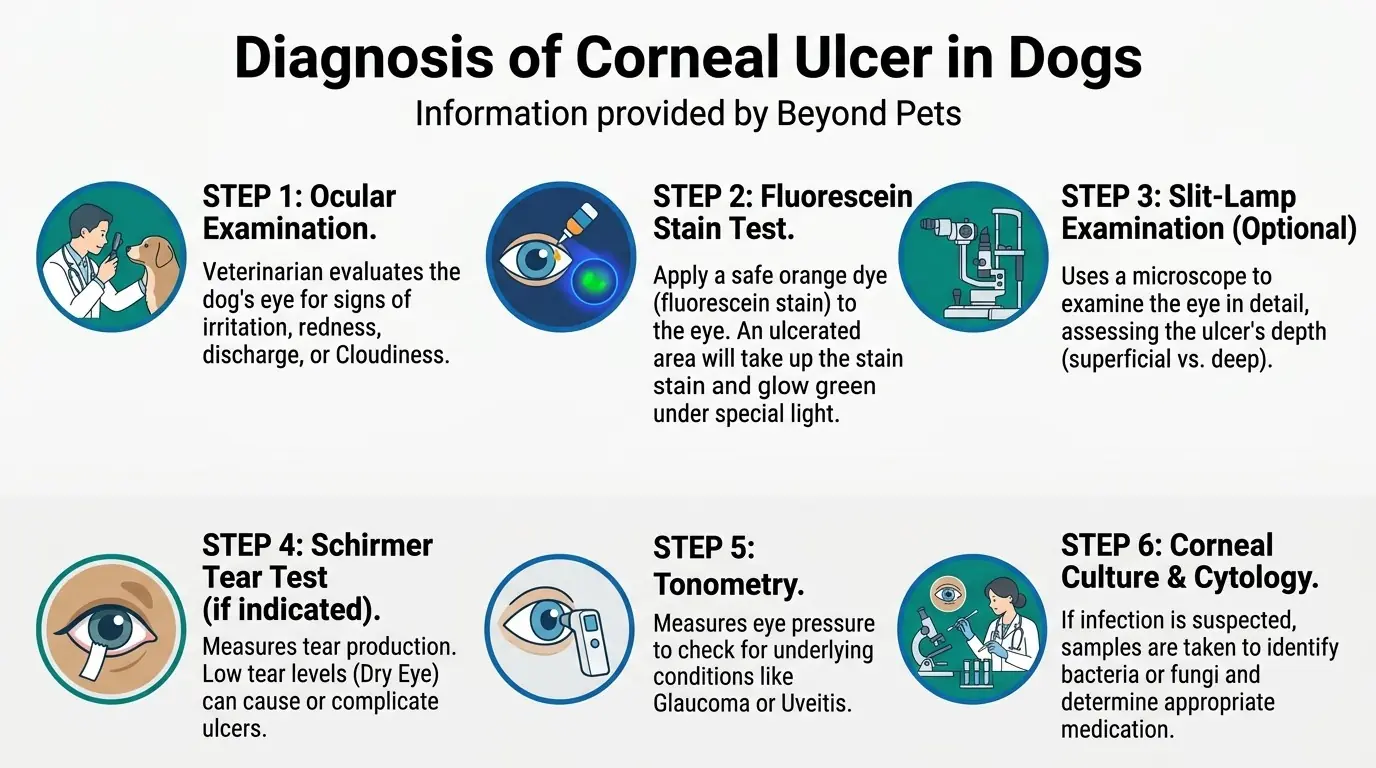
Diagnosing a corneal ulcer requires a systematic, comprehensive ophthalmic examination by a veterinarian. Because the eye is a delicate and complex organ, veterinarians utilize a battery of specialized tests to determine not only the presence of an ulcer but also its precise depth, its underlying cause, and any secondary complications that may threaten the dog’s vision. Skipping any step in this diagnostic process can result in an incomplete diagnosis and subsequent treatment failure.[11]
Fluorescein Staining
The definitive and most universally recognized diagnostic tool for identifying a corneal ulcer is the fluorescein stain test. Fluorescein is a non-toxic, water-soluble orange dye that is gently applied to the surface of the eye. The intact outer layer of the cornea (the epithelium) is highly lipophilic (fat-loving) and repels the water-based dye. However, the underlying stromal layer is highly hydrophilic (water-loving). Therefore, if the epithelium is scratched or missing, the exposed stroma rapidly absorbs the fluorescein dye. When the veterinarian illuminates the eye with a specialized cobalt blue light or a Wood’s lamp, the dye bound to the stroma fluoresces a brilliant, glowing apple-green color, clearly outlining the exact size, shape, and margins of the ulcer. It is important to note that deep descemetoceles will not absorb the stain in their center, creating a distinct “halo” appearance that instantly alerts the veterinarian to an impending rupture.[12]
Physical Examination
A rigorous general physical and neuro-ophthalmic examination is imperative to rule out underlying systemic or neurological causes. The veterinarian will assess the patient’s cranial nerve function by testing the menace response, palpebral reflex, and pupillary light reflexes (PLR). They will closely examine the symmetry of the face and eyelids to detect any subtle signs of facial nerve paralysis or trigeminal neuropathy. The physical exam also includes a meticulous inspection of the eyelid margins, utilizing magnification to hunt for microscopic ectopic cilia, distichiae, or subtle entropion that could be acting as the mechanical trigger for the persistent ulceration. Retropulsion of the globe is also performed to check for any hidden retrobulbar masses pushing the eye outward.[13]
Slit Lamp Biomicroscopy
Slit lamp biomicroscopy is an advanced diagnostic procedure that utilizes an intense, highly focused beam of light and a binocular microscope to evaluate the anterior segment of the eye in profound detail. This instrument allows the veterinarian to optically section the cornea, providing a three-dimensional view of its thickness. This is absolutely crucial for accurately determining the depth of the ulcer, assessing the degree of surrounding corneal edema, and identifying cellular infiltrates within the stroma. Additionally, the slit lamp is used to evaluate the anterior chamber (the fluid-filled space between the cornea and the iris) for signs of secondary uveitis, such as aqueous flare (increased protein content causing a hazy appearance) or hypopyon (an accumulation of white blood cells settling at the bottom of the chamber).[14]
Tonometry
Tonometry is the diagnostic measurement of intraocular pressure (IOP), the internal fluid pressure of the eye. Severe corneal ulcers cause profound pain that triggers an inflammatory response inside the eye, known as reflex anterior uveitis. This internal inflammation typically causes the intraocular pressure to drop below normal levels. However, if the inflammation is severe enough to clog the eye’s delicate drainage angle with protein and inflammatory cells, the pressure can spike dangerously high. Because untreated high pressure can cause irreversible damage to the optic nerve, measuring IOP is essential to monitor for and prevent glaucoma. Rebound tonometers and applanation tonometers are the modern standards for obtaining rapid, painless, and accurate pressure readings in canine patients.[15]
Schirmer Tear Test
Because dry eye is a massive contributor to both the development and the non-healing nature of corneal ulcers, quantifying the eye’s basal and reflex tear production is a mandatory step. The Schirmer Tear Test (STT) involves placing a standardized strip of special filter paper inside the lower eyelid for exactly sixty seconds. The tears migrate down the paper, and the distance is measured in millimeters. A normal canine reading is typically 15 millimeters or greater per minute. Readings between 11 and 14 millimeters are highly suspicious for early-stage keratoconjunctivitis sicca, while readings below 10 millimeters definitively diagnose severe dry eye. This test must always be performed before any liquid drops or stains are applied to the eye, as adding exogenous fluids will falsely elevate the final measurement.[16]
Cytology
In cases where an ulcer is rapidly deepening, showing signs of severe purulent discharge, or simply failing to respond to standard broad-spectrum antibiotic therapies, corneal cytology becomes highly indicated. After applying a drop of topical anesthetic, the veterinarian gently scrapes the surface of the ulcer with a specialized spatula or cytobrush to collect a sample of cells. This sample is rolled onto a glass microscope slide, stained (typically with a Wright-Giemsa or modified Romanowsky stain), and evaluated under high magnification. Cytology allows the clinician to instantly identify the presence of massive neutrophilic inflammation, pinpoint the morphological shape of bacteria (such as rod-shaped Pseudomonas or cocci-shaped Staphylococcus), or, more rarely, detect fungal hyphae, guiding an immediate, targeted shift in antimicrobial therapy.[17]
Biopsy
While uncommonly required for the vast majority of routine superficial or traumatic corneal ulcers, a corneal biopsy may be necessitated in highly atypical, chronic cases that baffle standard diagnostics. A biopsy involves the surgical removal of a small, full-thickness or partial-thickness wedge of the abnormal corneal tissue under general anesthesia. This sample is preserved in formalin and sent to a veterinary ophthalmic pathologist for histopathological evaluation. Biopsies are primarily reserved for confirming suspicions of complex immune-mediated diseases like eosinophilic keratitis, evaluating unusual corneal degenerations, or diagnosing suspected corneal neoplasms such as squamous cell carcinoma or limbal melanomas.[18]
Advanced Imaging
When corneal opacification (cloudiness) is so severe that it obscures the veterinarian’s ability to see into the anterior chamber, lens, or posterior segment of the eye, advanced imaging modalities become invaluable. High-resolution ocular ultrasonography (specifically Ultrasound Biomicroscopy or UBM) utilizes high-frequency sound waves to generate detailed images of the eye’s internal architecture, allowing the detection of lens luxations, intraocular tumors, or retinal detachments hiding behind the cloudy cornea. More recently, Optical Coherence Tomography (OCT) is being utilized in specialty veterinary ophthalmology practices. OCT uses light waves to capture micrometer-resolution, three-dimensional cross-sections of the cornea, providing unparalleled precision in measuring ulcer depth and evaluating the exact integrity of Descemet’s membrane prior to surgical intervention.[19]
Treatment of Corneal Ulcers in Dogs
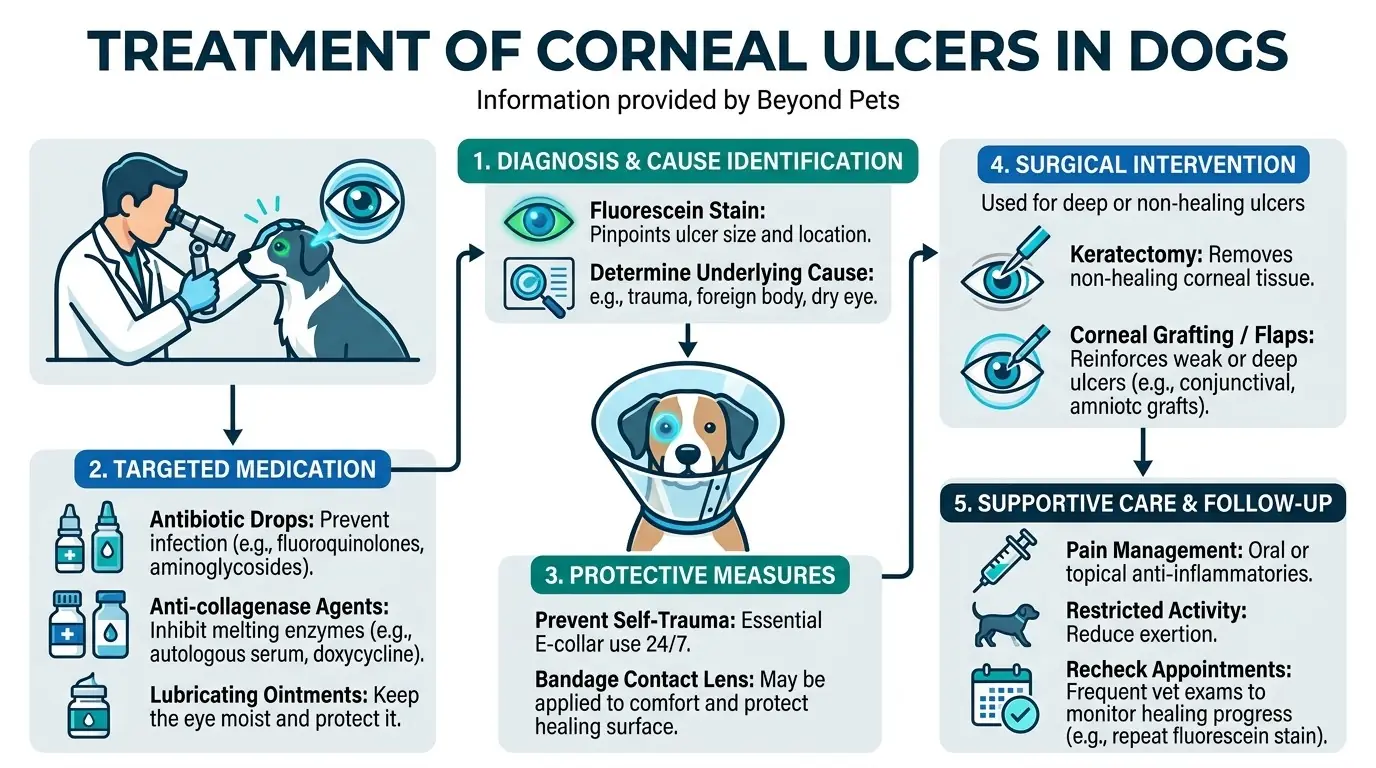
The therapeutic approach to a canine corneal ulcer is rigorously dictated by the ulcer’s depth, the presence or absence of secondary infection, and the underlying primary cause. There is no “one size fits all” remedy in veterinary ophthalmology. An accurate, tailored treatment protocol must be strictly adhered to, as deviations can result in catastrophic complications, including rapid progression to a melting cornea and the ultimate loss of the globe. Treatment broadens into two main categories: aggressive medical management for superficial and uninfected deep ulcers, and emergent surgical intervention for impending ruptures or structural collapse.[20]
Medical Intervention
Medical management is the cornerstone of therapy for the vast majority of corneal ulcers, aiming to eradicate infection, control severe ocular pain, halt enzymatic destruction, and provide an optimal environment for epithelial regeneration.
- Antibiotics: Because the protective barrier of the eye is broken, prophylactic topical antibiotics are absolutely mandatory to prevent opportunistic environmental bacteria from colonizing the wound. For simple superficial ulcers, broad-spectrum prescription antibiotic ointments or drops are frequently used. However, for deep, infected, or melting ulcers, aggressive therapy targeting highly destructive Gram-negative bacteria (like Pseudomonas aeruginosa) is required. In these severe cases, veterinary ophthalmologists will prescribe potent, targeted prescription antibiotic drops, sometimes requiring administration frequently around the clock to aggressively combat the infection.[21]
- Antivirals: While viral corneal ulcers are exceedingly common in feline patients due to the Feline Herpesvirus, they are comparatively rare in dogs. However, Canine Herpesvirus-1 (CHV-1) can occasionally induce superficial dendritic-like ulcers or punctate keratitis in immunocompromised or young canines. In such specialized cases, customized prescription antiviral medications are carefully compounded and administered to halt viral replication within the corneal epithelial cells.
- Antifungals: Fungal keratitis (keratomycosis) is relatively uncommon in dogs compared to horses, but it can occur, particularly in geographic regions with warm, humid climates, or following prolonged, inappropriate use of topical prescription steroids. If cytology confirms fungal hyphae or spores, prolonged, intensive treatment with targeted prescription antifungal therapies is essential to eradicate the deep-seated fungal elements.
- Cycloplegics: Corneal ulcers trigger a devastatingly painful reflex spasm of the ciliary body muscle located inside the eye. To alleviate this deep, throbbing internal pain, veterinarians apply a prescription cycloplegic medication. This medication temporarily paralyzes the ciliary muscle, breaking the painful spasm and simultaneously dilating the pupil (mydriasis). Dilating the pupil also serves a vital secondary function: it prevents the inflamed iris from adhering to the lens capsule (forming posterior synechiae), a complication that can lead to secondary glaucoma.
- Pain Relievers: Systemic pain management is a non-negotiable component of ulcer therapy. Veterinarians typically prescribe systemic prescription non-steroidal anti-inflammatory medications (NSAIDs) to profoundly reduce intraocular inflammation and control systemic pain pathways. In highly painful cases, adjunctive nerve-pain medication prescribed by your veterinarian may be added. Crucially, topical prescription steroid drops must NEVER be used on a dog with a corneal ulcer. Steroids obliterate the local immune response and massively accelerate the action of collagen-destroying enzymes, potentially causing the eye to melt and rupture within hours of application.[22]
- Collagenase Inhibitors: In the terrifying scenario of a “melting” ulcer (keratomalacia), bacterial toxins and the dog’s own overly aggressive white blood cells release massive amounts of matrix metalloproteinases (MMPs) and collagenases. These enzymes rapidly liquefy the corneal stroma. To arrest this catastrophic melting process, anti-collagenase therapy is initiated immediately. Autologous serum (serum spun down from the dog’s own blood sample) is rich in alpha-2 macroglobulins, which are potent natural inhibitors of these destructive enzymes. Other medical options include specifically formulated prescription anti-collagenase solutions.
- Lubricants: Viscous artificial tear ointments and premium artificial tear drops are frequently prescribed to provide enhanced lubrication. These supplements help decrease the mechanical friction between the eyelids and the ulcerated cornea during blinking, providing tremendous comfort and creating a smooth, hydrated matrix across which new epithelial cells can effectively migrate and heal.
Surgical Intervention
When a corneal ulcer progresses beyond the capabilities of medical management—specifically when the ulcer deepens past 50% of the stromal thickness, becomes a descemetocele, or actively perforates—emergent surgical intervention performed by a board-certified veterinary ophthalmologist is required to save the eye and restore structural integrity.[23]
- Debridement and Keratotomy: There is a specific type of chronic superficial ulcer known as an Indolent Ulcer, Spontaneous Chronic Corneal Epithelial Defect (SCCED), or “Boxer Ulcer.” In these cases, a microscopic defect prevents the healing epithelium from anchoring to the underlying stroma. Medical drops alone will never heal a SCCED. The veterinarian must physically intervene by performing a diamond burr debridement or a grid keratotomy under local anesthesia. These procedures involve gently stripping away the dead, non-adherent epithelial lips and intentionally creating microscopic scratches in the stromal bed. This exposes underlying collagen fibers, giving the new, migrating epithelial cells a textured surface to definitively grip and anchor onto, effectively resolving the chronicity of the ulcer.
- Conjunctival Pedicle Graft: For deep, melting ulcers or descemetoceles threatening immediate rupture, a conjunctival pedicle graft is the gold standard surgical procedure. Under general anesthesia and utilizing an operating microscope, the surgeon harvests a strip of healthy, highly vascular conjunctival tissue from the white of the eye. This tissue flap is rotated over the deep ulcer and meticulously sutured directly to the cornea using extremely fine, absorbable sutures. The graft acts as a permanent, living biological bandage. It physically seals the defect, and more importantly, its rich blood supply delivers systemic antibiotics, anti-collagenases, and healing fibroblasts directly into the heart of the avascular ulcer bed, aggressively halting the disease process and providing robust structural support.
- Corneoconjunctival Transposition (CCT): In cases where the ulcer is centrally located and a standard pedicle graft would permanently obstruct the dog’s visual axis, a corneoconjunctival transposition may be performed. This highly advanced microsurgical technique involves dissecting a sliding flap of healthy, clear cornea adjacent to the ulcer, along with its attached conjunctiva, and sliding it over to fill the ulcerated crater. This technique provides excellent structural support while maximizing the amount of clear cornea remaining in the visual field, ultimately offering a better visual outcome for the patient.
- Cyanoacrylate Glue and Contact Lenses: For very small descemetoceles or tiny, pinpoint perforations where the owner may decline major surgery due to financial or anesthetic risks, a salvage procedure utilizing medical-grade cyanoacrylate tissue adhesive (surgical glue) can be attempted. After carefully debriding the site, the surgeon applies a tiny drop of the adhesive directly to the defect. As the glue polymerizes, it forms a rigid, synthetic plug that seals the leak and halts further collagenase destruction. A soft, protective bandage contact lens is then placed over the cornea to protect the inner eyelids from the rough surface of the dried glue while the cornea heals beneath it.
Every phase of treatment, from the rigorous schedule of administering eye drops to the strict enforcement of an Elizabethan collar (E-collar or “cone of shame”) to prevent self-trauma, demands intense commitment from the pet owner. Consistency is key; skipping doses of antibiotics can allow resistant bacterial strains to flourish, plunging the eye back into a critical state. Corneal surgery, while complex and daunting, boasts a high success rate when performed promptly by skilled specialists, ultimately sparing the dog from the permanent disfigurement and trauma of complete eye removal (enucleation).[24]
How Can I Prevent My Dog From Developing Corneal Ulcers?
While accidents and unforeseen biological factors can never be entirely eliminated, proactive management and vigilant environmental control can drastically reduce the likelihood of your dog suffering from the immense pain of a corneal ulcer. The foundation of ocular health begins with regular, comprehensive veterinary examinations. Annual or bi-annual check-ups allow your veterinarian to conduct baseline Schirmer Tear Tests to catch the early, asymptomatic stages of dry eye, or to identify subtle anatomical abnormalities like newly developing ectopic cilia before they cause catastrophic damage to the corneal surface.[25]
Diligent grooming and facial hygiene are particularly crucial for long-haired or brachycephalic breeds. Hair falling into the eyes, or deep facial folds trapping moisture and debris against the cornea, act as constant mechanical irritants. Keep the hair around the eyes meticulously trimmed, and regularly clean facial folds with veterinary-approved wipes to prevent bacterial overgrowth. For highly active, working, or hunting dogs that frequently plunge into thick brush, investing in canine-specific protective eyewear, such as durable dog goggles (e.g., Rex Specs), provides an impenetrable physical barrier against sharp branches, flying debris, and harmful ultraviolet radiation. Furthermore, ensure that your home environment is safe; keep harsh household chemicals, abrasive fertilizers, and aerosolized sprays far out of your dog’s reach. Always consult your veterinarian before making any changes to your pet’s care, particularly regarding the initiation of over-the-counter eye washes or supplements, to ensure they are safe and specifically suited to your dog’s unique ophthalmic needs. Remaining highly observant of your dog’s daily eye comfort is your best defense in preserving their vision for years to come.
Frequently Asked Questions
How long does it take for a dog’s corneal ulcer to heal?
The healing timeline for a canine corneal ulcer is directly dependent on the ulcer’s depth, underlying cause, and the promptness of appropriate medical intervention. A simple, superficial, uncomplicated corneal abrasion typically heals remarkably fast, often within three to seven days, as the healthy epithelial cells rapidly migrate across the defect. However, deep stromal ulcers, severe melting ulcers, or indolent (SCCED) ulcers can take several weeks to multiple months to fully resolve. These complicated cases require intensive, prolonged medical therapy, frequent veterinary rechecks to monitor cellular progress, and sometimes surgical procedures to provide a biological bandage and facilitate ultimate healing.
Are corneal ulcers in dogs considered a medical emergency?
Yes, any suspected corneal ulcer in a dog must be treated as an absolute medical emergency. The cornea is extremely thin, and an untreated superficial ulcer can rapidly become infected with aggressive bacteria that produce collagen-destroying enzymes. These enzymes can literally “melt” through the remaining corneal tissue in a matter of hours, leading to a ruptured globe, irreversible blindness, and the potential need for complete surgical removal of the eye (enucleation). Prompt veterinary diagnostics and immediate implementation of aggressive antibiotic and anti-collagenase therapies are crucial to halting this destructive cascade and saving the pet’s vision.
Can I use leftover eye drops from a previous infection to treat a new corneal ulcer?
No, you should never apply leftover ophthalmic medications to your dog’s eye without a fresh veterinary diagnosis. Many commonly prescribed eye drops for allergic conjunctivitis or general inflammation contain potent topical prescription steroids. If a steroid is applied to a cornea that has an active ulcer, it severely suppresses the local immune response and massively accelerates the enzymatic destruction of the collagen matrix, practically guaranteeing that the ulcer will worsen, deepen, and potentially rupture the eye. Always seek a definitive diagnosis, specifically including a fluorescein stain test, before applying any medication.
Protect Your Pet’s Vision Today
Corneal ulcers are incredibly painful and can lead to permanent damage if not treated promptly. If your dog is squinting, rubbing their eyes, or showing any signs of ocular discomfort, immediate care is necessary.
References
- Merck Veterinary Manual. Corneal Ulcers in Animals. Merck & Co., Inc., 2023.
- VCA Hospitals. Corneal Ulcers in Dogs. VCA Animal Hospitals, 2022.
- Ledbetter, E. C., et al. “Clinical and microbiological features of canine corneal ulcers.” Journal of the American Veterinary Medical Association, 2015.
- American Veterinary Medical Association (AVMA). Eye Injuries in Pets. AVMA, 2021.
- Gelatt, K. N., et al. “Prevalence of the breed-related glaucomas and other conformational ocular issues in dogs.” Veterinary Ophthalmology, 2010.
- Merck Veterinary Manual. Keratoconjunctivitis Sicca in Animals. Merck & Co., Inc., 2023.
- Hendrix, D. V., et al. “Corneal and ocular surface disease in the canine.” Veterinary Clinics of North America: Small Animal Practice, 2004.
- Veterinary Information Network (VIN). Diagnosing and Treating Corneal Ulcers. VIN, 2019.
- Ollivier, F. J., et al. “Bacterial corneal diseases in dogs and cats.” Clinical Techniques in Small Animal Practice, 2011.
- VCA Hospitals. Eye Injuries in Dogs: Symptoms and Triage. VCA Animal Hospitals, 2023.
- ASPCA. Routine Eye Care and Recognizing Disease in Dogs. ASPCA, 2021.
- Maggs, D. J. “Basic diagnostic techniques in veterinary ophthalmology.” Slatter’s Fundamentals of Veterinary Ophthalmology, 2016.
- Merck Veterinary Manual. Ophthalmic Examination in Animals. Merck & Co., Inc., 2023.
- Plummer, C. E., et al. “The use of slit-lamp biomicroscopy in small animal practice.” Veterinary Clinics of North America, 2011.
- Miller, P. E., et al. “Tonometry in dogs and cats.” Veterinary Ophthalmology, 2007.
- Moore, C. P. “Diseases of the canine lacrimal system.” Veterinary Clinics of North America: Small Animal Practice, 2006.
- Willis, A. M. “Ocular cytology.” Veterinary Clinics of North America: Small Animal Practice, 2013.
- Labelle, A. L. “Corneal biopsy techniques and indications.” Veterinary Clinics of North America, 2017.
- Bentley, E. “Optical coherence tomography in veterinary ophthalmology.” Veterinary Ophthalmology, 2018.
- VCA Hospitals. Keratomalacia or Melting Corneal Ulcers in Dogs. VCA Animal Hospitals, 2023.
- Tolar, E. L., et al. “Antibiotic susceptibility patterns of bacterial isolates from canine corneal ulcers.” Veterinary Ophthalmology, 2018.
- Merck Veterinary Manual. Topical Ophthalmic Corticosteroids – Contraindications. Merck & Co., Inc., 2023.
- Gemensky-Metzler, A. J., et al. “Surgical management of deep and melting corneal ulcers.” Veterinary Clinics of North America, 2015.
- Grahn, B. H., et al. “Outcomes of conjunctival pedicle grafting for deep corneal ulcers in dogs.” Veterinary Ophthalmology, 2019.
- American Veterinary Medical Association (AVMA). Senior Pet Care FAQ – Eye Health. AVMA, 2023.