

 March 3, 2023
 Phil Good, DVM
This content was prepared with AI assistance and reviewed by a licensed professional for accuracy.
Understanding the complexities of Prostate Disease in Dogs is a critical component of managing the long-term health, comfort, and well-being of male canine companions. The prostate gland is an essential accessory sex organ found in male dogs, deeply integrated into both the reproductive and urinary systems. Because of its unique anatomical position and its intense reliance on circulating hormones, the prostate is highly susceptible to a wide variety of pathological changes as a dog ages. From benign, hormone-driven enlargement to severe, life-threatening bacterial infections and highly aggressive malignancies, prostatic conditions represent a significant subset of veterinary internal medicine. While some forms of prostate disease present with dramatic, unmistakable clinical signs, others develop silently over months or years, slowly compromising the dog’s quality of life. This comprehensive guide will explore the specific types of canine prostatic diseases, their underlying pathophysiological causes, the nuanced diagnostic tools utilized by modern veterinarians, and the cutting-edge medical and surgical treatments available to manage these complex conditions.
Introduction
The canine prostate gland is a small, bi-lobed, walnut-shaped organ situated deep within the pelvic cavity, lying directly caudal to (behind) the urinary bladder and positioned just below the rectum. It completely encircles the proximal urethra—the critical anatomical tube that carries both urine and semen out of the body. Because of this strategic location, any disease process that causes the prostate to swell, become inflamed, or develop structural abnormalities will inevitably place immense physical pressure on the surrounding organs, leading to a cascade of painful urinary and gastrointestinal complications. The primary biological function of a healthy prostate gland is the production and secretion of prostatic fluid, a nutrient-rich, clear liquid that constitutes the vast majority of the volume of a dog’s ejaculate. This specialized fluid serves as a vital transport medium, providing deep nourishment, essential biochemical support, and increased motility for spermatozoa during the reproductive process.[1]
In the world of veterinary medicine, dogs hold a somewhat unique position; aside from humans, male dogs are one of the only mammalian species known to naturally and spontaneously develop a high incidence of complex prostatic diseases as they progress into their senior years. The health, size, and function of the canine prostate gland are entirely dictated by the presence of circulating androgens, specifically testosterone, which is continuously produced by the testicles. As intact (unneutered) male dogs age, constant lifelong exposure to testosterone triggers cellular changes within the prostatic tissue, making the gland highly prone to excessive growth, architectural distortion, and increased susceptibility to ascending bacterial infections. Studies and epidemiological data clearly demonstrate that intact male dogs are at a substantially higher risk of developing the vast majority of prostatic conditions compared to their neutered counterparts, though neutering itself introduces a different, paradoxical set of risks regarding rare prostatic malignancies.[2]
In human medicine, prostate health is heavily monitored using the well-known Prostate-Specific Antigen (PSA) blood test. However, a common misconception among pet owners is that dogs can be screened using this exact same parameter. In reality, canine prostatic tissue does not secrete clinically meaningful levels of PSA. Instead, veterinary scientists and clinical pathologists evaluate canine prostatic health by measuring Canine Prostate-Specific Arginine Esterase (CPSE), the major protein secreted by the canine prostate gland. Measuring CPSE has revolutionized the way veterinarians screen for and manage early-stage prostatic enlargement, allowing for proactive interventions before the dog ever shows outward signs of pain or distress. Recognizing the subtle behavioral and physical shifts associated with early prostate disease is paramount, as delayed intervention can lead to life-threatening urethral obstructions, systemic sepsis, or the widespread metastasis of insidious cancers.[3]
Types of Prostate Disease in Dogs
Prostatic disease in the canine patient is not a single, uniform illness, but rather a diverse umbrella term that encompasses several distinct pathological conditions. Each type of disease possesses its own unique etiology, clinical presentation, and specific treatment paradigm. The four primary forms of prostate disease encountered in veterinary medicine include prostatitis, benign prostatic hyperplasia, prostate cancer, and prostatic cysts. Accurately distinguishing between these conditions is the first and most critical step in establishing an effective, long-term treatment plan.[4]
Prostatitis
Prostatitis refers to the inflammation or active infection of the canine prostate gland, a highly painful and potentially dangerous condition that typically affects older, sexually intact male dogs. This disease is fundamentally categorized into two distinct clinical presentations: acute prostatitis and chronic prostatitis. Acute prostatitis is a sudden, severe bacterial infection that rapidly compromises the dog’s systemic health. Dogs suffering from acute bacterial prostatitis often present to the emergency clinic with dangerously high fevers, profound lethargy, severe abdominal and pelvic pain, and a stiff, stilted gait in their hindquarters because physical movement dramatically exacerbates their internal discomfort. These patients may completely refuse to eat, vomit repeatedly, and show obvious, vocalized signs of distress when attempting to urinate or pass a bowel movement. The bacterial agents responsible for acute prostatitis are aggressive and multiply rapidly within the glandular tissue, making this condition an immediate medical emergency that requires swift, targeted antimicrobial intervention and intensive supportive care.[5]
In stark contrast, chronic prostatitis is a smoldering, persistent, and long-term infection that frequently goes unnoticed by the dog’s owner for months or even years. Dogs with chronic prostatitis rarely show the severe, dramatic signs of systemic illness seen in the acute form. Instead, they typically present to the veterinary clinic with a frustrating history of recurrent, lower urinary tract infections (UTIs) that temporarily resolve with a standard course of antibiotics but inevitably return shortly after the medication is discontinued. In these cases, the prostate acts as a deep, hidden reservoir for bacteria, continuously seeding the urinary bladder with infectious organisms. The bacterial organisms responsible for both acute and chronic prostatitis most commonly ascend from the external environment, traveling backward up through the urethra to colonize the susceptible prostatic tissue. While Escherichia coli is the most frequently isolated bacterial pathogen, other opportunistic bacteria such as Staphylococcus species, Streptococcus, Proteus mirabilis, and Klebsiella pneumoniae are frequently implicated in these stubborn infections. Because of the persistent, deep-seated nature of chronic prostatitis and the difficulty inherent in forcing antibiotics to cross the highly restrictive blood-prostate barrier, long-term medical management paired with surgical castration is almost always required to achieve a permanent clinical cure.[6]
Benign Prostatic Hyperplasia (BPH)
Benign Prostatic Hyperplasia, commonly abbreviated as BPH, is unequivocally the most frequently diagnosed prostate disease in dogs, representing the overwhelming majority of prostatic clinical cases. This condition is characterized by a spontaneous, age-related, completely non-cancerous enlargement of the prostate gland. It is a strictly hormone-dependent condition that exclusively affects sexually intact (unneutered) male dogs. Veterinary epidemiological studies suggest that nearly 50% of intact male dogs will show histological evidence of BPH by the time they are four to five years of age. By the time an intact male dog reaches nine years of age, the prevalence of BPH skyrockets to an astonishing 95% to 100%. BPH develops as a direct result of prolonged, lifetime exposure to male androgens. Over time, the ratio of circulating testosterone to estrogen shifts, leading to an intracellular accumulation of a highly potent hormone known as dihydrotestosterone (DHT). This powerful androgen actively binds to prostatic cell receptors, triggering massive cellular proliferation (hyperplasia) and an overall increase in individual cell size (hypertrophy).[7]
In its earliest stages, BPH is typically subclinical, meaning the dog displays no outward symptoms whatsoever. However, as the prostate gland slowly continues to expand over the years, it eventually begins to cause mechanical compression of the adjacent internal structures. Because the prostate sits directly below the colon and wraps tightly around the urethra, massive enlargement will inevitably press upward into the floor of the large intestine and squeeze inward on the urinary tract. This mechanical obstruction leads to the hallmark clinical signs of BPH: severe difficulty passing stool, the production of abnormal, ribbon-like feces, and intermittent straining to urinate. Additionally, the hyperplastic prostatic tissue becomes exceptionally vascular and fragile, meaning that tiny blood vessels within the gland frequently rupture. This leads to intermittent episodes of spontaneous bleeding from the prepuce, often independent of urination, as well as blood-tinged urine or bloody ejaculate (hemospermia). While BPH itself is not a malignant or immediately life-threatening condition, the severe anatomical distortion it causes drastically increases the dog’s risk of developing secondary, dangerous complications, including chronic bacterial prostatitis, severe constipation, perineal hernias, and the formation of massive prostatic cysts.[8]
Prostate Cancer
While benign hyperplasia is exceedingly common, true prostate cancer is a remarkably rare disease in the canine population, accounting for less than one percent of all reported canine malignancies. However, despite its overall rarity, canine prostate cancer is an exceptionally aggressive, fast-growing, and devastating disease with a generally poor long-term prognosis. Unlike BPH, which is strictly limited to intact male dogs, prostate cancer does not require the presence of testosterone to develop or progress. In fact, comprehensive veterinary oncology research has revealed a paradoxical statistical relationship: neutered male dogs actually possess a slightly higher relative risk of developing prostatic malignancies compared to intact dogs. This indicates that while removing the testicles entirely prevents hormone-driven diseases like BPH, the biological mechanisms driving canine prostatic carcinogenesis are independent of testicular androgens and likely heavily influenced by underlying genetics, somatic mutations, and environmental factors.[9]
The two most frequently diagnosed forms of malignant canine prostate cancer are Prostatic Adenocarcinoma (ACA) and Transitional Cell Carcinoma (TCC), the latter of which frequently originates in the bladder or urethra before aggressively invading the prostatic tissue. Both forms are characterized by a highly invasive local growth pattern and an extraordinarily high rate of systemic metastasis. By the time a dog begins showing definitive clinical signs of prostate cancer—such as severe weight loss, uncontrollable pain, extreme difficulty urinating, and total urinary blockages—the cancer has almost always already spread beyond the confines of the prostate gland. The malignant cells frequently metastasize through the lymphatic system and bloodstream, establishing secondary tumors in the sublumbar lymph nodes, the lumbar spine, the bones of the pelvis, and the fragile tissue of the lungs. Certain canine breeds have demonstrated a distinct, highly documented genetic predisposition to developing these aggressive prostatic tumors. The most commonly affected breeds include the Scottish Terrier, Shetland Sheepdog, Beagle, Doberman Pinscher, Bouvier des Flandres, West Highland White Terrier, and the German Shorthaired Pointer. Detecting prostate cancer early remains one of the greatest challenges in veterinary oncology, as the initial symptoms mirror those of simple BPH or minor urinary tract infections.[10]
Prostatic Cysts
Prostatic cysts represent a highly complex and potentially dangerous structural abnormality within the male canine reproductive tract. These cysts are essentially encapsulated, fluid-filled sacs that develop either deep within the dense parenchyma of the prostate gland itself or attached directly to its outer surface. In the context of veterinary medicine, these fluid-filled anomalies are generally classified into two primary categories: intraprostatic retention cysts and paraprostatic cysts. Intraprostatic retention cysts are almost exclusively seen in older, intact male dogs suffering from concurrent, advanced Benign Prostatic Hyperplasia (BPH). As the hyperplastic tissue continues to rapidly expand and warp the internal architecture of the gland, the tiny, delicate excretory ducts (canaliculi) that normally transport prostatic fluid out into the urethra become severely compressed and physically obstructed. Unable to drain, the continuously produced prostatic fluid backs up, creating immense localized pressure that forces the surrounding tissue to balloon outward, ultimately forming a cystic cavity deep within the prostate.[11]
Paraprostatic cysts, on the other hand, are distinctly different and far more enigmatic. These are large, often massive, standalone cystic structures that develop adjacent to the prostate gland, connected only by a thin stalk of fibromuscular tissue or heavy adhesions. Veterinary anatomists and pathologists strongly suspect that paraprostatic cysts originate from congenital embryonic remnants—specifically, microscopic remnants of the primitive Müllerian ducts that failed to fully resorb during the dog’s fetal development in utero. Over years, these tiny embryonic remnants can slowly fill with sterile fluid, eventually growing large enough to physically displace the urinary bladder, colon, and other major pelvic organs. Whether dealing with a retention cyst or a paraprostatic cyst, the clinical consequences are frequently severe. The cysts can grow to the size of a grapefruit, leading to extreme abdominal distension, severe mechanical obstruction of the urinary tract, and excruciating pain. Furthermore, the stagnant, trapped fluid within these cysts serves as an absolutely perfect, nutrient-rich incubator for ascending bacteria. If a prostatic cyst becomes secondarily infected, it rapidly transforms into a prostatic abscess—a life-threatening accumulation of toxic pus that requires immediate, aggressive surgical intervention to prevent a fatal septic rupture into the dog’s abdominal cavity.[12]
What Causes Prostate Disease in Dogs
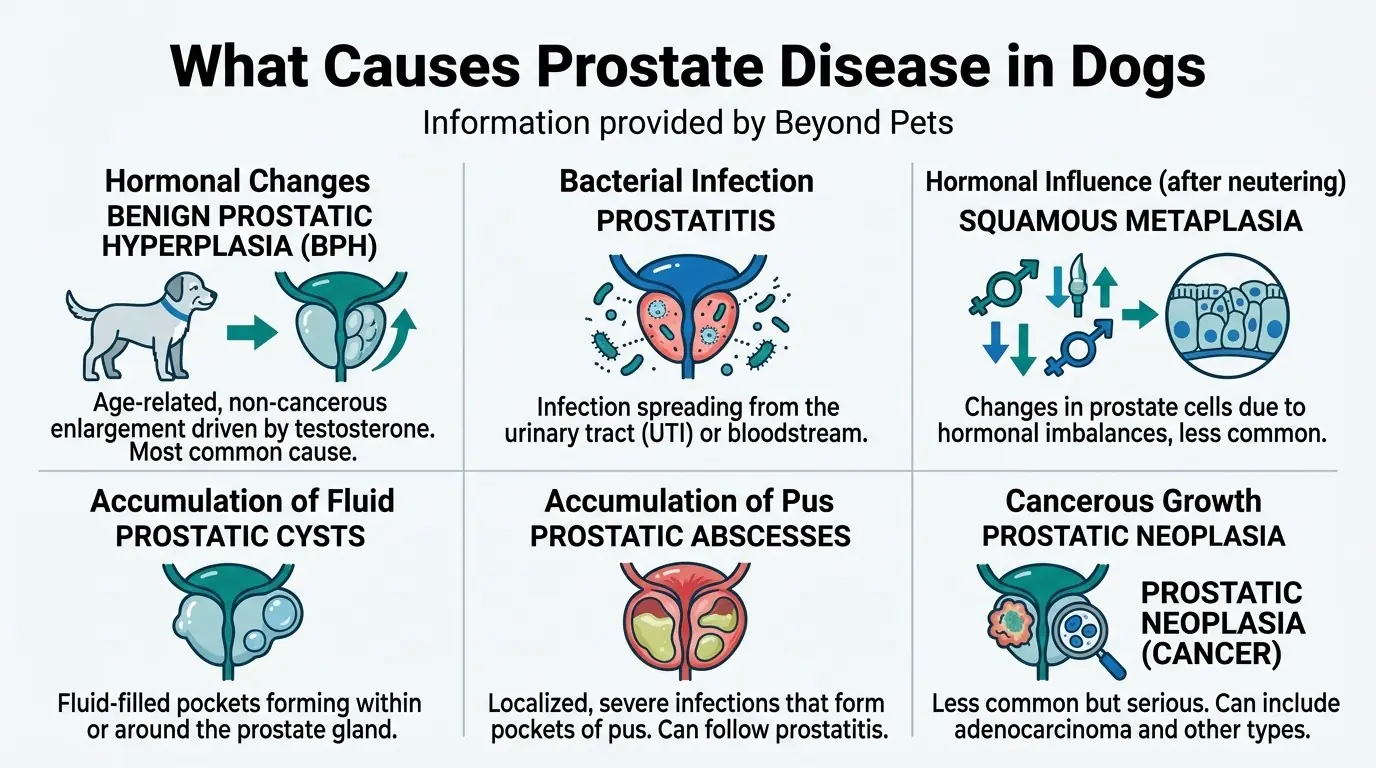
The development of prostate disease in dogs is rarely the result of a single, isolated event; rather, it is typically the culmination of complex, overlapping physiological mechanisms. A dog’s age, reproductive status, genetic lineage, immune system competency, and environmental exposures all interact dynamically to influence the health and structural integrity of the prostate gland over time. The exact pathological triggers vary drastically depending on whether the dog is suffering from a hyperplastic, infectious, cystic, or neoplastic condition. Below is an exhaustive clinical breakdown of the primary factors that directly cause or significantly contribute to the onset of canine prostate disease.[13]
Inflammation of the Prostate Gland
Chronic, low-grade inflammation is a central driving force behind many non-infectious prostatic pathologies, severely compromising the gland’s structural integrity and cellular function. At a microscopic level, inflammation occurs when specialized immune cells—most notably circulating macrophages and highly reactive neutrophils—infiltrate the delicate prostatic stroma and glandular epithelium. These immune cells are drawn to the tissue by underlying micro-trauma, cellular aging, or microscopic urinary reflux. Once present in the prostate, the macrophages begin to release a potent cascade of inflammatory mediators, including highly destructive cytokines, interleukins, and reactive oxygen species. These powerful chemicals indiscriminately damage healthy prostatic epithelial cells, breaking down the crucial blood-prostate barrier. As healthy cells are damaged, they release stress signals that attract even more inflammatory immune cells, creating a relentless, self-perpetuating cycle of cellular destruction and tissue remodeling. This chronic inflammatory state leaves the prostate highly vulnerable, paving the way for the development of severe secondary bacterial infections, large retention cysts, and potentially contributing to the early genetic mutations associated with oncogenesis.[14]
Bacteria
Bacterial infiltration remains the absolute most prevalent cause of acute and chronic infectious prostatic disease in the canine patient. The canine prostate gland is highly susceptible to ascending infections due to its direct, open anatomical connection to the urethra. Bacteria from the dog’s external environment, the prepuce, or the lower urinary tract can easily migrate upward, bypass the urinary sphincter, and aggressively colonize the nutrient-rich prostatic tissue. The most common and destructive bacterial culprit responsible for canine prostatitis is Escherichia coli (E. coli), an opportunistic pathogen that possesses specialized virulence factors—such as tiny, hair-like fimbriae—that allow it to tightly bind to the prostatic epithelium, preventing it from being naturally flushed away during normal urination. Other highly aggressive bacteria frequently isolated from infected prostates include Proteus mirabilis, Pseudomonas aeruginosa, Klebsiella species, Pasteurella multocida, Streptococcus, and various Staphylococcus strains. Once established deep within the glandular tissue, these bacteria form complex biofilms and release potent toxins, leading to severe cellular necrosis, the formation of massive, pus-filled abscesses, and the onset of life-threatening systemic sepsis if the infection enters the dog’s bloodstream.[15]
Age and Hormones
The natural biological processes of aging, combined with continuous, lifelong exposure to potent reproductive hormones, represent the absolute primary cause of Benign Prostatic Hyperplasia (BPH) in intact male dogs. Throughout an intact dog’s life, the testicles constantly produce and secrete the primary male androgen, testosterone. As testosterone circulates through the bloodstream and enters the prostate gland, it encounters a specific, highly active intracellular enzyme known as 5-alpha reductase. This critical enzyme is responsible for metabolizing standard testosterone into an incredibly potent, biologically active derivative called dihydrotestosterone (DHT). DHT binds to specific androgen receptors located within the nucleus of the prostatic epithelial cells with a profound affinity, directly stimulating widespread DNA synthesis and massive cellular proliferation. As the dog ages, age-related shifts in the delicate ratio between testosterone and systemic estrogen actually upregulate the number of these DHT receptors, supercharging the gland’s sensitivity to androgens. This relentless, hormone-driven cellular multiplication inevitably results in the massive, diffuse enlargement of the prostate gland, physically crushing the delicate excretory ducts and placing immense, painful pressure on the dog’s urinary bladder, urethra, and large intestine.[16]
Prostate Cancer
The precise, initial causative triggers of primary canine prostate cancer remain highly complex and somewhat enigmatic to modern veterinary researchers. However, it is widely accepted that the development of Prostatic Adenocarcinoma and Transitional Cell Carcinoma is deeply rooted in severe, spontaneous genetic mutations, chromosomal instability, and poorly understood environmental factors. Unlike human prostate cancer, which is heavily fueled by androgens, canine prostate cancer is completely androgen-independent, meaning the presence or absence of testosterone plays absolutely no role in the initiation or growth of the tumor. Recent breakthroughs in veterinary molecular oncology have discovered that a significant percentage of dogs suffering from prostate and bladder cancers possess a highly specific, acquired somatic mutation in the BRAF gene, specifically the BRAF V595E mutation. This genetic aberration causes the cells’ internal signaling pathways to become permanently jammed in the “on” position, leading to uncontrolled, rapid, and deeply invasive cellular division. Because specific breeds—such as the Scottish Terrier, Beagle, and Shetland Sheepdog—are vastly overrepresented in prostate cancer statistics, researchers heavily suspect that powerful, inherited genetic susceptibilities are quietly passed down through purebred bloodlines, predisposing certain family lines to these devastating malignancies.[17]
Cysts and Abscesses
The formation of cysts and abscesses within the prostate gland is generally viewed as a severe, secondary complication of pre-existing prostatic diseases, rather than a primary disease process itself. Intraprostatic retention cysts are directly caused by the chaotic architectural distortion seen in severe cases of Benign Prostatic Hyperplasia (BPH). As the hyperplastic prostatic tissue aggressively multiplies and expands, it acts like a vice, physically clamping down on the microscopic excretory ducts that are supposed to carry prostatic fluid into the urethra. Unable to escape, the continuously secreted fluid pools deeply within the glandular tissue, creating pockets of immense hydrostatic pressure that slowly stretch the surrounding cells until a large, encapsulated, fluid-filled cyst is formed. If the dog simultaneously suffers from a lower urinary tract infection, ascending bacteria can easily infiltrate these stagnant, fluid-filled cysts, finding an absolutely perfect, nutrient-dense environment for rapid multiplication. As the dog’s immune system desperately attacks the invading bacteria, massive amounts of dead white blood cells, necrotic tissue debris, and toxic bacterial byproducts accumulate within the cystic cavity, rapidly transforming the benign cyst into a highly dangerous, pus-filled prostatic abscess.[18]
Congenital Abnormalities
While relatively rare compared to acquired conditions, congenital structural abnormalities present from birth can severely predispose a dog to a lifetime of chronic prostate issues. During complex fetal development in utero, the canine reproductive and urinary systems form from incredibly intricate, overlapping embryological structures. If this delicate developmental sequence is interrupted, a dog may be born with severe anatomical malformations directly impacting the prostate gland. The most highly documented congenital issue is the persistence of Müllerian duct remnants. In normal male fetal development, the embryonic Müllerian ducts—which form the uterus and fallopian tubes in females—are supposed to completely regress and disappear. In some male dogs, tiny fragments of these ducts fail to regress, remaining dormant near the prostate. Over time, these remnants can spontaneously activate, slowly secreting fluid and growing into massive, standalone paraprostatic cysts. Furthermore, congenital strictures or severe malformations of the prostatic urethra can cause severe, lifelong turbulent urine flow, constantly forcing bacteria backward into the prostatic tissue and resulting in a completely incurable cycle of chronic, painful bacterial prostatitis.[19]
Trauma
Severe physical trauma to the caudal abdomen or pelvic region can act as a sudden, catastrophic trigger for acute prostate disease, leading to intense inflammation, massive internal hemorrhage, and life-threatening secondary infections. The prostate gland is highly vascularized, meaning it contains a dense, intricate network of fragile blood vessels. Traumatic injuries, such as those sustained from being struck by a motor vehicle, suffering a high-velocity fall, or experiencing severe blunt force trauma to the hindquarters, can cause the delicate prostatic capsule to tear, leading to massive internal bleeding and swelling. Furthermore, severe pelvic fractures can drive sharp shards of bone directly into the prostate gland or the prostatic urethra, physically crushing the tissue and completely severing the excretory ducts. This massive, sudden tissue destruction triggers an overwhelming inflammatory response, breaking down the gland’s natural defenses and allowing opportunistic bacteria from the damaged urinary tract to instantly colonize the shattered prostatic tissue, often leading to rapid, fatal sepsis if immediate, aggressive surgical intervention and stabilization are not performed.[20]
Immune-Mediated Disorders
In highly unusual, complex medical cases, a dog’s own immune system can experience a catastrophic miscalibration, leading it to incorrectly identify the healthy tissues of the prostate gland as a dangerous, invading foreign body. This results in an intense, localized immune-mediated disorder, where circulating lymphocytes, macrophages, and specific antibodies aggressively attack and destroy the healthy prostatic epithelium. This relentless autoimmune assault triggers massive, chronic inflammation, severe tissue scarring (fibrosis), and the eventual total dysfunction of the gland. Immune-mediated prostatic conditions are incredibly challenging for veterinarians to definitively diagnose, as their clinical signs perfectly mimic those of deep-seated chronic bacterial infections. Because the underlying cause is an overactive immune system rather than an invading pathogen, treating these specific cases with standard antibiotics will yield absolutely no clinical improvement. Instead, managing immune-mediated prostate disease requires the careful, long-term administration of powerful immunosuppressive medications—such as high-dose corticosteroids, cyclosporine, or mycophenolate—to deliberately suppress the dog’s immune response, halt the autoimmune destruction, and allow the heavily damaged prostatic tissue a chance to slowly heal and regenerate.[21]
Hormonal Imbalances
Beyond the normal, age-related fluctuations of testosterone and estrogen that drive Benign Prostatic Hyperplasia (BPH), specific, underlying pathological hormonal imbalances can significantly contribute to the onset and extreme severity of prostate disease in dogs. The prostate is an exquisitely hormone-sensitive organ, meaning any systemic disruption to the dog’s endocrine system can trigger profound prostatic changes. For instance, systemic endocrine diseases like Cushing’s disease (hyperadrenocorticism) result in the massive, chronic overproduction of cortisol by the adrenal glands. This extreme cortisol elevation causes profound, systemic immune suppression, making the dog highly susceptible to deep-seated, incredibly stubborn bacterial prostatitis that completely defies standard antibiotic therapies. Furthermore, specific types of testicular tumors—such as functional Sertoli cell tumors or highly active Leydig cell tumors—can massively overproduce potent estrogens or atypical androgens. A massive, sudden spike in circulating estrogen completely deranges the normal hormonal environment of the prostate, leading to a condition known as squamous metaplasia, where the normal glandular cells rapidly mutate into abnormal, flattened squamous cells. This pathological transformation physically blocks the prostatic ducts, causing massive fluid retention, the rapid formation of enormous intraprostatic cysts, and a critically high risk of severe, life-threatening prostatic abscessation.[22]
Symptoms of Canine Prostate Disease
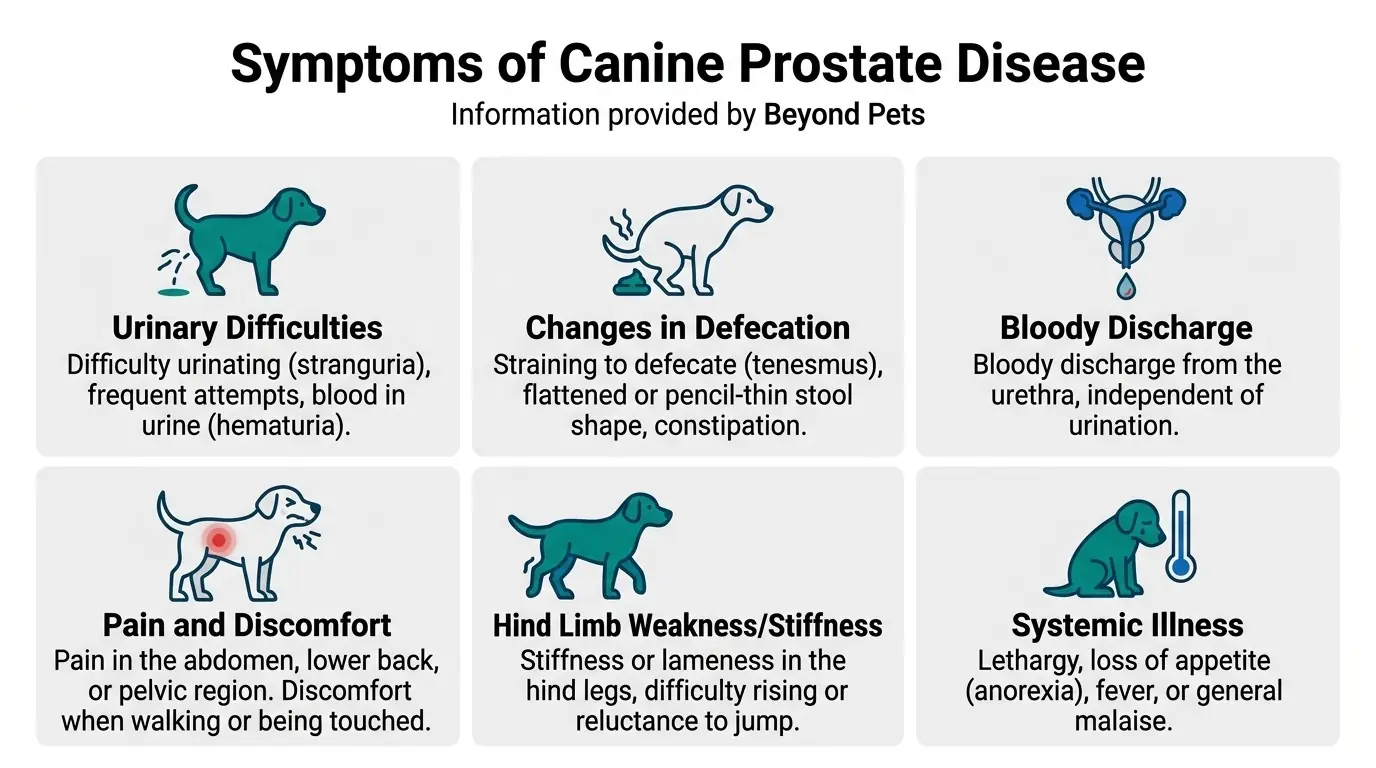
Because the prostate gland is so deeply intertwined with both the urinary and gastrointestinal tracts, the clinical symptoms of canine prostate disease are remarkably diverse, ranging from subtle, easily missed behavioral shifts to dramatic, life-threatening physiological emergencies. In the earliest stages of prostate disease, particularly with Benign Prostatic Hyperplasia (BPH) or early-stage, localized chronic prostatitis, the initial symptoms are often entirely behavioral. A normally active, deeply engaged dog might suddenly appear unusually lethargic, highly anxious, or display uncharacteristic irritability. Owners frequently note that their dog has begun acting unusually restless, pacing the house at night, barking at unseen stimuli, or constantly intensely licking their preputial area. The dog may completely lose interest in their regular meals, sleep excessively, or suddenly show highly abnormal, obsessive behavior, such as an intense, uncharacteristic interest in other household pets, driven by internal pelvic discomfort and confusing hormonal signals.[23]
As the prostate disease progresses—whether due to massive hyperplastic expansion, the formation of a large, fluid-filled paraprostatic cyst, or the aggressive, invasive growth of a malignant tumor—the mechanical pressure on the surrounding internal organs leads to highly visible, unmistakable physical symptoms. While specific clinical signs can vary significantly depending on the exact underlying cause and the absolute severity of the pathological condition, veterinarians generally categorize the most commonly observed symptoms of canine prostate disease into several distinct areas:
- Blood in the urine or semen: One of the most alarming signs for owners, hematuria (bloody urine) or hemospermia (bloody ejaculate) occurs as the highly vascular, fragile prostatic tissue bleeds spontaneously into the urinary tract.
- Straining or difficulty urinating: Known clinically as stranguria, the dog may posture to urinate for prolonged periods, passing only tiny drops of urine or vocalizing in severe pain due to the swollen prostate clamping tightly shut around the urethra.
- Frequent urination, often in small amounts: Pollakiuria occurs because the enlarged prostate physically pushes upward against the bladder, drastically reducing its capacity and constantly triggering the urge to void.
- Pain while urinating: Dysuria is a hallmark sign of active, severe bacterial prostatitis or invasive, nerve-damaging prostate cancer.
- Constipation or difficulty passing stool: Because the prostate sits directly below the colon, massive enlargement physically pushes upward, creating a highly restrictive bottleneck in the large intestine and causing severe tenesmus (straining to defecate).
- Ribbon-like, thin stools: The physical compression of the colon acts like an extruder, forcing the feces to pass through a severely narrowed opening, resulting in distinctly flattened, ribbon-shaped stools.
- Lethargy and profound weakness: Systemic exhaustion is incredibly common, particularly if the dog is battling a deep-seated bacterial infection, a toxic abscess, or an aggressive, energy-draining malignancy.
- Pain or discomfort in the hindquarters or abdomen: Deep pelvic pain causes the dog to become highly sensitive to being touched near their lower back or tail base, often crying out or attempting to bite when palpated.
- Stiff or highly abnormal gait: To minimize the agonizing friction against the swollen, inflamed prostate gland, dogs will frequently adopt a stiff, wide-based, stilted walk, carefully avoiding bending their lower spine or taking long strides.
- Swelling in the abdominal area: Massive paraprostatic cysts or highly advanced, invasive tumors can grow large enough to cause visible, asymmetrical distension of the lower abdomen.
- Fever: A spiking, dangerous fever is the primary clinical indicator of an acute, systemic bacterial infection or a ruptured prostatic abscess leaking toxic pus into the abdomen.
- Loss of appetite and rapid weight loss: Anorexia and severe muscle wasting (cachexia) are deeply concerning signs, most frequently associated with advanced, metastatic prostate cancer or prolonged, debilitating chronic infections.
- Vomiting and explosive diarrhea: While slightly less common, severe systemic illness, excruciating pain, and toxic sepsis originating from the prostate can trigger profound, dangerous gastrointestinal distress.
Diagnosing Prostate Disease in Dogs
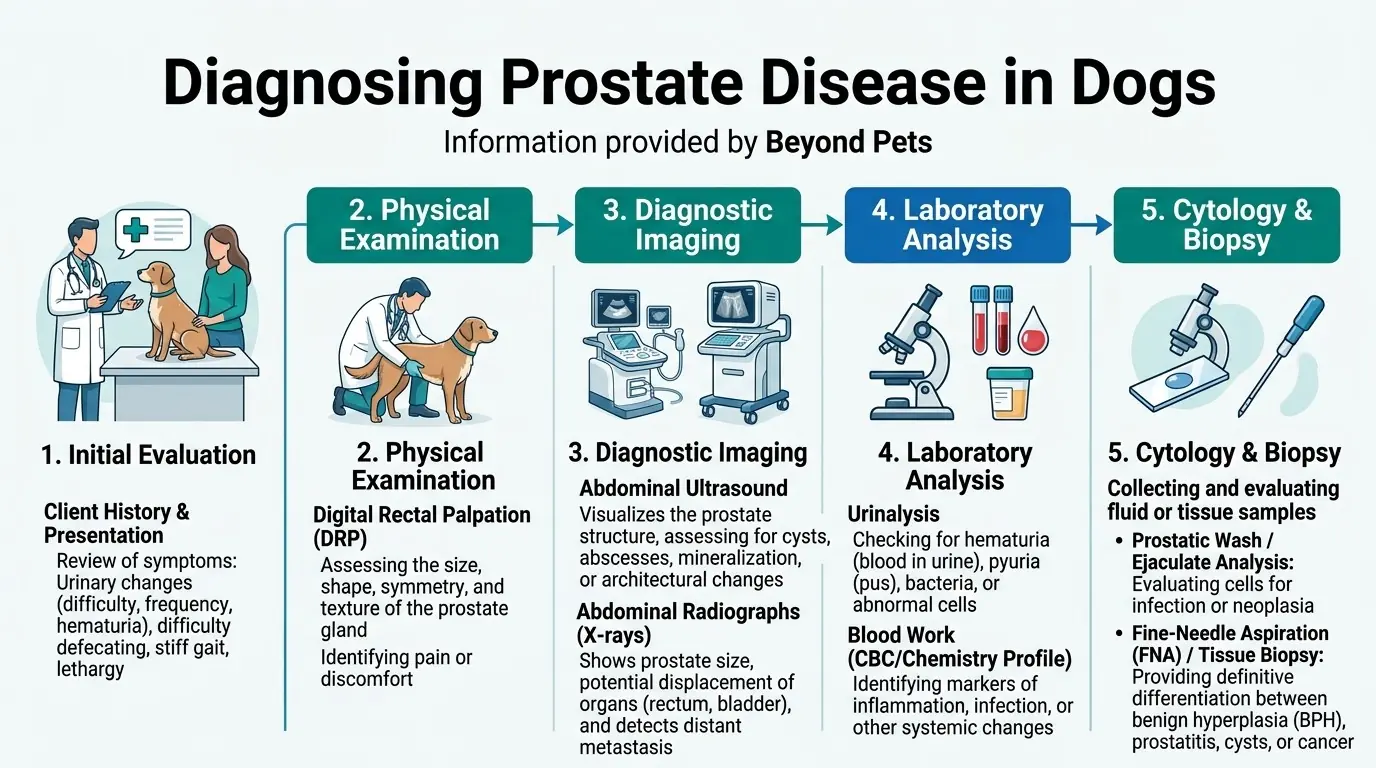
Because the clinical symptoms of benign prostatic hyperplasia, bacterial prostatitis, and highly aggressive prostate cancer can perfectly mimic one another, arriving at a definitive, perfectly accurate diagnosis requires a highly systematic, multi-tiered approach by a skilled veterinarian. A superficial exam is simply not sufficient; instead, the veterinary team must utilize a combination of deep physical palpation, highly advanced laboratory blood and urine diagnostics, high-resolution internal imaging, and precise microscopic cellular analysis to determine the exact nature, severity, and extent of the underlying prostatic pathology.[24]
Physical Examination
The diagnostic process always commences with a highly thorough, comprehensive physical examination. The veterinarian will carefully observe the dog’s gait as they walk around the exam room, looking for the stiff, stilted hind-limb movement characteristic of deep pelvic pain. During the abdominal palpation, the veterinarian will gently but firmly press on the dog’s caudal (rear) abdomen, feeling for the presence of a massively enlarged prostate gland that has been pushed forward out of the pelvic canal, or feeling for the large, firm, fluid-filled masses characteristic of paraprostatic cysts. The veterinarian will also meticulously examine the dog’s external genitalia, checking the testicles for severe asymmetry or firm, abnormal lumps that could indicate an estrogen-producing Sertoli cell tumor, and inspecting the prepuce for signs of abnormal, bloody, or purulent discharge. The external lymph nodes will be carefully assessed, as enlarged nodes can provide early clues to systemic infection or widespread cancer metastasis. Furthermore, the perineal area (the region around the anus) will be examined for signs of muscle weakness or herniation, which frequently occur secondary to the intense, chronic straining caused by BPH.[2]
Digital Rectal Exam
If the prostate cannot be fully isolated during the abdominal palpation, or if the veterinarian suspects internal abnormalities, the absolutely most critical hands-on diagnostic step is the Digital Rectal Exam (DRE). This specialized procedure involves the veterinarian carefully inserting a well-lubricated, gloved finger directly into the dog’s rectum to physically palpate the dorsal (top) surface of the prostate gland through the delicate rectal wall. During the DRE, the veterinarian is critically assessing the gland for size, symmetry, exact shape, and the dog’s specific pain response. A normal canine prostate is smooth, bilaterally symmetrical, completely painless, and features a distinct, palpable groove down the center known as the median raphe. If the gland feels symmetrically enlarged, smooth, and painless, Benign Prostatic Hyperplasia is highly suspected. If the dog vocalizes in intense, sharp pain during the exam, an acute bacterial infection or a volatile abscess is incredibly likely. Conversely, if the prostate feels highly asymmetrical, rock-hard, firmly anchored to the surrounding pelvic floor, or covered in irregular, knobby bumps, the veterinarian will become highly suspicious of aggressive, invasive prostatic neoplasia (cancer).[7]
Blood Test
Following the physical evaluation, advanced hematological diagnostics are essential. A Complete Blood Count (CBC) and a comprehensive serum biochemistry profile are standardly performed. The CBC evaluates the dog’s red and white blood cells; an incredibly high white blood cell count, particularly one featuring a “left shift” (the presence of immature immune cells), strongly indicates a severe, acute bacterial infection or a life-threatening, ruptured prostatic abscess. The biochemistry profile assesses critical organ function, checking liver enzymes and kidney values to ensure the dog can safely metabolize powerful medications or survive general anesthesia. Most importantly, modern veterinary diagnostics now heavily utilize specialized biomarker blood assays. While human doctors test for PSA, veterinarians measure Canine Prostate-Specific Arginine Esterase (CPSE) levels in the blood. CPSE is highly specific to the canine prostate; a massive elevation in circulating CPSE strongly correlates with the presence of active Benign Prostatic Hyperplasia, even in dogs that are completely asymptomatic, making it an invaluable, highly accurate tool for early detection and routine senior health screening.[3]
Urinalysis
A comprehensive Urinalysis is absolutely mandatory for evaluating any dog presenting with urinary or prostatic symptoms. Because the prostate constantly leaks fluid directly into the urethra, evaluating the urine provides a direct, highly revealing window into the internal health of the prostate gland. The veterinarian will carefully examine the urine sediment under a high-powered microscope, searching for the presence of red blood cells, excessive white blood cells (indicating deep infection), bacteria, and severely abnormal, malignant epithelial cells. To determine the exact bacterial species causing prostatitis and select the absolute most effective, targeted antibiotic, a sterile urine culture and sensitivity test will be performed. In highly complex cases, the veterinarian may perform a specialized procedure known as a prostatic wash, where a urinary catheter is placed, the prostate is vigorously massaged via the rectum to force fluid into the urethra, and sterile saline is flushed in and out to collect a highly concentrated sample of prostatic cells. Additionally, cutting-edge genetic urine tests, such as the CADET BRAF assay, can detect the specific BRAF V595E DNA mutation directly from the dog’s urine, allowing for the incredibly early, completely non-invasive detection of aggressive transitional cell carcinoma or prostatic adenocarcinoma.[5]
Biopsy
When imaging, blood tests, and urinalysis strongly suggest the presence of a malignant tumor, a highly complex infection, or an unusual immune-mediated condition, obtaining a physical tissue sample via a biopsy becomes absolutely necessary to reach a definitive, unassailable diagnosis. The most common and least invasive method is a Fine-Needle Aspiration (FNA), typically performed under real-time, high-resolution ultrasound guidance. The veterinarian carefully watches the ultrasound monitor while guiding a long, incredibly thin needle through the dog’s abdominal wall and directly into the abnormal prostatic tissue, using a syringe to vacuum up a tiny cluster of cells for a board-certified veterinary pathologist to examine. If the FNA does not yield a diagnostic sample, a more aggressive core biopsy may be required. Using a specialized, spring-loaded biopsy needle, the veterinarian extracts a solid, cylindrical core of prostatic tissue. While a core biopsy provides a massive amount of architectural detail, allowing for the exact grading of cancer, it carries a highly significant, well-documented risk: as the hollow needle is withdrawn, there is a distinct possibility of “seeding” highly aggressive cancer cells directly along the needle tract, inadvertently spreading the malignancy to the dog’s abdominal wall. Therefore, veterinarians must weigh the critical need for a definitive diagnosis against the potential risks before proceeding with aggressive tissue sampling.[1]
Treatment Options for Canine Prostate Disease
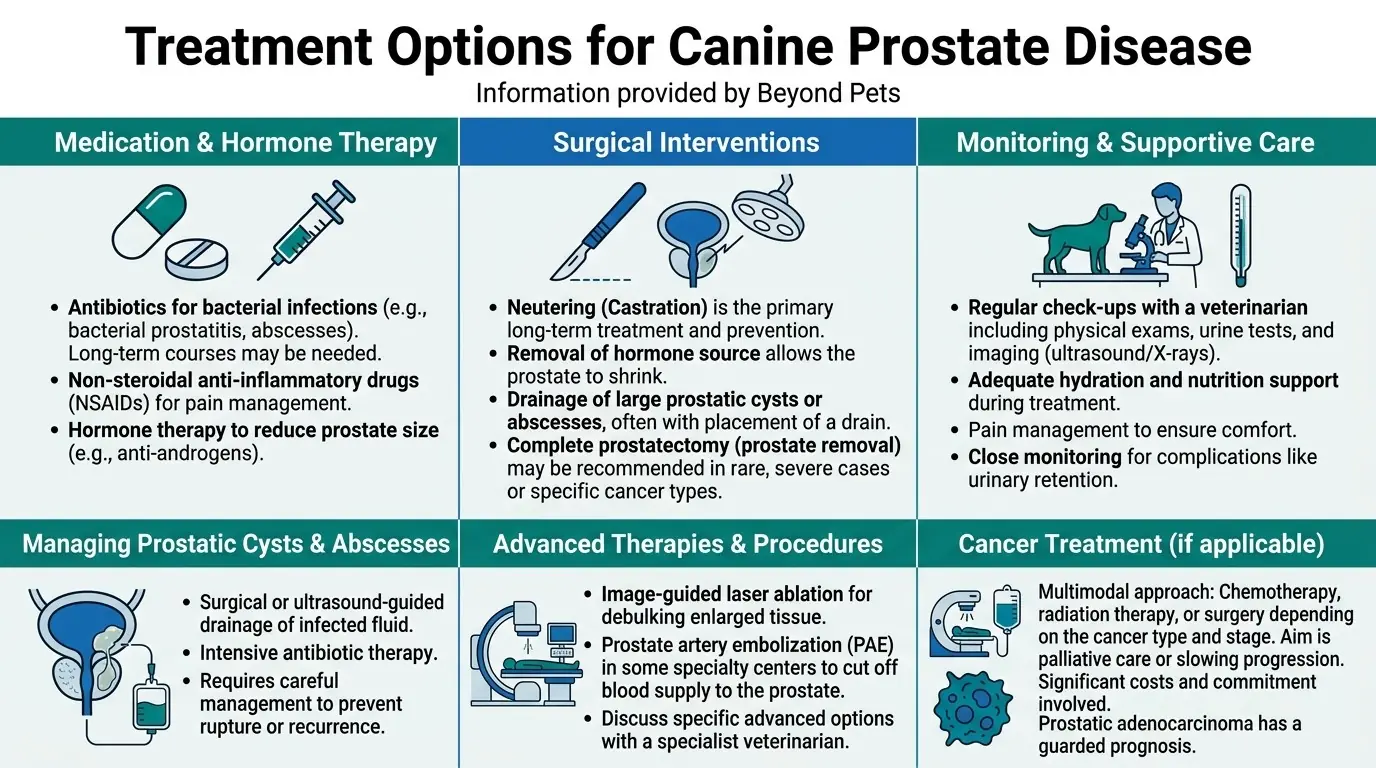
The successful, long-term management of canine prostate disease requires a highly tailored, deeply specialized approach that accounts for the exact specific diagnosis, the dog’s age, their overall systemic health, and the owner’s ultimate goals regarding breeding or show potential. The arsenal of treatments available to modern veterinary specialists is incredibly vast, ranging from routine, straightforward surgical procedures to highly advanced, cutting-edge oncological protocols. Treatment plans frequently utilize a dynamic, multi-modal approach, combining powerful surgical interventions with complex pharmacological management to achieve the highest possible quality of life for the patient.[25]
Surgery
Surgical intervention remains the absolute, foundational cornerstone in the definitive management of many specific prostatic conditions, though the exact surgical procedure chosen varies massively depending on the underlying pathology. For dogs suffering from Benign Prostatic Hyperplasia (BPH) or frustrating, recurrent chronic bacterial prostatitis, a routine bilateral orchiectomy—commonly known as castration or neutering—is the undisputed gold standard surgical treatment. By completely removing the testicles, the surgeon instantly eliminates the primary source of testosterone, causing a rapid, dramatic, and permanent involution (shrinkage) of the hyperplastic prostate gland over a period of just a few weeks. In cases involving severe, life-threatening prostatic abscesses, a simple neuter is drastically insufficient. Veterinary surgeons must employ a highly advanced, complex technique known as omentalization. During this major abdominal surgery, the surgeon meticulously cuts into the prostate to drain the toxic pus, deeply flushes the cavity, and then takes the omentum—a highly vascular, web-like organ naturally found within the abdomen—and physically packs it tightly into the empty prostatic defect. The omentum provides a massive, continuous blood supply and robust lymphatic drainage, aggressively fighting residual infection and promoting rapid, permanent healing. Conversely, surgical treatment for prostate cancer, such as a highly invasive subtotal or total prostatectomy (the complete removal of the gland), is fraught with extreme risk and massive complications. Because the canine prostate completely encircles the urethra, removing it entirely requires resecting a critical portion of the urinary tract and delicately anastomosing (reconnecting) the fragile bladder directly to the remaining urethra. This highly demanding procedure frequently results in devastating, permanent urinary incontinence, and because canine prostate cancer has almost always metastasized widely before the tumor is ever discovered, radical, curative-intent surgery is rarely recommended by veterinary oncologists.[2]
Hormone Treatments
When surgical castration is not a viable option—perhaps because the dog is actively utilized in a high-value breeding program, is a competitive conformation show dog, or suffers from severe underlying cardiovascular diseases that make general anesthesia unacceptably risky—veterinarians will frequently prescribe highly targeted, powerful hormone treatments to medically manage the disease. Medical management primarily relies on advanced pharmacological agents that manipulate the dog’s endocrine system to forcibly shrink the hyperplastic prostatic tissue. The most widely utilized medication in this specific category is finasteride, a highly potent 5-alpha reductase inhibitor. Finasteride works by systematically blocking the specific intracellular enzyme responsible for converting standard testosterone into dihydrotestosterone (DHT), the highly active, primary hormone derivative that directly fuels pathological prostatic enlargement. By drastically plunging the DHT levels within the prostate, finasteride can effectively shrink the entire gland by up to fifty percent over a period of several months, significantly alleviating urinary stranguria and fecal tenesmus. Crucially, finasteride achieves this profound physical reduction without severely depressing the dog’s overall systemic testosterone levels, meaning that libido, aggression, and semen quality often remain entirely sufficient for active breeding purposes. Another heavily utilized hormone therapy involves the daily oral administration of osaterone acetate, a highly specialized steroidal anti-androgen compound formulated specifically for veterinary use. Osaterone acetate competitively binds to the specific androgen receptors deep within the prostate gland, effectively locking out both testosterone and DHT. Furthermore, it actively prevents the transport of testosterone into the prostatic epithelial cells, resulting in rapid, dramatic clinical improvement—often noticeably shrinking the prostate within just a week or two of initiating treatment. While these hormonal treatments are incredibly effective at managing the painful clinical signs of BPH, they are not permanent cures; the medication must be administered continuously or in highly regimented cycles for the entire remainder of the dog’s life, requiring frequent veterinary oversight.[8]
Radiation Therapy
For dogs diagnosed with highly aggressive, localized prostate cancer, advanced Radiation Therapy represents a critical, incredibly powerful weapon in the veterinary oncologist’s arsenal. Radiation therapy utilizes highly targeted, incredibly intense beams of ionizing energy—typically high-energy X-rays generated by a massive medical device known as a linear accelerator—to systematically shatter the DNA within the rapidly dividing cancer cells, destroying the tumor from the inside out. There are two primary types of radiotherapy utilized in veterinary oncology: External Beam Radiation Therapy (EBRT) and Intraoperative Radiotherapy (IORT). External beam radiotherapy is the most common approach, where the dog is briefly placed under light anesthesia and precise beams of energy are directed at the prostatic tumor from completely outside the body, carefully calculated to maximize damage to the cancer while sparing the highly sensitive surrounding tissues of the bladder and colon. Intraoperative radiotherapy is a highly specialized, cutting-edge procedure where a specific radiation machine is used during an open abdominal surgery to deliver a massive, singular dose of radiation directly into the exposed prostate gland. While radiation therapy is highly effective at shrinking tumors, reducing excruciating bone pain from spinal metastasis, and temporarily restoring normal urination, it is generally considered a palliative treatment in canine prostate cancer, designed to maximize the dog’s comfort and significantly extend their high-quality lifespan, rather than providing a definitive, permanent cure.[9]
Chemotherapy
Because canine prostate cancer is overwhelmingly characterized by an exceptionally high rate of aggressive, widespread metastasis, highly targeted, systemic Chemotherapy is frequently recommended, either as a standalone treatment or utilized in conjunction with radiation and palliative surgery. Chemotherapy utilizes incredibly powerful, highly cytotoxic drugs that circulate completely throughout the dog’s bloodstream, actively hunting down and destroying rapidly dividing malignant cells that have already escaped the prostate and seeded in the lungs, lymph nodes, or skeletal system. The standard, highly potent intravenous chemotherapeutic agents commonly utilized by veterinary oncologists to combat canine prostate cancer include mitoxantrone, carboplatin, and potentially doxorubicin. These powerful drugs are meticulously dosed based on the dog’s exact body surface area and are carefully administered directly into a vein, typically in a dedicated oncology clinic. Furthermore, an absolutely critical, unique component of treating canine prostatic adenocarcinoma and transitional cell carcinoma involves the daily oral administration of powerful Non-Steroidal Anti-Inflammatory Drugs (NSAIDs), specifically piroxicam or carprofen. While traditionally used strictly for pain management, these specific NSAIDs act as potent COX-2 (cyclooxygenase-2) inhibitors. Veterinary research has definitively proven that canine prostate cancer cells massively overexpress the COX-2 enzyme, which the tumor uses to aggressively build new blood vessels (angiogenesis) and shield itself from the immune system. By constantly inhibiting COX-2 with daily piroxicam, veterinarians can effectively starve the tumor of its vital blood supply, significantly slowing its growth and drastically extending the dog’s survival time.[10]
Immunotherapy
Immunotherapy represents the absolute bleeding edge of modern, highly advanced oncological research, offering an entirely new paradigm for treating devastating diseases like canine prostate cancer. Rather than attempting to directly poison the cancer cells with toxic chemotherapy or burn them away with intense radiation, immunotherapy fundamentally works by deeply stimulating, re-training, and heavily arming the patient’s own native immune system to recognize and ruthlessly attack the hidden tumor cells. One highly promising avenue involves the precise intravenous injection of specialized, laboratory-engineered monoclonal antibodies. These customized antibodies are meticulously designed to seek out and physically attach themselves to highly specific, unique proteins located exclusively on the outer surface of the malignant prostate cancer cells. Once attached, they act like a glaring, chemical beacon, signaling the dog’s own aggressive white blood cells to swarm and destroy the marked tumor. Furthermore, veterinary researchers are actively developing highly experimental, autologous cancer vaccines. By surgically harvesting a small sample of the dog’s own unique prostatic tumor, scientists can extract the specific cancer antigens, heavily modify them in a laboratory, and inject them back into the patient. This triggers a massive, highly specific systemic immune response, prompting the dog’s body to generate a massive army of specialized antibodies designed entirely to hunt down and eradicate any remaining microscopic cancer cells circulating throughout the body.[4]
Targeted Therapy
Targeted therapy is a highly advanced, profoundly complex medical approach that, while somewhat similar in concept to traditional chemotherapy, operates on an entirely different, microscopic molecular level. Instead of indiscriminately killing all rapidly dividing cells in the body—which causes the classic side effects of chemotherapy like severe gastrointestinal upset and bone marrow suppression—targeted therapies are meticulously engineered to attack and disable specific, incredibly tiny molecular pathways located entirely within the cancer cell itself. The most frequently utilized targeted therapy drugs in veterinary oncology are small, highly complex molecules known as Tyrosine Kinase Inhibitors (TKIs), such as toceranib phosphate (Palladia). Tyrosine kinases are highly specific, critical enzymes that act as the master communication switches within a cell, constantly transferring vital chemical signals that order the cell to rapidly divide, aggressively grow, and construct new, dedicated blood vessels. In prostate cancer cells, these microscopic switches become permanently jammed in the active position. Targeted TKI medications physically bind to these specific enzymes, completely blocking their action and effectively severing the tumor’s internal communication network, forcing the cancer cells to stop dividing and ultimately undergo apoptosis (programmed cell death).[1]
Cryosurgery
Cryosurgery, also known as highly targeted cryoablation, is a highly specialized, intensely precise surgical technique occasionally utilized to manage highly localized, early-stage prostatic tumors or massive, deeply painful hyperplastic nodules. Rather than cutting the diseased tissue out with a traditional steel scalpel, cryosurgery relies on the highly controlled application of extreme, instantly lethal cold to freeze and completely destroy the abnormal cells. Under deep general anesthesia and utilizing real-time ultrasound guidance, the veterinary surgeon carefully inserts specialized, hollow, needle-like probes—known as cryoprobes—directly into the center of the prostatic tumor. Once precisely positioned, highly pressurized liquid nitrogen or argon gas is rapidly circulated completely through the probes, instantly dropping the temperature of the surrounding tissue to well below freezing. This massive thermal shock causes deadly, jagged ice crystals to form directly inside the cancer cells, physically shattering their delicate membranes and instantly destroying the tumor’s vital blood supply. As the tissue slowly thaws, the dead cancer cells are naturally broken down and safely absorbed by the dog’s immune system. While cryosurgery is incredibly effective at establishing local tumor control with minimal bleeding, there is always a small, persistent risk that microscopic clusters of cancer cells may survive at the very edges of the deep freeze, potentially allowing the tumor to slowly return over time.[25]
Brachytherapy
Brachytherapy is a highly advanced, incredibly sophisticated, and profoundly complex form of internal radiation therapy that is occasionally utilized in the management of canine prostate cancer. Unlike standard external beam radiation therapy, which shoots massive beams of radiation completely through the dog’s body from a distant machine, brachytherapy involves physically placing highly radioactive, incredibly potent material directly inside the center of the prostatic tumor itself. This is typically accomplished by utilizing specialized, hollow needles or tiny catheters to meticulously implant dozens of microscopic, radioactive “seeds”—often containing potent isotopes like Iodine-125 or Palladium-103—directly into the dense tissue of the prostate gland under continuous, high-resolution ultrasound guidance. Because the radioactive material is located directly inside the tumor, it delivers an incredibly massive, continuous, and highly lethal dose of targeted radiation specifically to the malignant cancer cells over a period of several weeks or months. This highly localized approach drastically minimizes the dangerous radiation exposure to the incredibly sensitive, healthy surrounding organs, such as the delicate walls of the rectum and the urinary bladder. While brachytherapy can provide excellent, highly targeted local tumor control, it requires highly specialized, incredibly expensive facilities, and the dog must often undergo strict radiation safety isolation protocols following the procedure to prevent accidental radiation exposure to the owners.[25]
How to Prevent Prostate Disease in Dogs
Preventing prostate disease in dogs requires a highly proactive, deeply committed, and lifelong approach to veterinary care, heavily focused on early intervention, strict hormonal management, and maintaining robust overall systemic health. While it is biologically impossible to completely eliminate the risk of incredibly rare, spontaneous genetic mutations that cause aggressive malignancies, there are several highly proven, medically sound measures that pet owners can take to drastically reduce their dog’s overall risk of developing the vast majority of debilitating prostatic conditions.[2]
- Neutering: Surgically neutering (castrating) male dogs, especially when performed when the dog is young, is absolutely the most effective, definitive, and medically proven method for entirely preventing Benign Prostatic Hyperplasia (BPH), chronic bacterial prostatitis, and the formation of massive intraprostatic retention cysts. By completely removing the testicles, the primary source of testosterone is eliminated, preventing the lifetime accumulation of DHT that fuels prostatic enlargement.
- Regular veterinary check-ups: Highly consistent, comprehensive, and regular veterinary visits are absolutely critical for early detection. Veterinarians should routinely perform a Digital Rectal Exam (DRE) on all intact male dogs over the age of five, and owners should strongly request routine CPSE biomarker blood testing to detect microscopic, asymptomatic prostatic enlargement long before it causes severe clinical pain or dangerous urinary obstruction.
- Monitoring for subtle symptoms: Owners must remain highly vigilant, keeping a close, daily eye on their dog’s specific urinary and defecation habits. Monitor for any signs of abnormal behavior, such as prolonged straining, the production of abnormal, ribbon-like stool, bloody urine, or intense discomfort when the dog’s hindquarters are touched. If you notice any of these highly concerning symptoms, consult your veterinarian immediately for a comprehensive diagnostic workup.
- Maintain a highly healthy weight: Severe, chronic obesity places immense strain on the dog’s entire metabolic system and drastically increases systemic inflammation. Ensuring your dog maintains a healthy weight through highly precise portion control and vigorous daily exercise is vital. While obesity influences many inflammatory conditions, the specific mechanisms driving prostate cancer in dogs remain largely genetic, yet maintaining an ideal, lean body condition keeps the immune system operating at peak efficiency.
- Prevent deep infections: Because chronic bacterial prostatitis is frequently caused by highly opportunistic bacteria ascending the urethra, maintaining an incredibly clean, highly sanitized living environment is paramount. Ensure your dog always has unrestricted access to fresh, clean water to promote frequent urination, which naturally flushes harmful bacteria out of the lower urinary tract before they can breach the prostate.
By diligently adhering to these highly preventative measures, pet owners can significantly reduce the statistical risk of their beloved dogs suffering from painful, life-altering prostate diseases. Always remember, it is absolutely essential to consult your veterinarian before making any changes to your pet’s care, diet, or preventative health routines. Professional veterinary guidance is the ultimate key to a long, healthy, and entirely comfortable life for your canine companion.[1]
Frequently Asked Questions
How long do dogs live after being diagnosed with prostate cancer?
The overall life expectancy of a dog diagnosed with primary prostate cancer is unfortunately highly guarded and generally quite poor. Because canine prostate cancer—such as Prostatic Adenocarcinoma or Transitional Cell Carcinoma—is an incredibly aggressive, fast-growing malignancy, it frequently metastasizes to the lungs, spine, and lymph nodes long before any obvious clinical symptoms ever appear. Without highly aggressive medical intervention, survival times are typically measured in mere weeks to a few short months, as the disease rapidly causes painful urinary obstructions and severe systemic decline. However, if the cancer is detected early and the dog undergoes an aggressive, multi-modal treatment plan involving advanced radiation therapy, powerful systemic chemotherapy, and daily COX-2 inhibiting medications like piroxicam, some dogs can achieve a high quality of life for 6 to 12 months, and occasionally longer depending on how positively their specific tumor responds to the targeted therapy.
What can I do to help my dog’s enlarged prostate?
If your dog has been definitively diagnosed with Benign Prostatic Hyperplasia (BPH), the absolute most effective, permanent, and medically sound intervention is a routine surgical castration. By completely removing the testicles, the production of testosterone immediately plummets, causing the massively enlarged prostate gland to rapidly and permanently shrink over a period of three to four weeks, instantly relieving the pressure on the urinary and gastrointestinal tracts. If your dog cannot undergo surgery due to severe underlying health conditions, or if they are an active, highly valuable breeding stud, your veterinarian can prescribe powerful, highly effective hormonal medications such as finasteride or osaterone acetate. These specialized drugs systematically block the potent androgens within the prostate, effectively shrinking the gland while keeping the dog intact. However, these powerful medications must be administered consistently for the entire remainder of the dog’s life, as the prostate will immediately begin to rapidly enlarge again if the targeted medication is ever stopped.
How much does it cost to remove a dog’s prostate?
The total financial cost associated with physically removing a dog’s entire prostate gland—a highly complex, incredibly invasive surgical procedure known as a total prostatectomy—is exceptionally high, typically ranging from $4,000 to well over $8,000. This massive expense is directly due to the extreme surgical complexity involved; the surgeon must meticulously cut out the entire prostate, remove a critical portion of the surrounding urethra, and delicately reconnect the fragile urinary bladder, requiring the highly specialized skills of a board-certified veterinary surgeon operating in a state-of-the-art facility. However, it is absolutely critical to note that a total prostatectomy is rarely performed in veterinary medicine. Because the procedure carries an incredibly high, near-guaranteed risk of leaving the dog permanently urinary incontinent, and because prostate cancer has usually already metastasized widely before the surgery can even be performed, veterinarians strongly prefer utilizing castration (which costs between $200 and $600) for BPH, or employing targeted radiation and chemotherapy for managing aggressive cancer, rather than attempting radical, curative-intent surgical removal.
References
- Merck Veterinary Manual. Prostatic Diseases in Dogs. Merck & Co., Inc., 2023.
- VCA Hospitals. Prostatic Disease in Dogs. VCA Animal Hospitals, 2022.
- Pinheiro D, et al. Evaluation of biomarker canine-prostate specific arginine esterase (CPSE) for the diagnosis of benign prostatic hyperplasia. BMC Vet Res. 2017.
- Gibson EA, Culp WTN. Canine Prostate Cancer: Current Treatments and the Role of Interventional Oncology. Vet Sci. 2024.
- Merck Veterinary Manual. Prostatitis and Prostatic Abscessation in Dogs. Merck & Co., Inc., 2023.
- Smith J. Canine prostatic disease: A review of anatomy, pathology, diagnosis, and treatment. Theriogenology. 2008.
- Merck Veterinary Manual. Benign Prostatic Hyperplasia in Dogs. Merck & Co., Inc., 2023.
- Barsanti JA, Finco DR. Medical management of canine prostatic hyperplasia. Vet Clin North Am Small Anim Pract. 2006.
- Palmieri C, et al. A review on canine and feline prostate pathology. Front Vet Sci. 2022.
- Sorenmo KU, et al. Evaluation of cyclooxygenase-1 and cyclooxygenase-2 expression and the effect of cyclooxygenase inhibitors in canine prostatic carcinoma. Vet Comp Oncol. 2004.
- Gobello C, Corrada Y. Noninfectious prostatic diseases in dogs. Compend Contin Educ Vet. 2002.
- Polisca A, et al. Retrospective study of canine prostatic diseases. Theriogenology. 2016.
- Veterinary Information Network (VIN). Benign Prostatic Hyperplasia – WSAVA Congress. VIN.com, 2018.
- Mahapokai V, et al. Models for studying benign prostatic hyperplasia. Prostate Cancer Prostatic Dis. 2000.
- Johnston SD, Root Kustritz MV, Olson PN. Disorders of the canine prostate. Canine and Feline Theriogenology. 2001.
- Berry SJ, et al. Development of canine benign prostatic hyperplasia with age. Prostate. 1986.
- Mochizuki H, et al. BRAF V595E mutation in canine prostatic carcinoma. PLoS One. 2015.
- Merck Veterinary Manual. Neoplasms of the Prostate in Dogs. Merck & Co., Inc., 2023.
- Sun F, et al. Canine prostate models in preclinical studies. Transl Androl Urol. 2017.
- American Veterinary Medical Association (AVMA). Spaying and Neutering. AVMA.org, 2023.
- Palmieri C, et al. Histopathological terminology standards for the reporting of prostatic epithelial lesions in dogs. J Comp Pathol. 2019.
- Krawiec DR, Heflin D. Study of prostatic disease in dogs. J Am Vet Med Assoc. 1992.
- DVM360. Prostate-Specific Protein Can Be Used to Diagnose BPH in Middle-Aged Dogs. DVM360.com, 2021.
- Ruel Y, et al. Ultrasonographic evaluation of the prostate in healthy intact dogs. Vet Radiol Ultrasound. 1998.
- Vetster. Everything you need to know about prostatic disease in dogs. Vetster.com, 2024.