


 May 13, 2023
 Phil Good, DVM
Urethral Obstructions in Dogs: Causes, Symptoms, Treatment
This content was prepared with AI assistance and reviewed by a licensed professional for accuracy.
Urethral obstructions in dogs represent one of the most critical and time-sensitive medical emergencies encountered in veterinary medicine. When a dog develops a blockage in their urethra—the narrow tube responsible for carrying urine from the bladder to the outside of the body—the normal excretion of metabolic waste comes to a complete halt. Without immediate intervention, this condition leads to rapid and severe systemic toxicity, severe kidney damage, and potentially fatal cardiac arrhythmias[1]. Imagine your beloved canine companion straining repeatedly with no success, writhing in abdominal pain, and rapidly declining in health over a matter of hours. The urgency for pet owners to recognize the clinical signs, understand the underlying causes, and seek prompt emergency veterinary care cannot be overstated.
In this comprehensive, clinical guide, we will explore the complex pathophysiology of urethral obstructions in dogs. We will delve deeply into the myriad of underlying causes ranging from microscopic crystal formations to complex structural abnormalities. Furthermore, we will break down the precise diagnostic methods utilized by emergency veterinarians, outline both medical and surgical treatment options, and provide actionable, science-backed preventative measures. By equipping yourself with this specialized knowledge, you can act swiftly and decisively to protect your dog’s urinary health, ensuring your furry friend remains healthy, comfortable, and safe throughout their lifetime.
Causes of Urethral Obstruction in Dogs
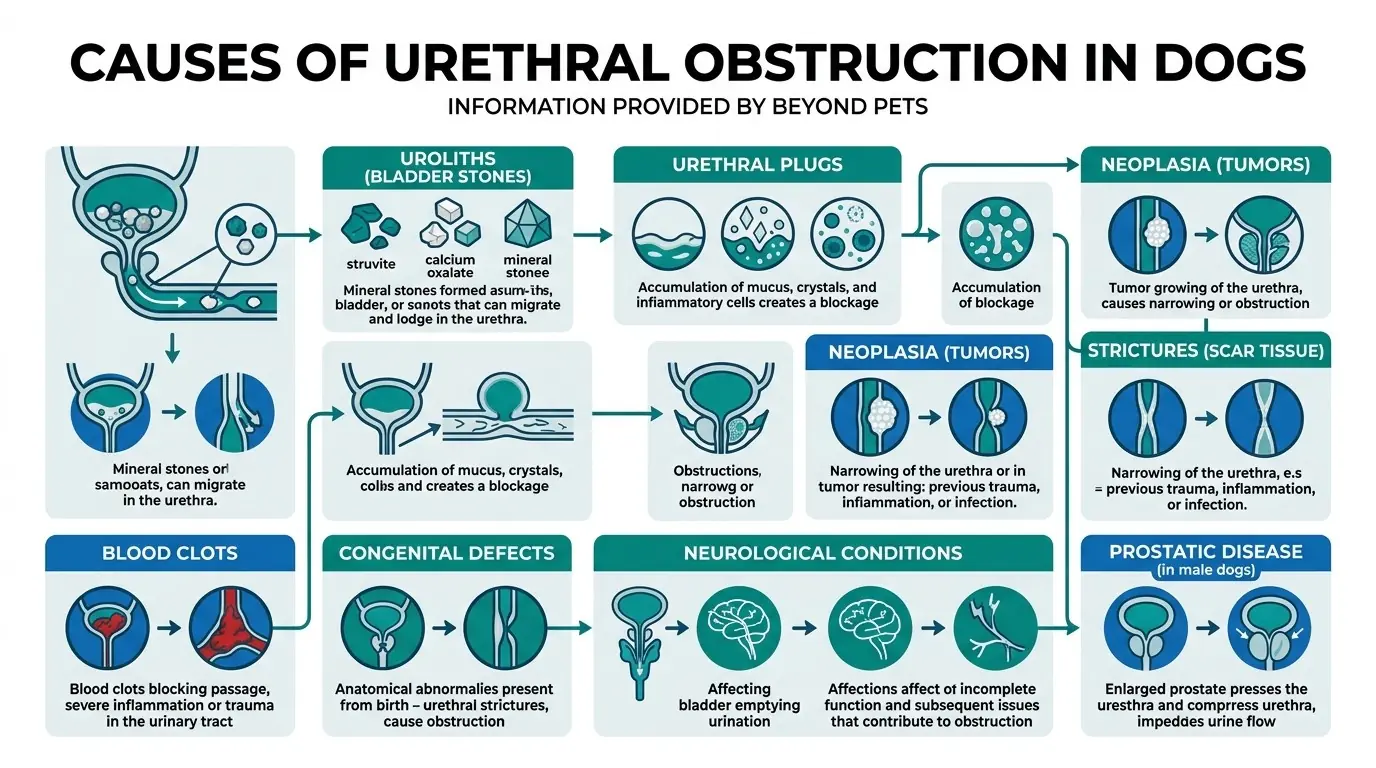
A urethral obstruction in dogs is rarely an isolated event; it is almost always the culmination of an underlying local or systemic disease process. The lower urinary tract can become blocked by physical materials lodged within the lumen of the urethra or compressed from the outside by surrounding inflamed tissues. Understanding the specific root cause is imperative for the attending veterinarian, as it directly dictates both the immediate emergency response and the long-term management strategy[2]. The most common causes include:
1. Uroliths or Urinary Stones: By far the most frequent culprit behind urethral blockages in dogs, uroliths (urinary stones) are rock-hard mineral concretions that form within the urinary bladder. When a dog attempts to urinate, the forceful flow of urine can sweep these stones out of the bladder and into the much narrower urethra, where they become firmly wedged[3]. Uroliths are categorized by their mineral composition. Struvite stones, often associated with bacterial urinary tract infections, are common in female dogs but can affect males. Calcium oxalate stones are highly prevalent in older male dogs and form in acidic, highly concentrated urine. Less common stones include urate uroliths, which are driven by liver shunts or genetic predispositions, and cystine stones, which result from a genetic defect in renal tubular transport. Regardless of the type, these stones cause severe trauma to the urethral lining, leading to intense inflammation and complete obstruction.
2. Tumors and Neoplasia: The abnormal growth of malignant or benign tumors within the urinary tract is another significant cause of urethral obstruction, particularly in senior and geriatric dogs. Transitional cell carcinoma (TCC) is the most common malignant tumor of the canine urinary tract. TCC frequently originates at the trigone of the bladder (the area where the ureters enter and the urethra exits) and aggressively extends down into the proximal urethra[4]. As the tumor mass expands, it physically occludes the lumen of the urethra, gradually choking off the flow of urine. Other types of tumors, including squamous cell carcinomas or leiomyomas, can also occur. Tumors may cause a slow, progressive narrowing of the urine stream before culminating in a complete and catastrophic blockage.
3. Urethral Stricture: A urethral stricture is a structural narrowing of the urethral passage caused by the excessive buildup of fibrous scar tissue. This dense scar tissue loses its natural elasticity, preventing the urethra from expanding to allow normal urine flow. Strictures are usually acquired rather than congenital. They can be due to an accident, a surgical procedure, or a catheterization that leads to inflammation or scar tissue. For example, if a dog previously suffered from a lodged urinary stone that caused severe ulceration of the urethral wall, the body’s natural healing process may lay down thick scar tissue, inadvertently narrowing the tube[5]. Strictures are notoriously difficult to manage and often require advanced surgical or interventional radiological techniques to correct.
4. Prostate Disease: The prostate gland is an accessory sex gland present only in male dogs, and it physically encircles the proximal urethra just past the bladder neck. In male dogs, diseases of the prostate gland, such as benign prostatic hyperplasia (BPH), acute or chronic bacterial prostatitis, prostatic cysts, or prostate cancer, can indirectly cause a severe urethral obstruction. When the prostate gland becomes grossly enlarged or severely inflamed, it exerts tremendous inward pressure on the section of the urethra running through it. This external compression squashes the urethra flat, making it incredibly difficult or impossible for the dog to empty his bladder[6]. Intact (unneutered) male dogs are at a substantially higher risk for hormone-driven prostatic conditions like BPH.
5. Trauma and Extramural Compression: Blunt force trauma to the pelvis or lower abdomen, such as being struck by a motor vehicle or suffering a severe fall, can result in catastrophic injuries to the urinary tract. Pelvic fractures can physically shear or compress the urethra, while massive hematomas (blood clots) formed in the surrounding tissues can exert external pressure to block the flow of urine[7]. Additionally, inflammatory conditions in adjacent organs, or severe abdominal internal bleeding, can result in clots traveling into the bladder and obstructing the urethra from the inside out.
Clinical Signs of Urethral Obstructions in Dogs
Recognizing the clinical signs of a urinary blockage early is the most vital step a pet owner can take. Because the metabolic consequences of a blocked urinary tract escalate exponentially with every passing hour, understanding the subtle early warnings versus the late-stage catastrophic symptoms is literally a matter of life and death.
General Symptoms
If you’re a dog owner, you must be intimately aware of the general symptoms associated with urethral obstructions in dogs. Recognizing these signs early can make the difference between a swift, uncomplicated recovery and a potentially life-threatening situation requiring days in the intensive care unit.
One of the most notable and distressing symptoms is straining to urinate (stranguria). You may notice your dog adopting the urination posture—squatting or lifting a leg—for extended periods, taking much longer than usual to pee, or repeatedly trying to urinate without producing any urine at all. It is highly common for owners to mistake this behavior for constipation, assuming the dog is struggling to pass a bowel movement[8]. However, unproductive straining is often a clear and immediate sign of an obstruction in the urethra, making it physically impossible for your pet to empty its painfully swollen bladder.
Another very common early symptom is pollakiuria, which is the production of frequent and very small amounts of urine, sometimes just a few drops at a time. While frequent urination alone might point toward a standard urinary tract infection (UTI), when combined with intense straining and other symptoms, it strongly indicates a partial urethral obstruction that is on the verge of becoming a complete blockage.
The presence of blood in the urine (hematuria) is also a significant and frightening warning sign. Blood in the urine generally indicates severe inflammation, ulceration, or physical trauma within the urinary tract. As jagged uroliths scrape against the delicate mucosal lining of the urethra, they shear the capillaries, resulting in urine that may appear pink, red, or even a dark, muddy brown color[9].
Excessive licking of the genital area is another behavioral symptom that should never be overlooked. If your dog is continuously grooming, licking, or biting at their penis or vulva, it is a direct physiological response to the intense burning, itching, and discomfort caused by the obstruction and localized tissue swelling.
As the blockage persists, the bladder continues to fill with urine produced by the kidneys, stretching the bladder wall to its absolute physical limits. This causes extreme abdominal pain and discomfort. Your dog might cry out or whimper when picked up, refuse to let you touch their belly, or adopt a distinctly “hunched” or roached-back posture to guard their agonizing abdomen. They will also show a drastically reduced interest in playing, walking, or any physical activities they usually enjoy.
Systemic toxicity quickly follows. Loss of appetite (anorexia), vomiting, and profound lethargy are common late-stage symptoms seen in dogs with unresolved urethral obstructions. Because the kidneys cannot excrete metabolic wastes like blood urea nitrogen (BUN) and creatinine, these toxins build up rapidly in the bloodstream—a condition known as post-renal azotemia or uremia[10]. This uremic state induces severe nausea, causing the dog to vomit and refuse food. Furthermore, the inability to excrete potassium leads to hyperkalemia (dangerously high blood potassium levels), which slows the heart rate (bradycardia) and can cause sudden cardiovascular collapse and death.
Lastly, it’s critically worth noting that urethral obstructions are exponentially more common in male dogs. The anatomical structure of the urethra in males is significantly longer and narrower than in females. Specifically, male dogs have a bony structure in their penis called the os penis. The urethra must pass through a tight groove in this bone, an area that cannot expand. Consequently, small stones that easily pass through a female’s wide, short urethra will become permanently lodged at the base of the os penis in a male dog. If your male dog shows any symptoms described above, it’s vital to seek emergency veterinary care immediately.
Breed-Specific Symptoms
Certain dog breeds are predisposed to developing urethral obstructions due to deep-rooted genetic and physiological traits, and they may display breed-specific patterns that owners need to proactively watch out for.
Dalmatians, for instance, are famously prone to developing urate stones. This is due to a unique genetic mutation (specifically in the SLC2A9 gene) that alters their liver and kidney metabolism, forcing them to excrete poorly soluble uric acid into their urine instead of the highly soluble allantoin excreted by other breeds[11]. Owners might notice their Dalmatians straining to urinate more frequently or producing “sandy” or gritty urine before a full obstruction occurs. Because this metabolic defect is inherent to the breed, Dalmatians require lifelong dietary management to prevent catastrophic blockages.
English Bulldogs, as well as Pugs and French Bulldogs, are genetically predisposed to form cystine stones due to an inherited defect in how their kidneys handle specific amino acids. They are also prone to calcium oxalate stones, which are currently one of the most common types of urinary stones in all dogs. These stones can cause a rapid and painful urethral obstruction, leading to symptoms such as sudden hematuria (blood in the urine) or excessive licking of the genital area due to the sharp, jagged nature of the oxalate crystals.
Miniature Schnauzers, Shih Tzus, and Bichon Frises are among the small dog breeds that statistically are far more likely to develop both calcium oxalate and struvite urinary stones. These breeds may show signs of chronic abdominal pain, recurrent urinary tract infections that never seem to fully clear up, or display sudden behavioral changes such as hiding, lethargy, and clinical depression when an obstruction occurs[12].
Male dogs, regardless of their specific breed, remain at a fundamentally higher risk of complete urethral obstructions due to the anatomical narrowing at the os penis compared to females. Owners of male dogs should thus be particularly vigilant for any subtle changes in the diameter or force of their pet’s urine stream.
Older dogs of all breeds are more prone to developing urethral obstructions due to age-related changes in their urinary system, such as the onset of benign prostatic hyperplasia in intact males or the development of transitional cell carcinoma in the bladder. Therefore, senior pets may display symptoms associated with this condition that are falsely attributed to general “aging” or arthritis.
While these symptoms and stone types may be more common in certain breeds, any dog, regardless of breed, age, or gender, can develop a deadly urethral obstruction. Vigilance and immediate action are the keys to a positive outcome.
Diagnosis of Urethral Obstructions in Dogs
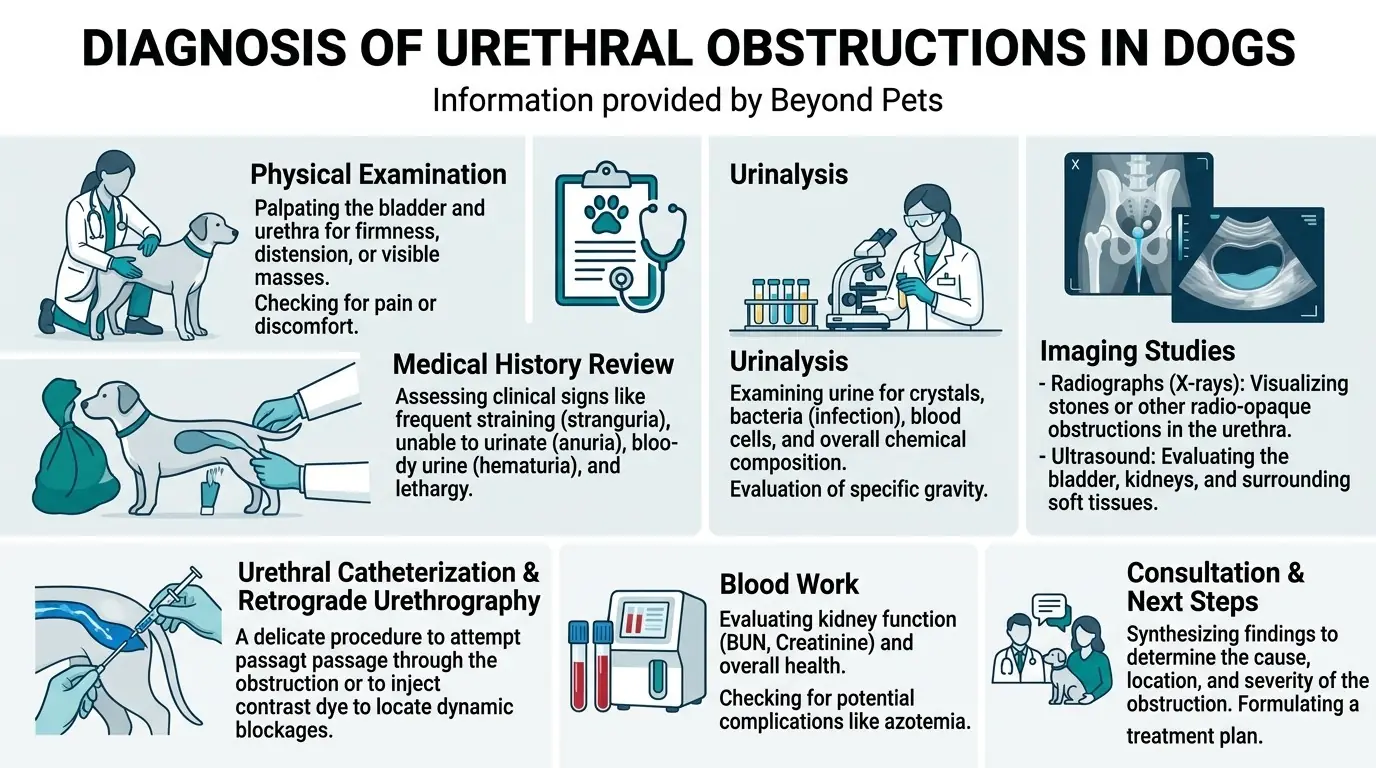
A prompt, aggressive, and highly accurate diagnostic approach is absolutely critical in managing urethral obstructions in dogs. The diagnostic process in an emergency setting usually involves a combination of a rapid but thorough physical examination and an array of immediate diagnostic tests to assess both the local blockage and the systemic fallout.
Physical Examination
The first and most crucial step in diagnosing a urethral obstruction is a comprehensive, hands-on physical examination by a veterinarian. Because an obstructed dog is highly unstable, the vet will immediately assess the patient’s cardiovascular status, checking heart rate, mucous membrane color, and pulse quality to rule out shock.
Abdominal palpation is typically conducted to assess the exact size, firmness, and location of the urinary bladder. In a normal dog, the bladder feels like a soft, partially deflated water balloon. In an obstructed dog, the bladder becomes massively distended, firm, and turgid—often described by veterinarians as feeling like a hard grapefruit or a taut water balloon ready to burst. A rigid, unyielding bladder is a hallmark indicator of a complete urinary obstruction. The vet will use extreme caution during palpation, as excessive pressure on an obstructed bladder can cause it to fatally rupture into the abdomen[13].
A rectal examination is an essential part of the physical evaluation, particularly in male dogs. By inserting a gloved finger into the rectum, the veterinarian can directly palpate the pelvic portion of the urethra as well as the prostate gland. They are feeling for an enlarged, painful, or asymmetrical prostate, or attempting to feel the grit and hardness of uroliths wedged in the urethral tract.
Finally, a careful genital examination is performed. The vet will extrude the penis to check the narrowest portion of the urethra at the tip (the external urethral orifice) for lodged stones, which can sometimes be seen or felt directly. They will also look for external signs of disease, such as severe mucosal inflammation, active bleeding, purulent discharge, or cancerous lesions that might contribute to the urinary obstruction.
Diagnostic Tests
Once the physical examination strongly suggests a blockage, the veterinary team will immediately deploy a series of diagnostic tests to confirm the presence of urethral obstruction, identify its specific underlying cause, and urgently assess the level of life-threatening systemic toxicity.
Blood tests, specifically a Complete Blood Count (CBC) and a Serum Biochemistry Profile, are the absolute most important early diagnostics. The biochemistry panel will reveal whether the obstruction has caused post-renal azotemia by measuring Blood Urea Nitrogen (BUN) and creatinine levels. More critically, the blood test will measure serum electrolytes, focusing on potassium. High potassium (hyperkalemia) is the primary cause of death in obstructed patients because it disrupts the electrical signaling of the heart muscles[14]. Recognizing these imbalances allows the vet to start life-saving intravenous therapy immediately.
An Electrocardiogram (ECG) is frequently performed if hyperkalemia is suspected or confirmed. High potassium levels alter the heart’s resting membrane potential, leading to characteristic ECG changes: the disappearance of P waves, widening of the QRS complexes, and tall, spiked “tented” T waves. If left untreated, this rapidly progresses to fatal ventricular fibrillation or cardiac standstill.
Urinalysis is a vital standard test for evaluating the health of the urinary tract. Once urine is safely obtained (often via cystocentesis or after a catheter is placed), the laboratory examines the sample for red blood cells, white blood cells indicating infection, and microscopic crystals. Identifying the specific shape of the crystals (e.g., coffin-lid shaped struvites or envelope-shaped calcium oxalates) helps determine the precise nature of the obstructing stones.
Radiographs (X-rays) are heavily relied upon to visualize the entire urinary tract, from the kidneys down to the tip of the penis. Most urinary stones, such as calcium oxalate and struvite, are radiopaque, meaning they show up clearly as bright white objects on an X-ray. Radiographs can pinpoint the exact number, size, and location of the stones blocking the urethra.
An ultrasound is a non-invasive, highly detailed imaging modality used to evaluate the internal architecture of the bladder, prostate, and kidneys. While X-rays are great for showing stones, ultrasound is superior for identifying radiolucent stones (like urate or cystine, which do not show up well on X-rays), measuring the thickness of the bladder wall, finding blood clots, or diagnosing underlying transitional cell carcinomas or prostatic tumors[15].
Lastly, in complex or recurrent cases, an advanced procedure known as cystoscopy might be performed by a veterinary specialist. This procedure involves the insertion of a rigid or flexible endoscope (a thin tube with a high-definition camera) directly into the urethra to visualize the mucosal lining of the urinary tract in real-time. This can help identify strictures, mucosal polyps, or micro-tumors that traditional X-rays and ultrasounds might miss.
Treatment of Urethral Obstructions in Dogs
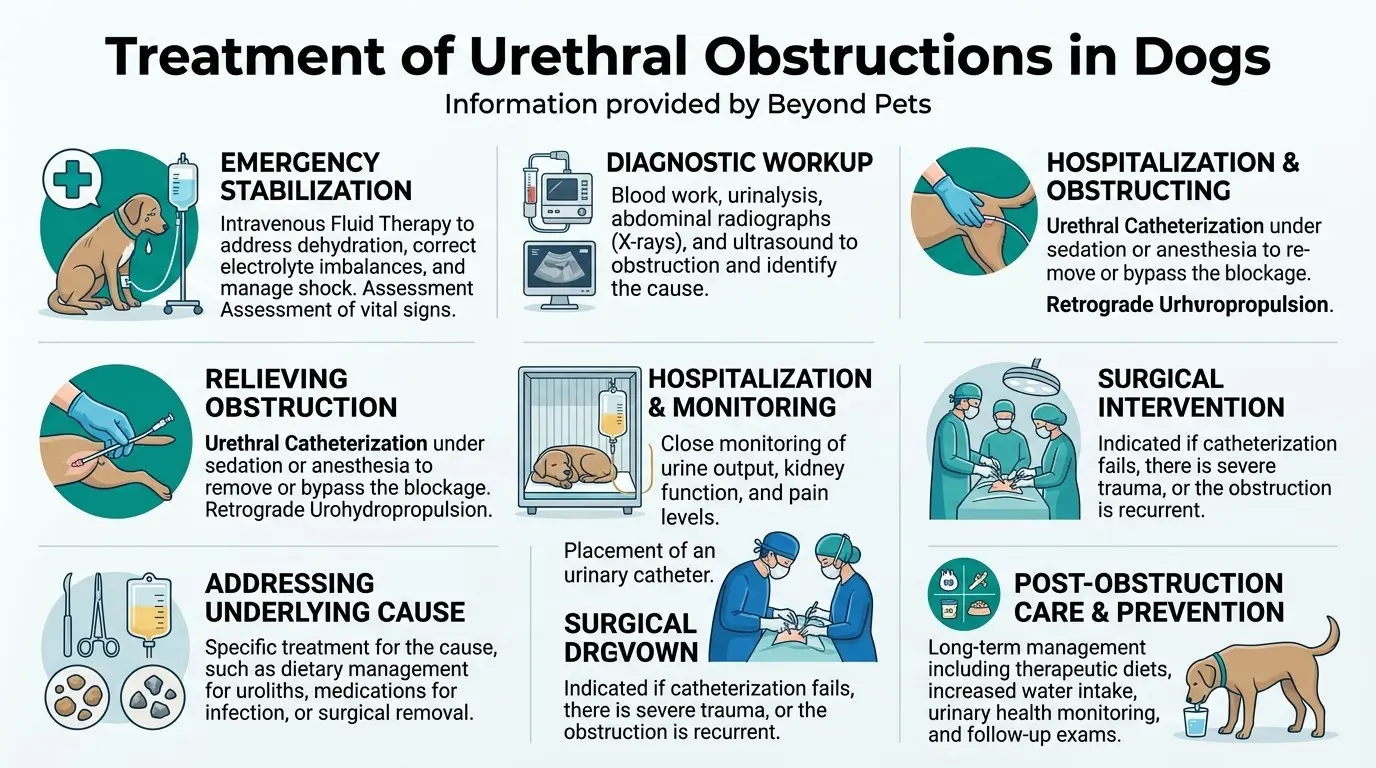
The treatment for urethral obstructions in dogs is an intensive, multi-step process tailored to the stability of the patient, the specific cause of the obstruction, and the dog’s overall systemic health. Because an obstructed dog is highly unstable, treatment always begins with aggressive medical stabilization before moving on to either definitive medical or surgical management to relieve the physical blockage.
Medical Management
Medical management forms the immediate, critical first line of defense for any dog presenting with a urethral obstruction. The very first goal is not to remove the stone, but to save the dog’s life from the toxic metabolic effects of the blockage.
Intravenous (IV) fluid therapy is immediately initiated. Aggressive fluid administration utilizing appropriate intravenous fluids or a balanced electrolyte solution helps dilute the deadly toxins in the bloodstream, restores vital perfusion to the compromised kidneys, and corrects life-threatening dehydration[16]. Once the obstruction is eventually cleared, these IV fluids will also help force the kidneys into high gear to aggressively flush out the remaining sediment and toxins.
If severe hyperkalemia (high potassium) is detected, emergency cardioprotective medications are administered. An intravenous cardioprotective medication is given slowly to immediately protect the heart muscle from dangerous arrhythmias. Following this, specific metabolism-altering medications paired with intravenous sugar solutions are administered. The metabolic medication forces the dangerous potassium out of the bloodstream and back into the body’s cells, while the sugar solution prevents the dog’s blood sugar from dropping to fatal levels.
Bladder decompression must be achieved if a urinary catheter cannot be immediately passed. Veterinarians may perform a therapeutic cystocentesis—inserting a long, sterile needle directly through the abdominal wall and into the bladder to draw out the trapped urine. While this procedure carries a small risk of bladder rupture, it is often necessary to rapidly relieve the agonizing pressure on the bladder wall and buy time for further treatment.
Pain management is an absolute necessity. A blocked bladder is intensely painful. Injectable prescription pain medication administered by your veterinarian is utilized to relieve suffering. Non-steroidal anti-inflammatory drugs (NSAIDs) are strictly avoided during this acute phase, as they can further damage the already compromised kidneys.
If a bacterial urinary tract infection is present, broad-spectrum antibiotics will be prescribed based on urine culture and sensitivity testing to combat the infection and prevent it from spreading to the kidneys (pyelonephritis).
In highly specific, non-emergency cases, certain types of stones, such as urate or struvite stones, can be managed with medical dissolution therapy. This involves feeding a strict prescription diet and utilizing specific medications to change the urine pH and dissolve the stones. However, this process can take weeks or months and is generally only an option if the stones are small and not causing a complete, life-threatening obstruction.
Surgical Management
For the vast majority of complete urethral obstructions caused by stones, tumors, or strictures, medical management alone is insufficient, and surgical management is urgently required to physically clear the pathway and restore normal urine flow.
The most common first-line procedure is retrograde urohydropropulsion. While technically a non-surgical intervention, it requires heavy sedation or general anesthesia. A sterile urinary catheter is carefully advanced into the tip of the urethra. A mixture of sterile saline and sterile lubricant is injected into the catheter under high pressure while a veterinarian simultaneously uses a finger in the rectum to compress the pelvic urethra. When the pressure builds up, the vet suddenly releases the rectal compression, and the high-pressure fluid forcefully flushes the lodged stones backward out of the narrow urethra and safely into the cavernous space of the bladder[17].
Once the stones have been successfully flushed back into the bladder via urohydropropulsion, a surgical procedure known as a cystotomy is performed. The surgeon makes an incision into the dog’s abdomen, isolates the bladder, and surgically opens it to meticulously extract every single stone and fragment. The entire lower urinary tract is then flushed repeatedly with sterile saline to ensure no microscopic debris is left behind before suturing the bladder closed.
In rare situations where a stone is deeply embedded in the urethral tissue and cannot be flushed backward into the bladder, a urethrotomy may be necessary. This involves the surgeon making a direct incision into the urethra over the site of the blockage to extract the stone. The incision is often left open to heal by second intention to prevent the formation of a stricture.
For male dogs suffering from persistent, recurring urethral obstructions that cannot be managed medically, a salvage procedure called a scrotal urethrostomy may be performed. The surgeon amputates the scrotum and surgically reroutes the urethra, stitching it directly to the skin to create a brand new, permanently wider opening for urine to exit the body[18]. By bypassing the narrow penile urethra entirely, small stones and crystals can be passed naturally without getting stuck.
Lastly, in cases where the obstruction is caused by a massive, inoperable tumor (like a transitional cell carcinoma) or a dense stricture, urethral stent placement may be utilized. Usually performed by board-certified veterinary specialists using fluoroscopy, this procedure involves deploying a self-expanding metallic mesh tube inside the urethra to physically hold the lumen open, allowing urine to flow freely and providing the dog with an extended, comfortable quality of life.
Prevention of Urethral Obstructions in Dogs
Surviving a urethral obstruction is a traumatic event for both the dog and the owner. Consequently, maintaining their overall health and wellness through meticulous preventative care is the absolute key to preventing a devastating recurrence. A comprehensive prevention plan requires focusing intensely on diet and nutrition, committing to regular veterinary screening, and strictly managing environmental factors.
Diet and Nutrition
Without question, diet and nutrition play the most significant role in preventing the recurrence of urolith-based urethral obstructions. Because stones form from minerals precipitating out of the urine, what a dog consumes directly dictates the chemical composition of their urine. Feeding a balanced, therapeutically formulated prescription diet is often the cornerstone of prevention. These veterinary diets are specifically engineered to maintain the urine at a specific pH level (either more acidic or more alkaline depending on the stone type being targeted) and to restrict the specific mineral precursors that form the stones[19].
Ensuring adequate water intake is equally, if not more, vital. The goal is to dilute the urine as much as possible, lowering the specific gravity so that minerals cannot physically clump together to form crystals. To achieve this, many veterinarians strongly advocate feeding only canned, high-moisture prescription food, adding warm water or low-sodium broth to meals, and placing multiple dog water fountains around the house to encourage frequent drinking.
Special diets are strictly mandated for breeds prone to specific metabolic defects. For instance, a low-purine, protein-restricted diet is mandatory to prevent urate stones in Dalmatians, while diets low in calcium and oxalates (and avoiding certain high-oxalate human foods like spinach or sweet potatoes) are critical to reduce calcium oxalate stone formation in English Bulldogs and Miniature Schnauzers.
As always, please ensure you consult your veterinarian before making any changes to your pet’s care, particularly when transitioning to a specialized therapeutic diet, to ensure all of your pet’s nutritional requirements are safely met.
Regular Veterinary Checkups
Regular veterinary checkups are crucial in the early detection and prevention of silent urinary issues. For dogs with a history of urinary stones, routine visits every three to six months are highly recommended. Standard urine tests (urinalyses) can help identify microscopic crystal formation, inappropriate pH levels, or hidden bacterial growth long before they culminate in a physical obstruction.
Veterinarians will also proactively monitor for early signs of urinary tract infections, bladder infections, and kidney failure, all of which alter the urine composition and increase the risk of stone formation or cast blockages. Routine abdominal ultrasounds may also be recommended to check the bladder for tiny, “sand-like” stones that can be managed medically before they grow large enough to block the urethra.
Environmental Factors
Environmental factors heavily influence a dog’s urinary health. Encouraging regular, frequent urination is vital. When a dog is forced to hold their urine for 10 to 12 hours a day while owners are at work, the urine stagnates in the bladder, becoming highly concentrated and giving minerals ample time to crystallize and form stones[20]. Providing frequent opportunities for your dog to empty their bladder—via doggie doors, dog walkers, or frequent outdoor breaks—flushes out microscopic crystals before they become a threat.
Maintaining a healthy weight is crucial, as severe canine obesity is a well-documented contributing factor to overall systemic inflammation and secondary urinary tract health issues. Overweight dogs are generally less active, drink less water, and urinate less frequently, creating a perfect storm for urolithiasis.
Breed-Specific Preventative Measures
For breeds with known genetic predispositions, specific, aggressive preventative measures are absolutely necessary. For instance, proactively monitoring for prostatic disease in male dogs through regular rectal exams and ultrasound screening can help prevent obstructions associated with benign prostatic hyperplasia. Neutering your male dog early in life eliminates the risk of BPH and significantly reduces the risk of prostate-induced obstructions.
Regularly checking for subtle signs of urinary incontinence or excessive grooming can help identify potential issues early on. In specific breeds like Dalmatians, daily administration of a targeted prescription medication may be prescribed to chemically alter how the body processes purines, thus preventing urate stones. For dogs prone to calcium oxalate, prescription urine-alkalinizing medications may be given to alkalinize the urine and inhibit stone formation.
Ultimately, the prevention of urethral obstructions in dogs demands a multi-faceted, lifelong approach. By integrating meticulous dietary control, regular veterinary diagnostics, an active lifestyle with plenty of hydration, and breed-specific medical therapies, you can substantially reduce the likelihood of your dog ever facing this life-threatening emergency again.
Frequently Asked Questions
How long can a dog survive with a complete urethral obstruction?
A complete urethral obstruction is a dire, time-sensitive medical emergency. Without immediate veterinary intervention, a dog can suffer irreversible kidney damage or die from fatal cardiac arrhythmias secondary to hyperkalemia (high blood potassium) within 48 to 72 hours. If your dog is straining to urinate and nothing is coming out, you must seek emergency veterinary care immediately; do not wait to see if it resolves overnight.
Why do male dogs get urethral blockages more often than female dogs?
Male dogs are at a substantially higher risk due to their unique urinary anatomy. The male urethra is significantly longer, narrower, and features distinct curves. Most importantly, the male urethra must pass through a small groove inside the os penis (the bone within the penis). This bony structure cannot expand or stretch, causing small urinary stones or mucus plugs to easily become permanently wedged, whereas a female’s shorter, wider urethra might allow the same small stones to pass safely.
Can a urethral obstruction be treated without surgery?
In many instances, the immediate physical blockage can be resolved non-surgically by an emergency veterinarian using a procedure called retrograde urohydropropulsion, which involves flushing the stones backward into the bladder using fluid pressure. However, once the stones are pushed back into the bladder, a surgical procedure (cystotomy) is almost always required to remove them permanently. Attempting to dissolve the stones with a specialized diet is rarely safe or feasible when the dog is actively obstructed and unable to urinate.
Protect Your Dog’s Urinary Health
Urethral obstructions are life-threatening emergencies that require immediate medical attention. If you notice your dog straining to urinate, producing blood-tinged urine, or showing signs of severe abdominal pain, do not wait. Schedule an appointment with a veterinarian or visit your nearest emergency veterinary clinic right away to ensure your pet gets the life-saving care they need.
References
- Merck Veterinary Manual. Urolithiasis in Small Animals. Merck & Co., Inc., 2023.
- VCA Animal Hospitals. Urethral Obstruction in Dogs. VCA Hospitals, 2022.
- American Veterinary Medical Association (AVMA). Urinary Tract Disease in Dogs. AVMA, 2023.
- Fulmer, A. K., et al. “Transitional Cell Carcinoma of the Canine Urinary Tract.” Journal of Veterinary Internal Medicine, 2017.
- American College of Veterinary Surgeons (ACVS). Urinary Obstruction in Small Animals. ACVS, 2023.
- VCA Animal Hospitals. Prostatic Disease in Dogs. VCA Hospitals, 2022.
- Merck Veterinary Manual. Urinary Tract Trauma in Small Animals. Merck & Co., Inc., 2023.
- ASPCA. Common Dog Health and Behavior Issues: Urinary Changes. ASPCA, 2023.
- Lulich, J. P., et al. “ACVIM Small Animal Consensus Recommendations on the Treatment and Prevention of Uroliths in Dogs and Cats.” Journal of Veterinary Internal Medicine, 2016.
- Merck Veterinary Manual. Renal Failure in Small Animals. Merck & Co., Inc., 2023.
- Bannasch, D., et al. “Mutations in the SLC2A9 Gene Cause Hyperuricosuria and Hyperuricemia in the Dog.” PLoS Genetics, 2008.
- Veterinary Information Network (VIN). Urolithiasis Predispositions by Breed. VIN, 2022.
- Olin, S. J., & Bartges, J. W. “Urinary Tract Emergencies.” Veterinary Clinics of North America: Small Animal Practice, 2018.
- Merck Veterinary Manual. Hyperkalemia in Animals. Merck & Co., Inc., 2023.
- D’Anjou, M. A., & Bédard, A. “Ultrasonographic Evaluation of the Urinary Tract in Small Animals.” Veterinary Clinics of North America, 2012.
- Merck Veterinary Manual. Fluid Therapy in Animals. Merck & Co., Inc., 2023.
- Adams, L. G., & Syme, H. M. “Canine Lower Urinary Tract Diseases.” Textbook of Veterinary Internal Medicine, 2010.
- American College of Veterinary Surgeons (ACVS). Scrotal and Perineal Urethrostomy. ACVS, 2023.
- American Veterinary Medical Association (AVMA). Pet Nutrition and Diet. AVMA, 2023.
- VCA Animal Hospitals. Struvite Bladder Stones in Dogs. VCA Hospitals, 2022.