




 March 3, 2023
 Phil Good, DVM
Understanding Intestinal Foreign Bodies in Dogs
This content was prepared with AI assistance and reviewed by a licensed professional for accuracy.
Introduction
A classic veterinary emergency often begins with a previously energetic dog suddenly exhibiting profound lethargy and distress. In many cases, these clinical signs point toward intestinal foreign bodies in dogs, a common yet potentially life-threatening condition. Dogs explore the world through their mouths, and this natural curiosity frequently leads to the ingestion of indigestible objects. When an object is too large to pass through the gastrointestinal (GI) tract, it becomes lodged, creating a partial or complete obstruction that requires immediate medical intervention.[1]
The term “foreign body” encompasses any non-food item that enters the digestive system. While some small, smooth objects may transit the length of the digestive tract and be expelled in the feces without incident, many objects become wedged in narrow anatomical bottlenecks. These choke points typically include the pyloric sphincter (the exit of the stomach), the proximal duodenum, and the ileocecal valve (where the small intestine joins the large intestine).[2] Once an object is lodged, it acts as a physical barrier, preventing the normal forward movement of food, water, and gastric secretions.
The pathophysiology of a gastrointestinal obstruction is complex and highly destructive if left untreated. When an intestinal foreign body blocks the lumen of the bowel, the tissue immediately proximal (before) the blockage begins to dilate. This dilation is driven by the accumulation of swallowed air, saliva, gastric juices, and ingesta. As the bowel stretches beyond its normal physiological limits, the pressure inside the intestinal lumen sharply increases. This mounting pressure compresses the delicate venous and lymphatic vessels within the intestinal wall, leading to severe venous congestion and tissue edema.[3]
If the obstruction is not relieved, the arterial blood supply is eventually compromised, depriving the intestinal tissue of oxygen. This localized ischemia leads to necrosis (tissue death), which compromises the mucosal barrier. A compromised mucosal barrier allows naturally occurring gut bacteria and potent digestive enzymes to leak into the sterile abdominal cavity, resulting in a catastrophic condition known as septic peritonitis.[4] Therefore, recognizing the early warning signs of an obstruction and seeking prompt veterinary care is critical to saving the animal’s life and preventing irreversible tissue damage.
Causes of Gastrointestinal Foreign Bodies in Dogs
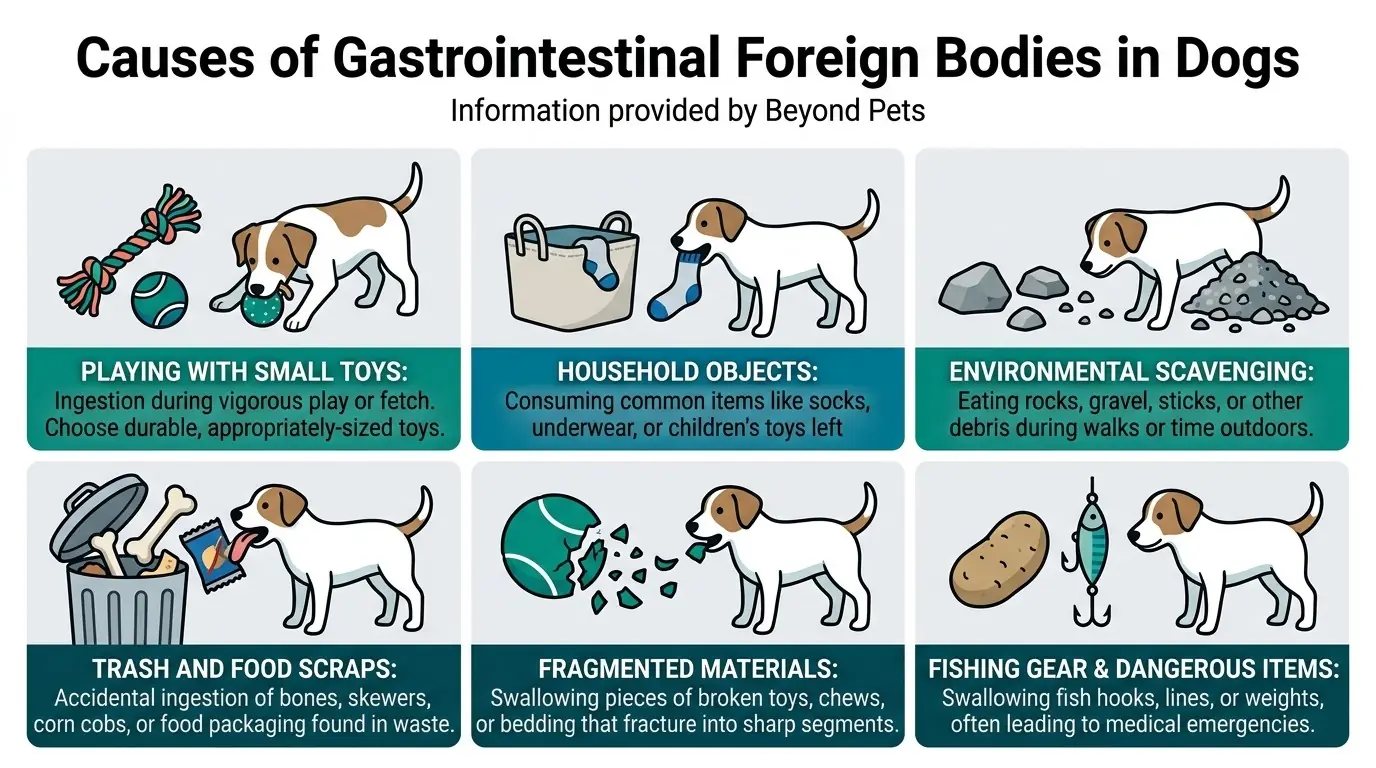
Understanding why dogs ingest non-food items is the first step in mitigating the risk of foreign body obstructions. The causes of gastrointestinal foreign bodies in dogs are generally divided into behavioral triggers, environmental factors, and underlying medical conditions. While any breed can suffer from this condition, some breeds—such as Labrador Retrievers, Golden Retrievers, Bull Terriers, and Pit Bulls—are statistically overrepresented in veterinary emergency rooms due to their vigorous chewing habits and indiscriminate appetites.[5]
Behaviorally, puppies are at an exceptionally high risk. Similar to human infants, puppies use their mouths to investigate their surroundings. During the teething phase, which typically occurs between three and six months of age, puppies experience significant gingival discomfort. To soothe their inflamed gums, they will chew on almost anything they can find, including rocks, sticks, baseboards, and small household trinkets. If a puppy accidentally swallows a fragmented piece of a chew toy or a small stone, it can easily lead to a physical blockage.[6]
Adult dogs are not immune to these risks. Boredom, separation anxiety, and a lack of adequate physical or mental stimulation frequently manifest as destructive chewing behaviors. A dog left alone for extended periods may tear apart a couch cushion, a stuffed animal, or a pair of socks. Unfortunately, the ingestion of fabric is incredibly dangerous. Cloth, string, carpet fibers, and yarn can act as “linear foreign bodies.” When a linear foreign body is ingested, one end often becomes anchored—usually around the base of the tongue or at the pylorus of the stomach. As the rest of the intestines attempt to push the trailing string forward via normal peristalsis, the bowel plicates, bunching up like an accordion along the string. The taut string then acts like a saw, lacerating the mesenteric border of the intestine and causing multiple, devastating perforations.[7]
Another major contributing factor is the ingestion of inappropriate items related to human food. Trash cans are treasure troves of highly appealing but incredibly dangerous refuse. Corn cobs, for instance, are one of the most common causes of canine intestinal obstructions. They are highly porous, allowing them to absorb gastric fluids and swell significantly, creating a perfect, immovable mechanical plug within the jejunum. Peach pits, mango seeds, and meat bones present similar hazards. Additionally, some objects present toxicological risks alongside the physical blockage. Pennies minted after 1982 contain high amounts of zinc; if swallowed, the acidic environment of the stomach breaks down the copper coating, leading to severe zinc toxicosis and secondary hemolytic anemia.[8]
Medical pica is another critical cause to consider. Pica is the compulsive ingestion of non-nutritive substances. While often behavioral, pica can be secondary to underlying medical conditions that cause chronic gastrointestinal distress or nutritional deficiencies. Conditions such as exocrine pancreatic insufficiency (EPI), inflammatory bowel disease (IBD), intestinal parasitism, or chronic iron-deficiency anemia can drive a dog to consume dirt, rocks, or metal objects in a misguided attempt to self-soothe or acquire missing minerals.[9]
Symptoms of Intestinal Foreign Bodies in Dogs
The clinical signs associated with gastrointestinal obstructions are largely dictated by the exact location of the foreign object, the degree of the blockage (partial versus complete), and the duration of time the object has been lodged. Because the signs can mimic a wide variety of other illnesses, vigilant observation is essential.
The most ubiquitous and alarming symptom of a gastrointestinal obstruction is vomiting. When an object completely blocks the stomach or small intestine, food and fluids have nowhere to go but back up. The presentation of clinical signs in dogs may include vomiting that is acute, forceful, and persistent. If the obstruction is located high in the GI tract (such as within the pylorus or the proximal duodenum), the vomiting is usually immediate and frequent after eating or drinking. Because these dogs are losing massive amounts of gastric hydrochloric acid, they can rapidly develop severe metabolic abnormalities, specifically hypochloremic metabolic alkalosis.[10]
Conversely, if the obstruction is located lower down in the intestinal tract (within the distal jejunum, ileum, or colon), the symptoms may be more insidious. These dogs may present with intermittent anorexia, progressive weight loss, and occasional vomiting that may appear dark or have a fecal odor due to the stagnation of intestinal contents. Dogs with a partial obstruction—where some liquid or gas can still squeeze past the foreign object—might exhibit a fluctuating appetite and chronic, low-grade diarrhea. It is a common misconception that a dog with a blockage will stop defecating entirely. In reality, a dog may continue to produce small amounts of liquid stool or mucous as the irritated bowel lining secretes fluid in an attempt to lubricate and expel the object.[11]
Pain and abdominal distension are prominent features of an acute obstruction. As the intestine dilates proximal to the blockage and gas builds up, the bowel wall becomes stretched and painfully inflamed. Dogs may exhibit a “praying posture,” characterized by resting their front elbows on the ground while keeping their hindquarters elevated. This posture helps relieve pressure on the inflamed abdominal organs. When palpated by an owner, the dog’s abdomen may feel tense, rigid, or splinted, and the dog may vocalize or attempt to bite due to extreme discomfort.[12]
If the condition progresses to the point of intestinal ischemia and perforation, the clinical picture darkens significantly. The leakage of bacteria into the peritoneal cavity causes systemic inflammatory response syndrome (SIRS) and septic shock. Symptoms of this life-threatening complication include extreme lethargy, a soaring fever or subnormal body temperature, tachycardia (an elevated heart rate), pale or intensely red (injected) mucous membranes, and bounding pulses. The dog will quickly fall into hypovolemic shock due to the massive shift of fluids out of the vascular space and into the abdomen and intestinal lumen (third-spacing).[13] At this stage, minutes matter, and emergency surgical intervention is the only chance for survival.
Diagnosis of Gastrointestinal Foreign Bodies in Dogs
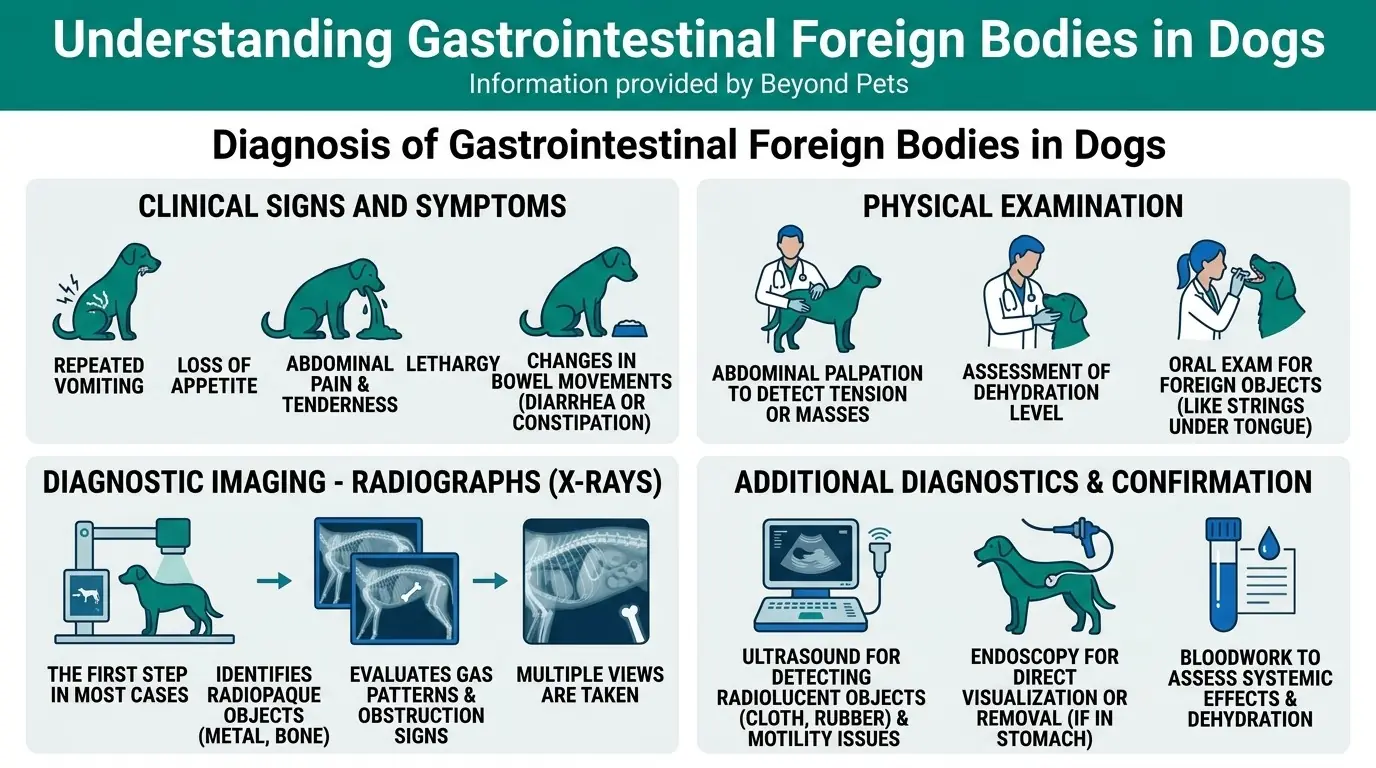
Securing a definitive diagnosis of a gastrointestinal foreign body requires a multi-modal approach. Because the clinical signs are non-specific and overlap with diseases like pancreatitis, gastroenteritis, and systemic infections, veterinarians must piece together the diagnostic puzzle using a combination of direct assessment, detailed history, and advanced imaging modalities.
Clinical Assessment
The diagnostic journey begins with an exhaustive physical examination. A skilled veterinarian will perform careful abdominal palpation, gently feeling the structures within the peritoneal cavity. In some cases, a firm, tubular, or irregular mass can be directly felt within the mid-abdomen, indicating the physical presence of the foreign body or the severely thickened, bunched-up loops of bowel associated with a linear foreign body. The veterinarian will also thoroughly examine the dog’s oral cavity, lifting the tongue to check for a string looped around the base, which is a hallmark sign of a linear obstruction. Vital signs, hydration status (assessed via skin turgor and mucous membrane moisture), and pain responses are meticulously recorded to gauge the animal’s stability.[14]
Case History Review
A comprehensive medical history provides vital clues. The veterinarian will ask targeted questions about the dog’s habits, diet, and environment. Has the dog previously destroyed toys? Are there missing socks, underwear, or child’s toys in the home? Has the dog been seen raiding the trash or scavenging in the yard? The exact timeline of the symptoms is also crucial. Knowing whether the vomiting started acutely two hours ago or has been intermittent for two weeks helps the clinician determine whether they are dealing with an acute complete blockage or a chronic partial obstruction. Complete transparency from the pet owner is essential during this phase.
Radiography (X-rays)
Orthogonal abdominal radiographs (X-rays taken from multiple angles, usually two lateral views and one ventrodorsal view) are the cornerstone of diagnosing a bowel obstruction. Radiopaque objects—materials that absorb X-rays and appear bright white on the film, such as metal, bone, and certain dense rocks—are easily identifiable. However, many common foreign bodies, including cloth, plastic, rubber, and wood, are radiolucent, meaning they blend in with the surrounding soft tissues and fluid. In these cases, the veterinarian must look for secondary, indirect signs of obstruction. These signs include a “two-population” bowel pattern, where some loops of the small intestine are severely dilated with gas and fluid, while the loops distal to the obstruction are completely empty and collapsed. The classical diagnostic metric is that if the diameter of the small intestine exceeds 1.6 times the height of the central body of the fifth lumbar vertebra (L5), a mechanical obstruction is highly likely.[15]
Ultrasound
When radiographs are equivocal, abdominal ultrasonography provides an exceptional, highly detailed view of the gastrointestinal tract. Ultrasound allows the clinician to look inside the fluid-filled loops of bowel that may obscure findings on an X-ray. A foreign body typically presents as a highly echogenic (bright) structure that casts a distinct acoustic shadow, blocking the sound waves from reaching deeper tissues. Furthermore, ultrasound is invaluable for assessing the viability of the intestinal wall. The sonographer can evaluate the distinct layers of the bowel wall, measure its thickness, and assess for localized loss of peristalsis (motility). Importantly, an ultrasound can detect tiny amounts of free abdominal fluid or free gas, which strongly suggests that the intestine has already perforated.[16]
Contrast Studies
Although less commonly used today due to the widespread availability of ultrasound, positive-contrast radiography can sometimes provide clarity. This involves administering a liquid contrast agent orally and taking serial X-rays over several hours to track the dye’s transit. If the contrast material pools in the stomach and fails to move into the intestines, or if it abruptly stops and outlines the rough edges of a filling defect, a diagnosis is confirmed. Barium sulfate is the traditional contrast medium, but it comes with significant risks. If the veterinarian suspects that the bowel may be perforated, barium must never be used, as leakage into the abdomen causes severe, often fatal, granulomatous peritonitis. In suspected perforation cases, an organic, water-soluble iodinated contrast medium like iohexol is utilized instead.
Gastrointestinal Endoscopy
In certain scenarios, the clinician may utilize a flexible endoscope to directly examine the gastrointestinal tract. Endoscopy involves passing a long, fiber-optic camera tube down the esophagus and into the stomach and proximal duodenum while the patient is under general anesthesia. This allows for real-time visual confirmation of gastric and high-intestinal foreign bodies. The mucosa can be evaluated for ulcerations or severe inflammation. While endoscopy is a phenomenal diagnostic tool, it is limited by the length of the scope; it cannot evaluate the mid-to-distal jejunum or the ileum, meaning lower obstructions will be missed by this modality.
Exploratory Surgery
When diagnostic imaging strongly suggests an obstruction but cannot definitively identify the object or its exact location, an exploratory laparotomy (abdominal surgery) serves as both the ultimate diagnostic test and the definitive treatment. In cases where the patient’s clinical condition is rapidly deteriorating, and signs of septic shock are mounting, spending hours on advanced imaging is contraindicated. Proceeding directly to surgery is the safest and most prudent approach, allowing the surgeon to physically inspect the entire length of the gastrointestinal tract and address the pathology immediately.
Treatment of Gastrointestinal Obstruction in Dogs
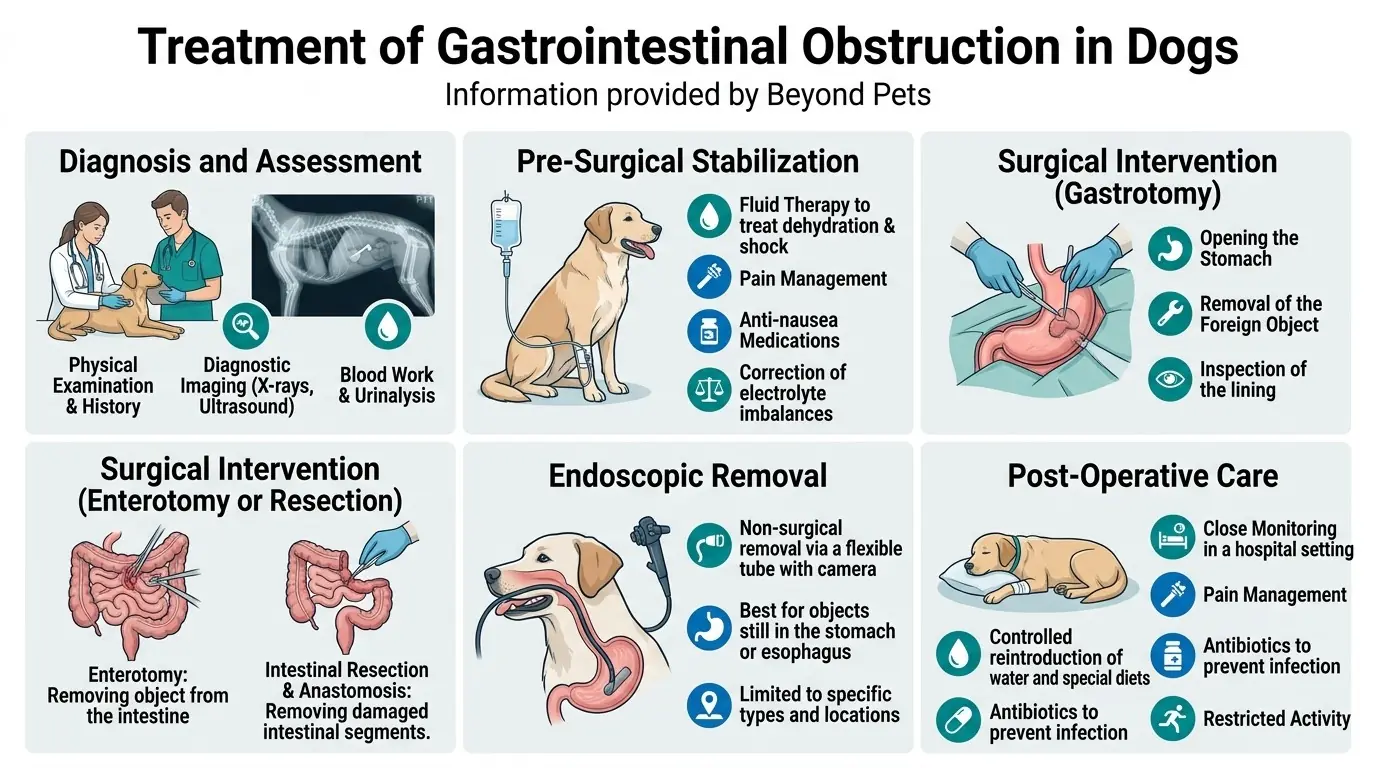
The treatment approach for a foreign body obstruction is entirely dependent on the stability of the patient, the location of the object, its size and material composition, and the degree of blockage it has created. Time is of the essence, as delays exponentially increase the risk of intestinal necrosis and systemic sepsis. The two broad categories of treatment are non-surgical management and surgical intervention.
Non-Surgical Intervention
Not every ingested object requires surgery. If the object is recently ingested (within the last few hours), located strictly within the stomach, and is smooth, blunt, and non-caustic (e.g., a small rubber ball or a piece of plastic), the veterinarian may attempt to induce emesis (vomiting). Medications such as apomorphine or ropinirole ophthalmic drops are administered to safely trigger the brain’s emetic center, allowing the dog to expel the object before it can enter the intestines. However, emesis is strictly contraindicated if the object is sharp (like a needle or shattered bone), caustic (like a battery), or if it has already passed into the duodenum.[1]
If an object is lodged in the stomach or upper duodenum and cannot be vomited, endoscopic retrieval is often the treatment of choice. Using specialized grasping forceps, snares, or retrieval baskets passed through the working channel of the endoscope, the veterinarian can grab the object and pull it out through the mouth. This non-invasive approach spares the dog a major abdominal incision and significantly reduces recovery time. The limitation of endoscopy is that the object must be small enough to safely pass back through the lower esophageal sphincter without causing trauma.
In cases where a small, blunt object is confirmed to be moving freely through the colon and the dog is clinically stable, medical management may be employed. This involves hospitalizing the dog, providing aggressive intravenous fluid therapy to combat dehydration and maintain gut perfusion, administering anti-nausea medications, and sometimes feeding a high-fiber “bulking” diet (like whole wheat bread or canned pumpkin) to help encase the object and push it out via normal defecation. Frequent monitoring and follow-up X-rays are necessary to ensure the object is actively progressing.
Surgical Intervention
For the vast majority of true intestinal obstructions, exploratory surgery (laparotomy) is the only viable, life-saving option. Under general anesthesia, a ventral midline incision is made to access the abdominal cavity. The surgeon methodically “runs the bowel,” inspecting the entire GI tract from the stomach down to the descending colon to locate the obstruction and ensure no secondary objects are present.
If the foreign body is located in the stomach, a gastrotomy is performed. An incision is made into the avascular portion of the stomach wall, the object is extracted, and the stomach is sutured closed. Gastrotomies generally heal very quickly with a low rate of complications due to the stomach’s robust blood supply.
When the object is firmly lodged in the small intestine, the surgeon must evaluate the viability of the surrounding tissue. If the intestinal wall remains healthy and pink, an enterotomy is performed. The surgeon carefully makes a small incision into healthy tissue immediately aborad (distal) to the obstruction. Extracting the object through healthy, viable tissue ensures that the subsequent surgical closure will heal properly and not break down. The incision is then meticulously closed with specialized absorbable sutures.
Unfortunately, if the object has been lodged for an extended period, the intense pressure may have destroyed the arterial blood supply, rendering a segment of the intestine necrotic (dead), black, or severely compromised. In these severe cases, an enterotomy is insufficient. The surgeon must perform an intestinal resection and anastomosis (enterectomy). This complex procedure involves surgically removing the entire dead section of the bowel along with the foreign body, and then precisely suturing the two remaining healthy ends of the intestine back together. This procedure carries a much higher risk of postoperative complications, specifically dehiscence (failure of the suture line), which can leak intestinal contents and cause fatal peritonitis typically three to five days post-surgery.[4]
Postoperative care is intense. Patients require heavy intravenous analgesia, broad-spectrum antibiotics, and continued fluid support to restore electrolyte imbalances. Early enteral nutrition is highly encouraged; offering small, easily digestible meals (trickle feeding) shortly after surgery helps nourish the intestinal cells (enterocytes) directly, speeding up the healing of the surgical site. Please ensure that you always consult your veterinarian before making any changes to your pet’s care, diet, or medication routine, especially during the critical postoperative recovery window.
Prevention of Intestinal Foreign Bodies in Dogs
Preventing the ingestion of foreign objects is infinitely preferable to subjecting a dog to the risks and costs of emergency abdominal surgery. Proactive environmental management, behavioral modification, and diligent supervision are the cornerstones of keeping your canine companion safe from this life-threatening condition.
The most immediate step is rigorous “dog-proofing” of your home and yard. Just as one would child-proof a house for a toddler, owners must secure items that pose a chewing risk. Laundry hampers should have secure lids to prevent access to socks and underwear. Small children’s toys, which are frequently swallowed by medium-to-large breed dogs, must be kept off the floor. Trash cans, both indoors and outdoors, should feature locking lids or be stored inside heavy cabinets. Yard maintenance is also vital; remove fallen fruit, decorative rocks, and sticks that your dog tends to chew.
Providing the correct type of enrichment is crucial. Dogs chew out of instinct, boredom, and anxiety. To satisfy this need safely, provide appropriate, size-specific chew toys. Avoid toys that are small enough to be swallowed whole or toys made of brittle plastics that can shatter. Stuffed plush toys with squeakers inside are notorious culprits; many dogs will systematically dissect the toy to swallow the plastic squeaker. Monitor the condition of all toys daily and discard them as soon as they begin to tear or fray. Most importantly, remember that cooked bones can fracture and cause blockages or injuries throughout the digestive tract; they should never be offered to a dog. Even commercially available rawhides can be problematic if your dog tends to swallow large, unchewed chunks.
Training plays a vital role in prevention. Teaching your dog an ironclad “leave it” and “drop it” command can quite literally save their life if you catch them picking up a dangerous item on a walk. For dogs with an incorrigible scavenging habit or those suffering from intense behavioral pica, wearing a properly fitted basket muzzle during outdoor excursions allows them to pant, sniff, and drink while completely eliminating their ability to swallow foreign objects.
Finally, address any underlying medical conditions. If your adult dog suddenly develops an obsession with eating dirt, licking concrete, or consuming non-food items, do not write it off as a simple behavioral quirk. Have your veterinarian perform a comprehensive physical exam and blood panel to rule out gastrointestinal diseases, pancreatic insufficiency, or metabolic imbalances that may be driving the compulsion. Maintaining a high-quality, balanced diet ensures your dog isn’t seeking out alternative, dangerous sources of nutrients.
Frequently Asked Questions
Can a dog live with a foreign object in the stomach?
While a dog might temporarily survive with a smooth, inert object sitting quietly in the stomach, it is never a safe, long-term situation. Small, heavy objects like coins might sit in the gastric pool without immediately blocking the exit, but they continuously pose the risk of sudden obstruction if they shift into the pylorus. Furthermore, chronic gastric foreign bodies can cause severe, long-term irritation, leading to deep gastric ulcers, chronic vomiting, weight loss, and eventual perforation. Always have suspected ingestions evaluated by a veterinarian immediately.
How much does dog intestinal blockage surgery cost?
The cost of an exploratory laparotomy to resolve an intestinal blockage varies widely based on geographic location, the type of clinic (general practice versus a 24-hour emergency/specialty center), and the surgical complexity. A straightforward gastrotomy or enterotomy with a short hospital stay might range from $1,500 to $3,500. However, if the intestine is necrotic and requires an extensive resection and anastomosis, or if the dog has developed septic peritonitis requiring days of intensive care unit (ICU) support, blood transfusions, and specialized monitoring, costs can easily exceed $5,000 to $8,000. Pet insurance can be immensely helpful in mitigating these unexpected emergency costs.
How long does it take for a dog to show clinical signs of intestinal blockage?
The timeline for symptoms varies based on the location and nature of the obstruction. If a dog swallows an object that immediately blocks the exit of the stomach or the high small intestine, violent vomiting can begin within 2 to 6 hours of ingestion. Conversely, if an object partially blocks the lower intestine, or if a linear foreign body is slowly sawing through the tissue, clinical signs might develop gradually over several days to even a couple of weeks. These delayed symptoms often start as mild lethargy or a slightly decreased appetite before escalating into severe vomiting, abdominal pain, and collapse.
References
- Merck Veterinary Manual. Gastrointestinal Obstruction in Small Animals. Merck & Co., Inc., 2023.
- American College of Veterinary Surgeons (ACVS). Gastrointestinal Foreign Bodies. ACVS, 2022.
- Hayes G. Gastrointestinal foreign bodies in dogs and cats: a retrospective study of 208 cases. J Small Anim Pract. 2009.
- American Veterinary Medical Association (AVMA). Emergency Care for Pets. AVMA, 2023.
- VCA Animal Hospitals. Ingestion of Foreign Bodies in Dogs. VCA, 2021.
- ASPCA. Destructive Chewing in Dogs. ASPCA, 2022.
- Hobday MM, et al. Linear versus discrete gastrointestinal foreign bodies in 114 dogs. J Am Anim Hosp Assoc. 2014.
- Merck Veterinary Manual. Zinc Toxicosis in Animals. Merck & Co., Inc., 2023.
- Cornell University College of Veterinary Medicine. Pica in Dogs. Cornell, 2023.
- Boag AK, et al. Acid-base and electrolyte abnormalities in dogs with gastrointestinal foreign bodies. J Vet Intern Med. 2005.
- Veterinary Information Network (VIN). Gastrointestinal Foreign Bodies. VIN, 2020.
- American Animal Hospital Association (AAHA). Recognizing Pain in Dogs. AAHA, 2022.
- Cortellini S, et al. Systemic inflammatory response syndrome in veterinary patients. Vet Clin North Am Small Anim Pract. 2018.
- American Veterinary Medical Association (AVMA). The Importance of Physical Exams. AVMA, 2023.
- Graham JP, et al. Radiographic evaluation of the small intestine to diagnose obstruction in dogs. Vet Radiol Ultrasound. 2004.
- American College of Veterinary Radiology (ACVR). Veterinary Ultrasound. ACVR, 2022.