




 March 4, 2023
 Phil Good, DVM
What is a Gastrointestinal Parasite in Dogs?
This content was prepared with AI assistance and reviewed by a licensed professional for accuracy.
Understanding what a Gastrointestinal Parasite is, and how it can silently undermine the health of a beloved canine companion, is one of the most critical aspects of responsible pet ownership. An intestinal parasite is a highly adapted organism that takes up residence within the digestive tract of a host animal—in this case, a dog—deriving its essential nutrients at the direct expense of that host. Ranging from microscopic, single-celled protozoa to complex, multicellular helminths (worms) that can grow to several inches in length, these insidious invaders disrupt normal digestion, damage delicate intestinal mucosa, and strip the host of vital calories, vitamins, and minerals. If you have ever wondered why a voraciously eating puppy fails to gain weight, or why an adult dog suffers from chronic, unexplained digestive upset, the presence of intestinal worms or protozoan infections is often the underlying culprit. Navigating the world of canine internal parasites requires a comprehensive understanding of their distinct life cycles, the pathways through which they are transmitted, the overt and subtle clinical signs they provoke, and the modern veterinary strategies utilized to diagnose, treat, and prevent them.
Introduction
The domestic dog, by its very nature, explores the world through its mouth and nose. Sniffing the ground, tasting foreign objects, grooming their fur, and interacting closely with other animals are fundamental canine behaviors. Unfortunately, these exact behaviors perfectly position dogs to encounter and ingest various forms of gastrointestinal parasites. A gastrointestinal parasite is not a single type of organism; rather, the term encompasses a broad and diverse spectrum of biological pathogens that have evolved over millennia to exploit the mammalian digestive system. Some of these parasites attach firmly to the mucosal lining of the intestines to feed on the host’s blood, while others swim freely within the nutrient-rich fluid of the gut lumen, absorbing the dog’s digested food before the dog itself can utilize it. The clinical consequences of these parasitic infections can range from completely asymptomatic states in robust, healthy adult dogs, to severe, life-threatening crises in young puppies, geriatric dogs, or immunocompromised individuals.[1]
The pathophysiology of gastrointestinal parasite infections is complex and multifaceted. When a dog becomes a host, the parasites can induce mechanical damage, trigger severe inflammatory immune responses, and create secondary bacterial infections due to the compromised integrity of the gut wall. For example, the physical presence of a massive worm burden can lead to a complete mechanical obstruction of the small intestine, a surgical emergency that can rapidly become fatal if not addressed. Furthermore, the constant irritation of the intestinal lining often results in a condition known as protein-losing enteropathy, where the dog’s vital blood proteins leak into the gastrointestinal tract and are excreted in the feces, leading to severe fluid imbalances and muscle wasting.[2] The insidious nature of these infections means that a dog might be harboring a significant parasite population for months before overt clinical signs become undeniable to the owner.
Beyond the direct threat to canine health, the discussion of gastrointestinal parasites in dogs is inextricably linked to public health. Many of the most common intestinal worms and protozoa that infect dogs are zoonotic, meaning they possess the biological capability to cross species barriers and infect human beings. Children, the elderly, and individuals with suppressed immune systems are at the greatest risk of contracting these zoonotic infections. Humans typically become accidental hosts through the inadvertent ingestion of microscopic parasite eggs or cysts present in contaminated soil, unwashed vegetables, or directly from the dog’s fur. Once inside a human host, the larvae of certain canine parasites can undertake erratic and destructive migrations through human tissues, organs, and even the eyes, causing conditions known as visceral and ocular larva migrans.[3] Therefore, preventing and treating gastrointestinal parasites in dogs is not merely a matter of veterinary care; it is an essential component of protecting the entire human household.
Types of Intestinal Parasites in Dogs
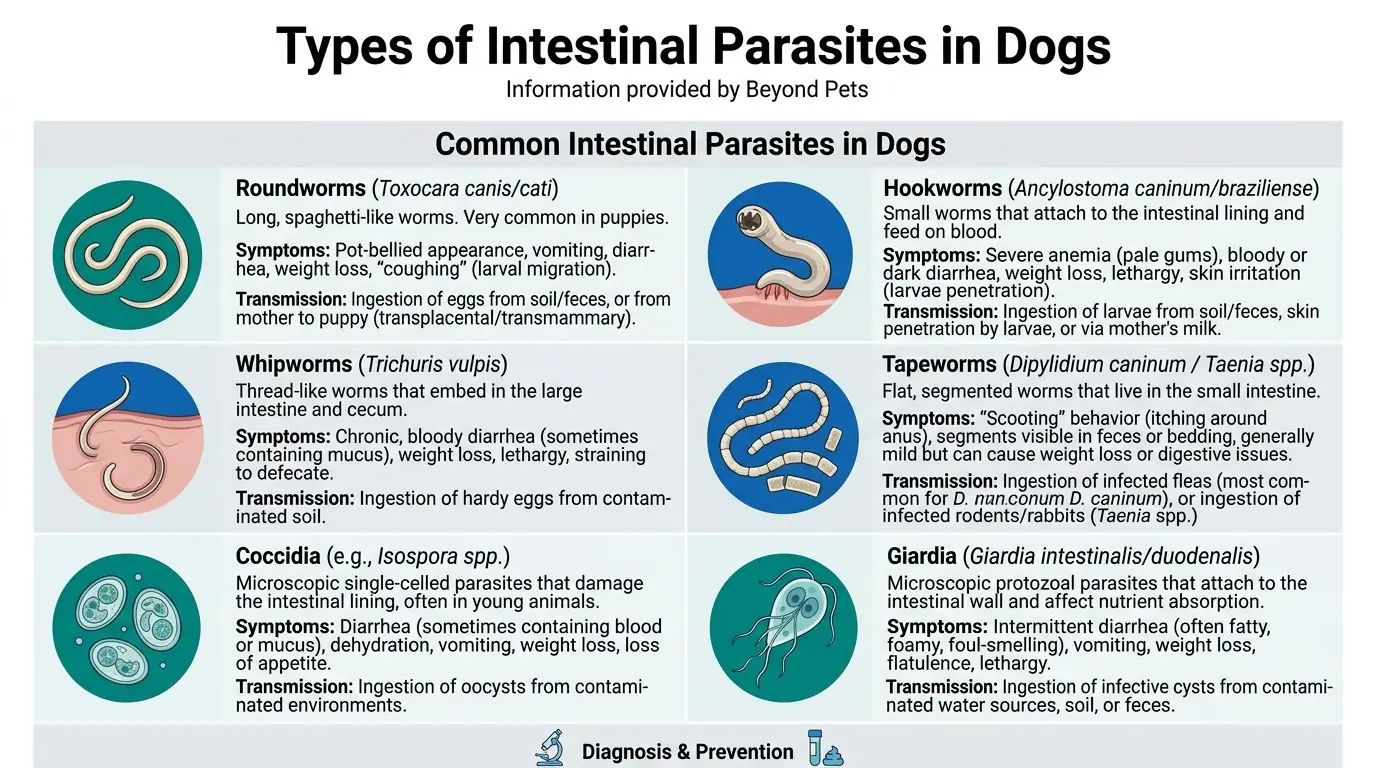
The diverse ecosystem of canine gastrointestinal parasites is broadly categorized into two main taxonomic groups: helminths (which are parasitic worms) and protozoa (which are microscopic, single-celled organisms). Helminths are further subdivided into nematodes (roundworms, hookworms, and whipworms) and cestodes (tapeworms). Each specific type of parasite possesses a unique and often highly complex life cycle that dictates how it reproduces, how it spreads from host to host, and how it survives in the external environment. Understanding the distinct biological characteristics of these different parasites is the foundation of effective veterinary diagnosis and targeted anthelmintic therapy.[4] While some parasites complete their entire life cycle within a single host, others require one or more intermediate hosts—such as fleas, rodents, or even earthworms—to mature into their infective stages. The following sections provide a detailed clinical examination of the most prevalent and clinically significant intestinal parasites affecting domestic dogs.
Roundworms
Roundworms, scientifically classified as ascarids, are arguably the most ubiquitous and well-known of all canine intestinal worms. The two primary species that infect dogs are Toxocara canis and Toxascaris leonina, with T. canis being the most common and clinically significant due to its complex life cycle and profound zoonotic potential. Adult roundworms are large, robust, cylindrical nematodes that closely resemble cooked spaghetti. They can grow up to seven inches in length and reside freely within the lumen of the small intestine, where they actively swim against the peristaltic currents, absorbing the dog’s digested nutrients directly through their cuticle. A single adult female Toxocara canis is capable of producing an astonishing 85,000 to 100,000 microscopic eggs per day, which are passed in the dog’s feces and heavily contaminate the surrounding environment.[5] These eggs are incredibly hardy, possessing a thick, protective outer shell that allows them to survive in harsh weather conditions and resist most standard household disinfectants for years.
The life cycle of Toxocara canis is remarkable for its adaptability and utilizes several different routes of transmission. When a dog ingests embryonated (infective) eggs from contaminated soil, the eggs hatch in the dog’s stomach. The emerging larvae then penetrate the intestinal wall and embark on a systemic migration. In young puppies (typically under six months of age), these larvae migrate through the liver and into the bloodstream, which carries them to the lungs. There, they break through the alveolar spaces, are coughed up the trachea, and are subsequently swallowed back down into the gastrointestinal tract, where they finally mature into egg-producing adults. This is known as tracheal migration. However, in older dogs with more developed immune systems, the larvae undertake somatic migration. Instead of returning to the gut, they travel to various tissues—such as skeletal muscle, liver, or kidneys—and encyst, entering a state of dormant, suspended animation.[6]
The most alarming aspect of Toxocara canis biology involves pregnant female dogs. During the final trimester of pregnancy, the hormonal shifts within the mother’s body signal the dormant, encysted larvae in her muscle tissues to reactivate. These reactivated larvae migrate across the placenta to directly infect the fetal puppies developing in utero. Consequently, a vast majority of puppies are born already harboring a roundworm infection. Furthermore, larvae can also migrate into the mother’s mammary glands, leading to transmammary transmission when the newborn pups begin to nurse. This highly efficient evolutionary strategy ensures the continuation of the parasite’s life cycle across generations. In the puppy, heavy roundworm burdens lead to classic clinical signs: a distinctive pot-bellied appearance, dull and unkempt fur, failure to thrive, chronic vomiting, and persistent diarrhea. In severe cases, the sheer volume of worms can cause fatal intestinal impaction or intussusception (a telescoping of the bowel).[7] From a public health perspective, Toxocara canis is a primary agent of human visceral and ocular larva migrans, highlighting the critical necessity of aggressive, early deworming protocols for all puppies.
Hookworms
Hookworms represent one of the most dangerous and rapidly debilitating gastrointestinal parasites that can afflict a dog, particularly young puppies. The most prevalent species in canine medicine are Ancylostoma caninum (the Southern dog hookworm), Ancylostoma braziliense, and Uncinaria stenocephala (the Northern dog hookworm). Unlike roundworms, which swim freely and absorb surrounding nutrients, hookworms are aggressive, blood-feeding parasites. They are relatively small nematodes, measuring only about half an inch in length, but they possess a disproportionately large and highly specialized buccal cavity (mouth) armed with sharp, cutting teeth or chitinous cutting plates. Using this formidable oral apparatus, hookworms latch tenaciously onto the delicate mucosal lining of the dog’s small intestine. Once attached, they secrete potent anticoagulant enzymes to prevent the host’s blood from clotting, allowing them to constantly siphon whole blood, tissue fluids, and mucosal plugs.[8]
The continuous blood-feeding behavior of a heavy hookworm burden can lead to profound, life-threatening exsanguination, particularly in small puppies with minimal blood volume reserves. The clinical presentation of severe hookworm infection often involves acute, severe iron-deficiency anemia. Affected dogs exhibit remarkably pale or completely white mucous membranes (gums and conjunctiva), extreme lethargy, tachycardia (rapid heart rate), and respiratory distress as the body struggles to oxygenate tissues with a depleted red blood cell count. Furthermore, because hookworms frequently detach from one feeding site to move to another, the previous wounds continue to bleed due to the lingering anticoagulants. This chronic hemorrhage into the intestinal lumen results in melena—dark, tarry, foul-smelling stools composed of digested blood. Without rapid veterinary intervention, including blood transfusions and anthelmintic therapy, puppies can die rapidly from hookworm-induced hypovolemic shock.[9]
The transmission pathways for hookworms are multifaceted and highly efficient. The primary route is the ingestion of infective third-stage larvae from contaminated environments. However, hookworm larvae possess the unique and insidious ability to actively penetrate the intact skin of a host. If a dog walks or lies down on soil laden with hookworm larvae, the microscopic worms can burrow directly through the skin, typically around the paws or the belly, causing localized dermatitis. Once through the skin, they enter the bloodstream, travel to the lungs, are coughed up, and swallowed to reach the intestines. Similar to roundworms, Ancylostoma caninum also utilizes somatic migration, encysting in the host’s muscle tissues. In female dogs, these dormant larvae activate during lactation and are passed to nursing puppies via the milk (transmammary transmission).[10] Additionally, a phenomenon known as “larval leak” can occur, where encysted larvae periodically emerge and repopulate the gut of adult dogs, leading to chronic, recurrent infections even in the absence of new environmental exposure. In humans, skin penetration by dog hookworm larvae causes cutaneous larva migrans, a severely itchy, winding rash commonly known as “creeping eruption.”
Whipworms
Whipworms, known scientifically as Trichuris vulpis, are insidious nematodes that colonize the lower digestive tract of the dog, specifically targeting the cecum (a blind pouch at the junction of the small and large intestines) and the colon. The name “whipworm” is derived from the parasite’s distinct physical morphology: they possess a thick, sturdy posterior end that resembles the handle of a whip, and a long, incredibly thin, thread-like anterior end that resembles the lash. The adult worm uses this microscopic, thread-like anterior end to literally thread itself through the mucosal and submucosal layers of the cecal and colonic walls. Once embedded, they are securely anchored and feed on tissue fluids, blood, and cellular debris. This deep tissue embedding causes significant physical trauma, severe localized inflammation (typhlitis and colitis), and the disruption of the large intestine’s primary function: the absorption of water and electrolytes.[11]
The clinical signs associated with whipworm infections are primarily centered around chronic, debilitating large bowel dysfunction. Dogs harboring Trichuris vulpis typically present with persistent, watery diarrhea that is frequently coated with thick mucus and flecks of bright red, fresh blood (hematochezia). Because the large intestine is intensely irritated, affected dogs experience tenesmus, which is a painful, urgent, and frequent straining to defecate, often producing only small volumes of stool. Over time, the chronic inflammatory state and blood loss lead to profound weight loss, dehydration, dull coat, and generalized weakness. In severe, chronic cases, the disruption of electrolyte absorption in the colon can lead to a condition known as pseudo-Addison’s disease. This syndrome mimics the clinical and laboratory findings of hypoadrenocorticism (Addison’s disease), presenting with life-threatening hyponatremia (low sodium) and hyperkalemia (high potassium), which can induce severe cardiac arrhythmias and collapse.[12]
Diagnosing whipworm infections presents a unique and frustrating challenge for veterinarians. The adult female Trichuris vulpis produces eggs sporadically and in relatively low numbers compared to the prolific roundworms and hookworms. Furthermore, whipworm eggs are exceptionally dense and heavy; they do not readily float in standard fecal flotation solutions. As a result, a dog can have a significant and clinically devastating whipworm burden, yet routine fecal examinations may frequently return false-negative results. Diagnosis often requires specialized centrifugation techniques utilizing high-specific-gravity solutions, repeated fecal sampling over several days, or the use of modern fecal antigen ELISA testing. The environmental persistence of whipworm eggs is also a major hurdle. The distinct, lemon-shaped, bi-operculated eggs are extraordinarily resilient to environmental extremes, desiccation, and freezing temperatures. Once a yard or kennel is contaminated with Trichuris vulpis eggs, it can remain a source of reinfection for five to seven years, making environmental eradication nearly impossible and necessitating rigorous, year-round preventive medication.[13]
Tapeworms
Tapeworms, belonging to the class Cestoda, are flat, segmented intestinal parasites that represent a fascinating example of evolutionary specialization. Unlike nematodes, tapeworms lack a digestive tract entirely; they do not have a mouth or a gut. Instead, they absorb predigested nutrients directly across their specialized external surface area, known as the tegument. The anatomy of an adult tapeworm consists of a scolex (the head), which is equipped with an array of hooks and suckers designed to anchor the parasite firmly to the mucosal wall of the dog’s small intestine. Extending from the scolex is the strobila, a long, ribbon-like body composed of individual reproductive segments called proglottids. As the tapeworm grows, it continuously generates new proglottids at the neck region, while the oldest, fully mature segments at the tail end break off. These detached, egg-filled proglottids are motile; they actively crawl out of the dog’s anus or are passed in the feces, and are frequently observed by pet owners as small, white objects resembling grains of rice or sesame seeds adhering to the fur around the perineum.[14]
The life cycle of canine tapeworms is obligately indirect, meaning that direct dog-to-dog transmission is biologically impossible. Tapeworms absolutely require an intermediate host to complete their development. The most commonly diagnosed tapeworm in dogs is Dipylidium caninum, frequently referred to as the flea tapeworm. In this life cycle, the dog passes the egg-laden proglottids into the environment. Microscopic flea larvae, which scavenge in the dog’s bedding and carpets, ingest the tapeworm eggs. The tapeworm egg then develops into a cysticercoid (the infective stage) inside the body of the flea as the flea matures into an adult. The dog becomes infected with this tapeworm species when they attempt to soothe itchy skin by chewing and nibbling on themselves, leading to dogs by ingesting infected external parasites like fleas or ticks. Once the infected flea is digested in the dog’s stomach, the tapeworm cysticercoid is released, attaches to the intestinal wall, and begins producing segments. Other significant tapeworm species include Taenia pisiformis and various Echinococcus species, which utilize intermediate hosts such as rabbits, rodents, sheep, and other wildlife. Dogs acquire these tapeworms through predation and scavenging behavior.[15]
Clinically, adult tapeworm infections in dogs are often relatively benign compared to other helminths. While a massive burden can theoretically cause mild nutritional theft or mechanical irritation leading to vague gastrointestinal distress, most infected dogs do not exhibit severe systemic illness. The most common clinical sign noted by owners is pruritus ani—intense itching around the anal region caused by the physical movement of the exiting proglottids. This irritation frequently causes the dog to “scoot” or drag its hindquarters across the floor, or to excessively lick its anal area. Despite the generally mild clinical presentation in the dog, certain tapeworms, particularly Echinococcus granulosus and Echinococcus multilocularis, pose an extreme and potentially fatal zoonotic threat to humans. Inadvertent ingestion of Echinococcus eggs by a human can result in hydatid cyst disease or alveolar echinococcosis, where massive, tumor-like parasitic cysts develop within the human liver, lungs, or brain, often requiring complex surgical resection. Therefore, aggressive management of tapeworms and their intermediate hosts is a critical public health mandate.[16]
Giardia
Stepping away from multicellular worms, Giardia duodenalis (also known as Giardia intestinalis or Giardia lamblia) is a microscopic, single-celled protozoan parasite that acts as a significant pathogen within the canine gastrointestinal tract. This highly motile organism possesses flagella—whip-like appendages—that allow it to actively swim through the fluid environment of the small intestine. Giardia exists in two distinct morphological stages: the fragile, active, feeding stage known as the trophozoite, and the hardy, environmentally resistant, infective stage known as the cyst. The trophozoites attach themselves to the microvilli of the epithelial cells lining the dog’s small intestine using a specialized ventral sucking disk. This attachment, while not deeply penetrating, causes significant physical blunting of the microvilli, triggers inflammatory responses, and disrupts the critical brush border enzymes necessary for proper digestion. The result is a profound maldigestion and malabsorption syndrome, where nutrients pass through the gut unabsorbed, drawing excess water with them osmotically.[17]
The clinical hallmark of a symptomatic Giardia infection is acute, sudden-onset, and often explosive diarrhea. Because the pathology primarily involves the small intestine and lipid malabsorption, the resulting feces are typically pale, greasy, highly voluminous, and notably foul-smelling (steatorrhea). The stool may contain excessive amounts of mucus, but unlike whipworm infections, it rarely contains gross, fresh blood. Alongside the profound diarrhea in dogs, affected animals often exhibit signs of systemic illness including significant weight loss, lethargy, flatulence, and a generalized lack of thriftiness. Some dogs with Giardia may experience vomiting, although this is less common than the lower gastrointestinal signs. It is also clinically relevant to note that many adult dogs with robust immune systems may harbor Giardia subclinically, shedding infective cysts into the environment continuously while exhibiting absolutely no symptoms themselves, thus acting as silent reservoirs for the pathogen.
The transmission dynamics of Giardia are defined by the extraordinary resilience of its cyst stage. When trophozoites are carried down into the large intestine, the changing environment triggers them to encyst. Millions of these microscopic cysts are then passed in the dog’s feces. Giardia cysts are remarkably tough; they thrive in cold, damp environments and can survive for months in contaminated soil, puddles, streams, and standing water. Furthermore, the cysts are highly resistant to standard levels of chlorination used in municipal water treatment. Infection occurs via the fecal-oral route, most commonly when a dog drinks from a contaminated puddle, lake, or shared water bowl, or when they groom feces from their paws. Because the infective dose is remarkably low—ingestion of only a few cysts is sufficient to establish a massive infection—Giardia outbreaks are notoriously common in high-density canine environments such as kennels, shelters, and dog parks. Given that certain assemblages (strains) of Giardia have zoonotic potential, rigorous hygiene and appropriate veterinary treatment are paramount.[18]
Coccidia
Coccidiosis in dogs is caused by infection with single-celled protozoan parasites, primarily belonging to the genus Cystoisospora (formerly known as Isospora). The most frequently encountered species in canine veterinary medicine are Cystoisospora canis and Cystoisospora ohioensis. Unlike Giardia, which remains on the surface of the intestinal lining, coccidia are obligate intracellular parasites. This means their complex life cycle—which includes both asexual reproduction (schizogony) and sexual reproduction (gametogony)—must take place entirely inside the epithelial cells (enterocytes) lining the dog’s small and large intestines. As the microscopic parasites rapidly multiply within a host cell, they eventually cause the cell to rupture and die, releasing the next generation of parasites to invade neighboring healthy cells. This widespread cellular destruction strips the mucosal lining of the gut, causing severe inflammation, hemorrhage, and a catastrophic failure of the intestinal barrier function.[19]
Coccidiosis is overwhelmingly a disease of young, vulnerable animals. While adult dogs frequently ingest coccidia oocysts, their mature immune systems typically suppress the parasite’s replication, resulting in asymptomatic shedding. However, in puppies—particularly those under six months of age, or those enduring the stress of weaning, relocation, or concurrent viral infections—the protozoa can replicate unchecked. The clinical presentation of severe clinical coccidiosis in a puppy is often dramatic. Affected puppies present with profuse, watery diarrhea that frequently contains large amounts of mucus and blood. The rapid fluid loss quickly leads to severe dehydration, profound weakness, anorexia, and hypothermia. In highly stressed or immunocompromised puppies, the extensive damage to the intestinal mucosa can allow opportunistic bacterial translocation, leading to systemic sepsis and, without aggressive veterinary intervention, death. The environmental stage of the parasite, the oocyst, is passed in the feces and must undergo a period of maturation (sporulation) in the external environment before becoming infective. These sporulated oocysts are highly resilient to harsh weather and standard chemical disinfectants, making environmental control in breeding facilities and shelters exceptionally challenging.[20]
Causes of Intestinal Parasite in Dogs
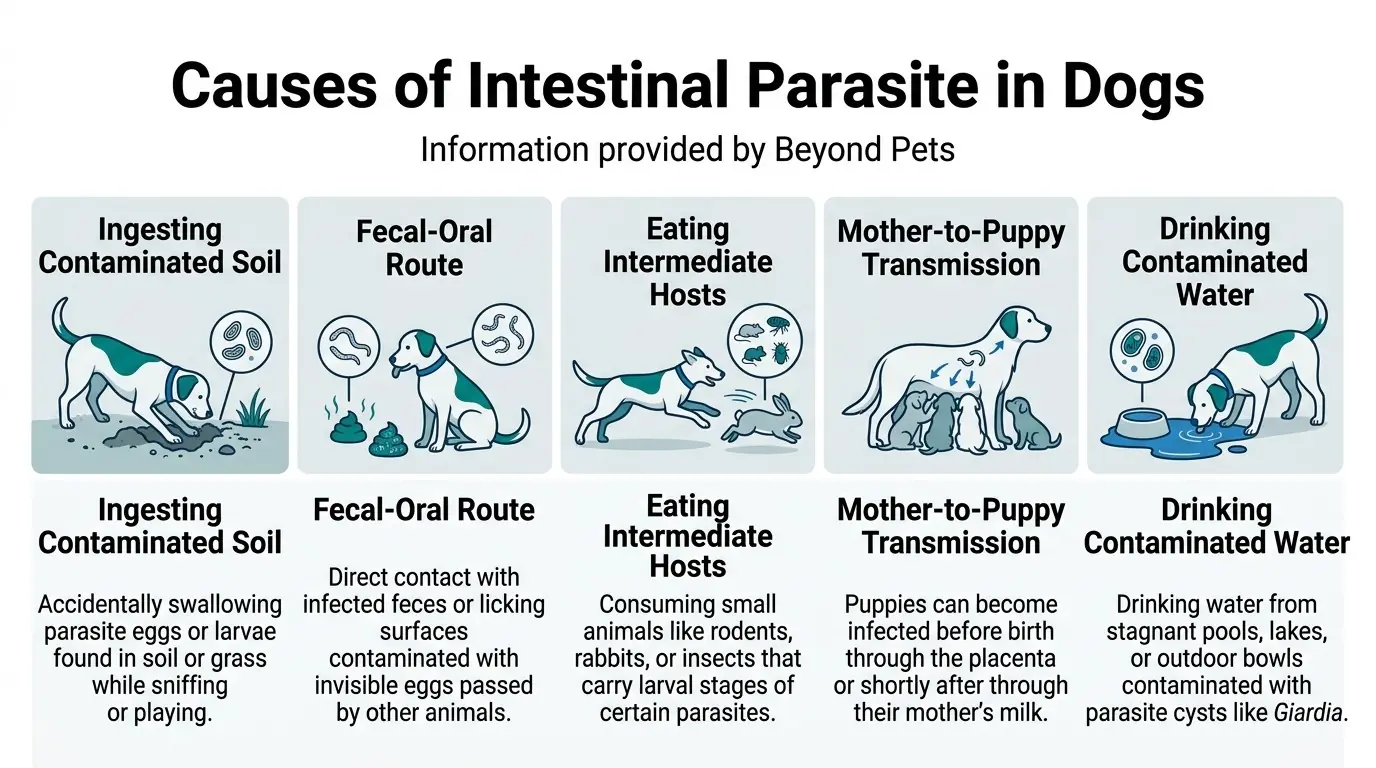
The exact mechanisms by which a dog acquires a gastrointestinal parasite vary significantly depending on the specific biology and life cycle of the invading organism. However, the unifying characteristic of nearly all these infections is that they are ultimately tied to the external environment and the dog’s behavioral interactions with it. The causes and transmission pathways of common intestinal parasites can be categorized into several distinct biological routes.
First and foremost is direct ingestion via the fecal-oral route. This is the most common transmission pathway for parasites that produce environmentally resilient eggs or cysts, including roundworms, whipworms, Giardia, and coccidia. When an infected animal defecates, millions of microscopic eggs or cysts are deposited onto the soil or grass. Even after the gross fecal matter has washed away or degraded, these microscopic pathogens remain viable in the soil for months or even years. Dogs become infected simply by walking through contaminated areas and subsequently licking their paws, chewing on contaminated sticks or toys, or through coprophagia (the behavioral act of eating feces). Furthermore, waterborne transmission is a major factor for protozoa like Giardia; drinking from contaminated streams, puddles, or communal water bowls provides a direct route of entry.[21]
The second major cause involves the utilization of intermediate or paratenic (transport) hosts. Tapeworms are the classic example of obligate intermediate host transmission. As mentioned, the flea tapeworm (Dipylidium caninum) is contracted exclusively when a dog swallows an infected adult flea. Therefore, a lapse in external parasite control directly leads to internal parasite infection. Other tapeworm species (Taenia spp.) require the dog to hunt, scavenge, or be fed the raw meat of an infected intermediate host, such as a rabbit, mouse, or sheep. In addition to obligate intermediate hosts, many parasites utilize paratenic hosts. A paratenic host is an animal that ingests the parasite egg, but the parasite does not develop further; it simply encysts in the tissues and waits. If a dog eats an earthworm, cockroach, or rodent carrying encysted roundworm larvae, the larvae will activate and infect the dog. This makes hunting and scavenging significant risk factors for gastrointestinal parasitism.[22]
Vertical transmission—the passing of parasites from a mother to her offspring—represents a crucial and highly effective evolutionary strategy for certain nematodes, guaranteeing that the next generation of hosts is infected immediately upon birth. As detailed in the discussion of roundworms and hookworms, larvae that have undergone somatic migration and encysted in the mother’s muscle tissues are completely shielded from the host’s immune system and most standard deworming medications. Pregnancy triggers the reactivation of these larvae. Transplacental transmission (crossing the placenta to infect fetal puppies) is the primary route for Toxocara canis, while transmammary transmission (passing through the milk during nursing) is a significant route for both roundworms and hookworms. Consequently, treating the mother during pregnancy is incredibly difficult, and neonatal deworming protocols must assume that all puppies are born infected. Finally, percutaneous (through the skin) transmission is a unique and dangerous capability of hookworm larvae, meaning a dog does not even need to ingest the parasite to become infected; simply resting on contaminated soil is sufficient.[23]
Symptoms of Intestinal Parasites in Dogs
The clinical manifestations of gastrointestinal parasites in dogs are remarkably diverse, existing on a broad spectrum from entirely subclinical (asymptomatic) infections to acute, life-threatening physiological crises. The severity and specific nature of the symptoms a dog exhibits are dictated by several intersecting factors: the exact species of the invading parasite, the absolute numerical burden (how many parasites are present), the age and nutritional status of the dog, and the overall competence of the dog’s immune system. It is a fundamental tenet of veterinary parasitology that the absence of visible symptoms does not equate to the absence of parasites. Many adult dogs serve as silent reservoirs, shedding massive numbers of infective eggs or cysts into the environment while appearing perfectly healthy to their owners. However, when the parasitic burden crosses a critical threshold, or when the host is young or compromised, definitive clinical signs become apparent.
The most immediate and obvious symptoms relate to the direct disruption of the gastrointestinal tract. Vomiting is a common sign, particularly with parasites that inhabit the stomach or upper small intestine, such as roundworms. In cases of severe roundworm burdens, it is not uncommon for a dog, especially a puppy, to vomit up tangles of live, writhing adult worms. Diarrhea is a nearly ubiquitous symptom across almost all species of intestinal parasites. The nature of the diarrhea can offer diagnostic clues: Giardia and coccidia typically produce watery, voluminous, foul-smelling diarrhea indicative of small bowel malabsorption, whereas whipworms produce mucous-laden, urgent, small-volume stools with fresh red blood, indicative of severe large bowel inflammation (colitis). The chronic loss of fluids and inability to absorb nutrients through the damaged intestinal mucosa rapidly leads to weight loss, a failure to thrive in growing puppies, and a distinctly unkempt, dull, and brittle hair coat resulting from poor protein and lipid absorption.[24]
Beyond the localized gastrointestinal distress, severe parasitic infections cause profound systemic pathology. The blood-feeding behavior of hookworms leads directly to severe iron-deficiency anemia, characterized by pale mucous membranes, extreme lethargy, tachycardia, and potentially sudden death due to hypovolemic shock. Similarly, heavy burdens of large parasites like roundworms can physically occlude the lumen of the bowel, causing a mechanical obstruction or triggering an intussusception, both of which present with acute abdominal pain, intractable vomiting, and rapid clinical deterioration requiring emergency surgical intervention. Furthermore, the constant tissue damage and blood loss associated with whipworms and hookworms can lead to hypoproteinemia (dangerously low blood protein levels). This lack of protein in the blood reduces oncotic pressure, leading to ascites (fluid accumulation in the abdomen) and peripheral edema (swelling of the limbs). In the case of migrating parasite larvae—such as roundworms traversing the lungs—the dog may exhibit respiratory signs, including coughing, wheezing, and exercise intolerance. Given the overlapping and potentially devastating nature of these symptoms, accurate laboratory diagnosis is absolutely imperative.[25]
Fecal Exam (Fecal Flotation Test)
The fecal flotation test is the cornerstone of veterinary parasitology and remains the most frequently utilized diagnostic procedure for identifying gastrointestinal parasites in both adult dogs and puppies. The underlying physical principle of this test is specific gravity. A small, fresh sample of the patient’s feces is mixed with a specialized, standardized chemical solution—commonly zinc sulfate, sodium nitrate, or Sheather’s sugar solution. These solutions are carefully formulated to possess a specific gravity that is higher (heavier) than the specific gravity of most common parasite eggs, cysts, and oocysts, yet lower than the specific gravity of the heavy fecal debris. When the mixture is allowed to sit, or ideally, when it is subjected to centrifugation, the heavier fecal matter sinks to the bottom of the tube, while the lighter parasite eggs break free of the debris and float to the surface meniscus. A glass coverslip placed on the meniscus collects these buoyant eggs. The coverslip is then carefully removed, placed on a glass slide, and meticulously examined under a light microscope by a trained veterinary technician or veterinarian. Centrifugal fecal flotation is significantly more sensitive than simple passive flotation, as the physical force of the centrifuge drives more eggs to the surface and provides a much cleaner, easier-to-read slide. This non-invasive test allows the clinical team to visually identify the unique morphological characteristics of specific parasite eggs, confirming the presence of roundworms, hookworms, whipworms, and coccidia.[26]
Fecal Smear
While the fecal flotation test is excellent for concentrating and identifying eggs and cysts that float, it is not the optimal tool for every parasitic scenario. The direct fecal smear is an alternative, supplementary microscopic technique. Unlike the flotation method, the direct smear involves taking a very tiny amount of completely fresh feces and mixing it with a few drops of warm saline directly on a microscope slide to create a thin, semi-transparent emulsion. A coverslip is applied, and the wet mount is examined immediately under the microscope. The primary benefit of the direct smear is its ability to identify fragile, motile organisms that would be destroyed, distorted, or simply fail to float in the hypertonic solutions used in fecal flotation. The most critical application of the direct smear in canine medicine is the detection of the active trophozoite stage of Giardia. Because trophozoites are highly motile, the microscopist looks for their characteristic “falling leaf” swimming pattern. Additionally, a direct smear is useful for identifying the presence of certain motile bacteria (like Campylobacter) or detecting abnormal cellular components in the stool, such as excessive white blood cells indicative of severe intestinal inflammation. However, because it examines such a minuscule volume of feces, the direct smear has a low overall sensitivity and is generally used in conjunction with other testing modalities.[27]
Blood Tests
While definitive diagnosis of gastrointestinal parasites traditionally relies on finding the organism in the feces, blood tests play a critical supportive, and increasingly primary, role in modern veterinary diagnostics. A Complete Blood Count (CBC) is frequently performed on sick dogs to assess the systemic impact of the parasitic infection. The CBC can reveal the presence and severity of anemia (low red blood cell count) caused by blood-feeding parasites like hookworms or whipworms. Furthermore, parasitic infections frequently trigger a specific immune response that results in eosinophilia—an abnormal elevation in a specific type of white blood cell (eosinophils) that the body uses to attack helminths. A serum biochemistry profile can identify hypoproteinemia (low protein) caused by chronic malabsorption or blood loss, as well as electrolyte imbalances like hyponatremia and hyperkalemia seen in severe whipworm infections. Beyond general blood panels, the landscape of parasite diagnostics has been revolutionized by Enzyme-Linked Immunosorbent Assay (ELISA) technology. While originally famous for detecting blood-borne heartworm antigen, highly sensitive ELISA tests are now widely used to detect specific parasite antigens directly in the blood or, more commonly, adapted to detect parasite-specific proteins secreted into the feces. These advanced fecal antigen tests can detect the presence of roundworms, hookworms, and whipworms even during the pre-patent period (before adult worms have started shedding eggs), or in cases where worms are present but not actively reproducing, significantly reducing the rate of false-negative diagnoses.[28]
Endoscopy or Colonoscopy
In certain complex, chronic, or diagnostically challenging clinical cases, advanced internal imaging via endoscopy or colonoscopy becomes a vital tool. These minimally invasive procedures require the dog to be placed under general anesthesia. A veterinarian then utilizes a flexible endoscope—a long, thin tube equipped with a high-definition camera and a light source—to visually inspect the interior mucosal lining of the gastrointestinal tract. Upper GI endoscopy is used to examine the esophagus, stomach, and the proximal portion of the small intestine (duodenum), while a colonoscopy evaluates the rectum, large intestine (colon), and occasionally the cecum. These procedures provide unparalleled, direct visualization of the mucosal health. In the context of parasitology, a veterinarian may physically see adult worms attached to the gut wall, such as Trichuris vulpis firmly embedded in the cecum, or dense clusters of Ancylostoma caninum in the duodenum. Endoscopy is particularly valuable when fecal testing remains persistently negative despite severe clinical signs. Crucially, the endoscope contains a channel that allows the passage of specialized instruments. This enables the veterinarian to safely collect full-thickness pinch biopsies of the intestinal mucosa. These tissue samples are then submitted for rigorous histopathological evaluation by a veterinary pathologist, which can reveal microscopic parasitic damage, rule out inflammatory bowel disease, or identify deep-tissue protozoal infections that evade standard diagnostics.[29]
Ultrasound or X-ray
Diagnostic imaging modalities, specifically abdominal radiography (X-rays) and abdominal ultrasonography, provide indispensable, non-invasive insights into the structural integrity and functionality of the dog’s internal organs. While neither an X-ray nor an ultrasound can definitively diagnose a microscopic protozoan or directly visualize a single small worm egg, they are vital for identifying the catastrophic mechanical and architectural consequences of severe gastrointestinal parasitism. Radiographs can highlight abnormal gas patterns, severe distension of bowel loops, or the presence of radiopaque foreign bodies that the dog may have ingested. In puppies with massive roundworm infections, plain X-rays may occasionally reveal dense, spaghetti-like masses silhouetted within the gas-filled lumen of the intestine. Abdominal ultrasound, however, provides a much more detailed, real-time, cross-sectional evaluation of the abdominal cavity. A skilled veterinary sonographer can measure the precise thickness of the intestinal wall, identifying the severe localized thickening associated with chronic inflammation from whipworms or Giardia. Most importantly, ultrasound is the diagnostic gold standard for rapidly identifying an intussusception—a deadly condition where a segment of the intestine telescopes inward upon itself, often triggered by the hypermotility and irritation caused by a heavy worm burden. The classic “target sign” or “bullseye” appearance on an ultrasound confirms this surgical emergency.[30]
Baermann Test
The Baermann test or Baermann technique is a specialized, targeted diagnostic procedure primarily utilized in veterinary medicine when an infection with lungworms (such as Oslerus osleri or Crenosoma vulpis) or certain unique gastrointestinal nematodes (like Strongyloides stercoralis, the intestinal threadworm) is suspected. Unlike standard fecal flotation techniques that are designed to isolate buoyant parasite eggs, the Baermann test is engineered to isolate live, actively motile parasite larvae from a fresh fecal sample. The methodology exploits the innate biological behaviors of these larvae: they are positively hydrotropic (they actively seek out and move into water) and they are unable to swim against gravity. A large sample of fresh, un-refrigerated feces is loosely wrapped in a porous material like cheesecloth or gauze and suspended in a specialized, funnel-shaped apparatus filled with warm water. As the warm water penetrates the fecal mass, the live larvae actively migrate out of the feces and into the surrounding water. Because they are heavy and cannot swim upward, they slowly sink through the water column, eventually accumulating in a dense cluster at the narrow, clamped-off bottom of the funnel. After a designated migration period (typically 12 to 24 hours), a few drops of fluid are drawn from the very bottom of the funnel and examined under a microscope. The identification of specific larval morphology provides a definitive diagnosis for parasites that would be entirely missed by traditional egg-flotation methods.[31]
Treatment Canine Gastrointestinal Parasites
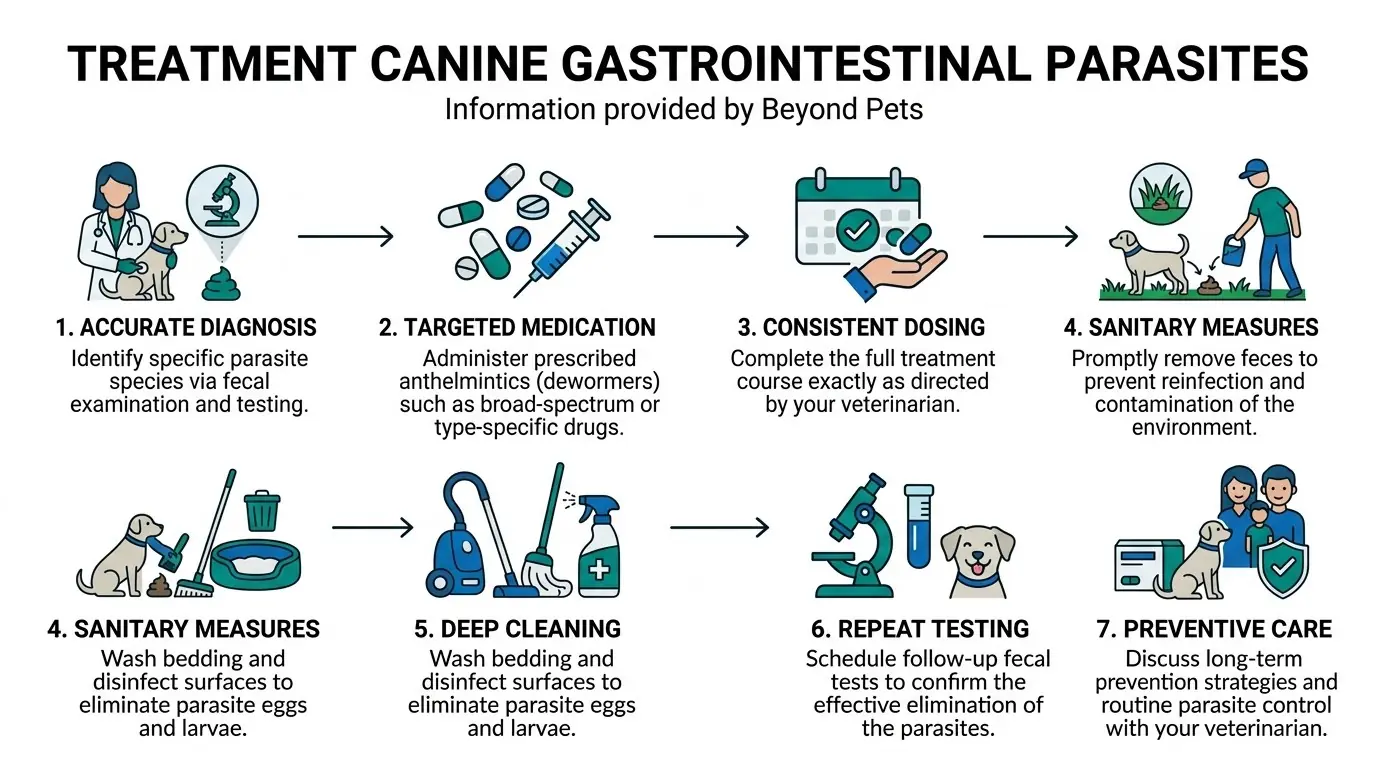
The pharmacological eradication of gastrointestinal parasites is a central pillar of modern veterinary medicine. The advent of highly effective, targeted, and safe anti-parasitic medications has drastically reduced the morbidity and mortality associated with these infections. However, the successful treatment of a canine patient is never a “one-size-fits-all” endeavor. The selection of an appropriate treatment regimen must be meticulously tailored to the specific type of parasite identified, the severity of the infection, the age and weight of the dog, and the presence of any concurrent medical conditions. Using the wrong medication, or an incorrect dosage, can result in treatment failure, ongoing environmental contamination, and the potential development of dangerous parasite resistance. Treatment strategies generally fall into a combination of targeted oral medications, broad-spectrum topical applications, and rigorous environmental management.
Deworming Medications
Oral deworming medications, technically referred to as anthelmintics, are the primary pharmacological weapons used to eliminate established intestinal worm infections. These medications are scientifically formulated to exploit distinct biochemical or neurological pathways that exist in the parasite but are absent or significantly different in the mammalian host, ensuring the drugs are highly toxic to the worm while remaining safe for the dog. Anthelmintics are classified into several major pharmacological families based on their specific mechanism of action. The benzimidazoles (e.g., fenbendazole) are broad-spectrum drugs that work by binding to the parasite’s tubulin proteins, effectively dismantling their cellular scaffolding and starving the worm by preventing glucose uptake. They are highly effective against roundworms, hookworms, whipworms, and even certain protozoa like Giardia when administered over several consecutive days. Another common class is the tetrahydropyrimidines, such as pyrantel pamoate. Pyrantel acts as a potent depolarizing neuromuscular blocking agent. It causes intense, rigid, spastic paralysis in the worms (specifically roundworms and hookworms), causing them to lose their grip on the intestinal wall so they can be safely expelled in the feces. The isoquinolines, primarily praziquantel and epsiprantel, are the drugs of choice for cestode (tapeworm) infections. These drugs induce rapid calcium influx into the tapeworm’s tegument, causing severe tetanic muscle spasms and the subsequent destruction of the parasite’s outer skin, leading to the worm being digested by the dog’s own intestinal enzymes. Implementing preventive measures like deworming protocols utilizing these medications is essential for maintaining canine health.[32]
Prescription Medications
While over-the-counter dewormers may address some basic nematode infections, the treatment of complex, deep-seated, or protozoal infections necessitates potent, veterinary-prescribed medications. Protozoal infections like Giardia and coccidia require entirely different pharmacological approaches than helminths. For Giardia, the antibiotic metronidazole is frequently prescribed. Metronidazole enters the protozoal cell and disrupts its DNA synthesis, effectively killing the organism. In addition to its anti-protozoal action, metronidazole possesses potent anti-inflammatory properties within the large intestine, helping to soothe the damaged mucosal lining and resolve chronic diarrhea. For coccidiosis, veterinarians typically prescribe specific anticoccidial drugs such as sulfadimethoxine (a sulfa antibiotic that inhibits the parasite’s folate synthesis) or newer, highly effective triazine derivatives like ponazuril or toltrazuril. These specialized medications actively halt the intracellular replication cycle of the coccidia, allowing the puppy’s immune system to clear the infection. Prescription medications require precise, weight-based dosing and strict adherence to the treatment schedule. Prematurely discontinuing the medication, even if the dog’s symptoms have resolved, frequently leads to immediate relapse and the creation of drug-resistant parasitic strains. Follow-up fecal testing at specific intervals after the completion of the prescription protocol is mandatory to verify that the parasite has been completely eradicated.[33]
Topical Treatments
In addition to traditional oral tablets, liquids, and chewables, modern veterinary pharmacology has developed highly sophisticated topical treatments (spot-on medications) that provide broad-spectrum parasite control. These formulations are typically applied directly to the skin at the base of the dog’s neck or between the shoulder blades, where the dog cannot reach to lick them off. The active ingredients in these topical solutions are lipophilic; they rapidly absorb through the epidermal lipid layers and enter the dog’s systemic blood circulation. Once in the bloodstream, the medication is distributed throughout the body, including the gastrointestinal tract and the lungs. The macrocyclic lactones, such as moxidectin and selamectin, are frequently utilized in these topical formulations. These compounds act by binding to glutamate-gated chloride channels in the parasite’s nervous system, causing an influx of chloride ions that hyperpolarizes the nerve cells, leading to flaccid paralysis and death of the parasite. These systemic topical treatments are incredibly versatile, functioning simultaneously as potent heartworm preventives, effective treatments for intestinal roundworms and hookworms, and powerful adulticides for external parasites like fleas and mites. By eliminating the external flea vectors, these topical medications inherently prevent the secondary transmission of the flea tapeworm (Dipylidium caninum), offering comprehensive, multi-modal parasite management.[34]
Environmental Control
Pharmacological treatment of the dog represents only half of the battle; rigorous environmental control is an absolutely non-negotiable requirement for achieving long-term success against gastrointestinal parasites. The sheer volume of resilient eggs and cysts shed by infected dogs means that a home, yard, or kennel can rapidly become a massive reservoir of reinfection. Because many of these parasites represent a direct zoonotic threat that can spread to humans, sanitation is a matter of public health. The foundational step in environmental management is the immediate, daily removal and proper disposal of all canine feces from yards, parks, and walking paths. Parasite eggs like Toxocara canis require several weeks in the environment to embryonate and become infective; immediate removal completely breaks this cycle. Indoors, hard surfaces, dog crates, and floors must be meticulously cleaned. However, traditional household cleaners are often ineffective. Giardia cysts and coccidia oocysts require disinfection with high-potency quaternary ammonium compounds or diluted bleach solutions (typically a 1:10 or 1:32 dilution) applied for a prolonged contact time. Heat is also an exceptional sterilizer; steam cleaning carpets, upholstery, and dog bedding at high temperatures is highly effective at destroying tapeworm eggs, flea larvae, and protozoan cysts that evade chemical cleaners. Furthermore, restricting the dog’s access to known high-risk areas, controlling rodent populations around the home, and preventing hunting or scavenging behaviors are essential behavioral modifications required to minimize environmental exposure.[35]
Preventive Measures
In veterinary medicine, the paradigm regarding gastrointestinal parasites has decisively shifted from reactive treatment to proactive, year-round prevention. The Companion Animal Parasite Council (CAPC), the leading authority on parasite epidemiology, unequivocally recommends that all dogs receive broad-spectrum, year-round parasite control. The foundation of this strategy is the consistent, monthly administration of a veterinary-approved preventive medication. Most modern monthly heartworm preventives are formulated with additional anthelmintic compounds (such as pyrantel or praziquantel) that simultaneously target and eliminate roundworms, hookworms, whipworms, and tapeworms before they can mature, reproduce, or cause significant tissue damage. This continuous pharmacological barrier is critical because dogs are constantly exposed to microscopic parasite eggs in their environment, making complete avoidance impossible. By killing newly acquired parasites in their early developmental stages, these preventives ensure the dog’s gastrointestinal tract remains clear and drastically reduce the shedding of infective eggs into the community environment.
However, administering preventives is not a substitute for routine diagnostic monitoring. The CAPC guidelines mandate that all adult dogs undergo a comprehensive fecal examination, utilizing centrifugation and ideally incorporating advanced antigen testing, at least once or twice annually, regardless of whether they are on a monthly preventive. This routine screening is essential to verify the efficacy of the preventive protocol, ensure owner compliance, and detect breakthrough infections or parasites not covered by the monthly spectrum (such as Giardia or coccidia). For puppies, the protocol is far more aggressive. Due to the high probability of transplacental and transmammary infection, puppies should begin empirical deworming with a safe anthelmintic like pyrantel pamoate at two weeks of age, repeated every two weeks until they are old enough to transition to a monthly broad-spectrum preventive. Regular veterinary wellness examinations, maintaining strict environmental hygiene, employing robust year-round flea and tick control, and preventing the ingestion of raw meats or wildlife are all critical components of a holistic preventive strategy. By adhering to these evidence-based guidelines, dog owners can effectively safeguard their pets’ gastrointestinal health, optimize their nutritional status, and mitigate the serious zoonotic risks to their human family. Please consult your veterinarian before making any changes to your pet’s care to ensure that all parasite protocols are specifically tailored to your dog’s unique geographic location, lifestyle, and medical history.[36]
Frequently Asked Questions
Why Should You Test Your Dog For Parasites?
Testing your dog for gastrointestinal parasites is a fundamental aspect of responsible preventive healthcare. First, early detection is crucial; dogs frequently harbor significant parasitic burdens while appearing completely asymptomatic, allowing the parasites to cause silent internal damage and nutrient theft over months. Second, different parasites (like nematodes versus protozoa) require entirely different, highly specific prescription medications; a definitive laboratory diagnosis via fecal centrifugation or antigen testing ensures your veterinarian can prescribe the exact drug required for eradication. Finally, routine testing protects public health. Many canine parasites, including roundworms, hookworms, and Giardia, are zoonotic and can cause serious disease in humans, particularly young children. Regular screening and treatment prevent your dog from silently contaminating your home environment.
Can dog parasites transfer to humans?
Yes, many common gastrointestinal parasites in dogs are highly zoonotic, meaning they are biologically capable of infecting humans. The most significant threats are roundworms (Toxocara canis) and hookworms (Ancylostoma caninum). Humans usually become infected by accidentally ingesting microscopic parasite eggs present in contaminated soil or unwashed hands, or in the case of hookworms, through direct skin penetration. In humans, roundworm larvae can migrate erratically through internal organs or the eyes, causing visceral or ocular larva migrans, which can lead to severe organ damage or permanent blindness. Zoonotic strains of Giardia can also cause severe, acute gastrointestinal illness in humans. Maintaining strict hygiene, picking up dog feces immediately, and keeping dogs on year-round parasite prevention are the most effective ways to protect human family members.
How long does it take to get rid of dog parasites?
The timeline for completely eliminating an intestinal parasite infection depends entirely on the specific organism, the severity of the burden, and the dog’s immune status. Fast-acting anthelmintics like pyrantel can paralyze and clear adult roundworms from the gut within 24 to 48 hours. However, this does not cure the infection. Because medications only kill specific life stages (usually adults), migrating larvae or encysted tissue stages are often unaffected. Therefore, treatment protocols usually require multiple doses spread over several weeks or months to kill new adults as they mature. Difficult protozoal infections like Giardia or environmentally persistent parasites like whipworms may require repeated courses of prescription medications and rigorous environmental decontamination over several months to achieve a true, negative cure.
References
- Companion Animal Parasite Council. General Guidelines for Dog Parasites. CAPC, 2024.
- Merck Veterinary Manual. Overview of Gastrointestinal Parasites in Dogs. Merck & Co., 2023.
- Centers for Disease Control and Prevention (CDC). Zoonotic Toxocariasis. CDC, 2023.
- American Veterinary Medical Association. Internal Parasites in Dogs. AVMA, 2022.
- VCA Animal Hospitals. Roundworm Infection in Dogs. VCA, 2023.
- Despommier D. Toxocariasis: clinical aspects, epidemiology, medical ecology, and molecular aspects. Clin Microbiol Rev, 2003.
- Companion Animal Parasite Council. Ascarid (Roundworm) Guidelines. CAPC, 2023.
- Merck Veterinary Manual. Hookworms in Dogs. Merck & Co., 2023.
- Ketzis JK, et al. Ancylostoma caninum: A review of the global prevalence. Vet Parasitol, 2018.
- Centers for Disease Control and Prevention (CDC). Zoonotic Hookworm. CDC, 2023.
- Companion Animal Parasite Council. Whipworm Guidelines (Trichuris vulpis). CAPC, 2023.
- Veterinary Information Network. Pseudo-Addison’s Disease and Whipworms. VIN, 2021.
- Little SE, et al. Prevalence of intestinal parasites in pet dogs in the United States. Vet Parasitol, 2009.
- ASPCA. Common Dog Diseases: Tapeworms. ASPCA, 2023.
- Companion Animal Parasite Council. Dipylidium caninum Guidelines. CAPC, 2023.
- World Health Organization. Echinococcosis Fact Sheet. WHO, 2021.
- Merck Veterinary Manual. Giardiasis in Dogs. Merck & Co., 2023.
- Centers for Disease Control and Prevention (CDC). Giardia and Pets. CDC, 2023.
- Companion Animal Parasite Council. Coccidia Guidelines. CAPC, 2023.
- Dubey JP, et al. A review of coccidiosis in dogs. Vet Parasitol, 2011.
- VCA Animal Hospitals. Giardia in Dogs: Transmission and Risk. VCA, 2023.
- American Veterinary Medical Association. Pets and Parasites: Transmission. AVMA, 2022.
- Bowman DD, et al. Feline and Canine Parasitology. Saunders, 2002.
- Merck Veterinary Manual. Malabsorption Syndromes and Parasitism. Merck & Co., 2023.
- Veterinary Information Network. Clinical Signs of Severe Parasitism. VIN, 2022.
- Companion Animal Parasite Council. Fecal Flotation Centrifugation Protocols. CAPC, 2023.
- Dryden MW, et al. Comparison of common fecal flotation techniques. Vet Ther, 2005.
- Elsemore DA, et al. Enzyme-linked immunosorbent assay for diagnosis of Ancylostoma caninum and Toxocara canis. J Vet Diagn Invest, 2014.
- American Veterinary Medical Association. Endoscopy in Veterinary Diagnostics. AVMA, 2023.
- Penninck D, et al. Gastrointestinal Ultrasound in Small Animals. Vet Radiol Ultrasound, 2007.
- Companion Animal Parasite Council. The Baermann Technique for Larval Recovery. CAPC, 2023.
- Merck Veterinary Manual. Overview of Anthelmintics. Merck & Co., 2023.
- Veterinary Information Network. Pharmacologic Management of Giardia and Coccidia. VIN, 2021.
- Blagburn BL, et al. Macrocyclic lactones in veterinary parasitology. Vet Parasitol, 2002.
- Centers for Disease Control and Prevention (CDC). Preventing Zoonotic Parasitic Infections. CDC, 2023.
- Companion Animal Parasite Council. Preventive Care Guidelines for Dogs. CAPC, 2024.