



 March 9, 2023
 Phil Good, DVM
What are Corneal Ulcers in Cats? Understanding Ulcerative Keratitis, Open Sores on the Cornea’s Surface, and Injury to the Eyes
This content was prepared with AI assistance and reviewed by a licensed professional for accuracy.
Introduction
When Jenny first noticed that her usually playful and highly energetic cat, Luna, was persistently squinting and keeping her left eye tightly closed, she grew increasingly concerned. Luna was never one to shy away from pouncing on her favorite feathered wand toy, but she suddenly seemed entirely disinterested, lethargic, and visibly uncomfortable. Alarmed by the rapid change in her feline companion’s demeanor, Jenny took Luna to the emergency veterinary clinic. It was there, under the specialized lights of the examination room, that she discovered her precious companion had developed corneal ulcers in cats, a severe clinical condition also known as ulcerative keratitis, which essentially manifests as open sores on the cornea’s surface often triggered by underlying disease processes or direct physical injury to the eyes. This diagnosis launched Jenny into a comprehensive learning process about feline ocular health, the fragile nature of the eye’s outer barriers, and the critical importance of immediate medical intervention.[1]
To fully grasp the severity of this diagnosis, pet owners must understand that the cornea serves as the primary protective windshield of the eye. A healthy feline cornea is perfectly transparent, smooth, and devoid of any blood vessels, allowing light to pass through unobstructed to the retina. When a breakdown occurs in the outermost cellular layers of this structure, the underlying tissues are exposed to the external environment, resulting in a painful ulceration. Much like treating a deep, infected wound on the skin, addressing a corneal ulcer requires meticulous care, precise diagnostic testing, and an aggressive, targeted treatment plan. Feline patients present unique challenges in ophthalmology due to their specific immune responses, the prevalence of species-specific viral pathogens, and their distinct anatomical features.[2]
Understanding the intricate manifestation of corneal ulcers is incredibly beneficial for pet owners, enabling them to recognize the subtle, early clinical signs of this potentially blinding condition and seek appropriate, life-saving veterinary care before permanent damage ensues. A normal, uncompromised cornea should always remain free of these painful defects. Therefore, establishing whether a cat is suffering from a superficial epithelial abrasion or a rapidly deteriorating, deep stromal melting ulcer is absolutely vital for preserving the structural integrity of the globe and maintaining your pet’s long-term visual acuity. The diagnostic journey and subsequent therapeutic management require a collaborative effort between the pet owner, the primary care veterinarian, and occasionally a board-certified veterinary ophthalmologist.[3]
What is the Cornea?
The cornea is the transparent, highly specialized, dome-shaped outer protective layer covering the anterior (front) portion of the eye in cats. It is arguably the most vital optical component of the feline visual system, serving not only as a robust structural barrier against the outside world but also as the primary refractive lens of the eye. Functionally, the cornea provides approximately two-thirds of the eye’s total focusing power, bending light rays as they enter the pupil to ensure they strike the retina with pinpoint accuracy. To maintain this exquisite transparency, the cornea relies on a state of relative dehydration and a complete absence of blood vessels, a characteristic known as avascularity. This pristine clarity is essential; any inflammation, fluid accumulation, or structural damage, such as that caused by a corneal ulcer, instantly compromises the cat’s ability to see clearly.[4]
Microscopically, the feline cornea is a marvel of biological engineering, composed of four distinct and highly interdependent anatomical layers. The outermost layer is the corneal epithelium, a stratified squamous cellular barrier that is highly lipophilic (fat-loving) and completely repels water. This layer acts as the first line of defense against environmental debris, invading pathogens, and the shear forces of the blinking eyelids. Just below the epithelium lies the stroma, which makes up roughly 90 percent of the cornea’s total thickness. The stroma is hydrophilic (water-loving) and consists of meticulously aligned collagen fibrils interspersed with specialized cells called keratocytes. The precise, parallel arrangement of these collagen fibers is exactly what makes the cornea transparent. If an ulcer penetrates the epithelium and enters the stroma, water from the tear film rushes in, disrupting the collagen alignment and resulting in a cloudy, opaque appearance known as corneal edema.[5]
Beneath the thick stromal layer rests Descemet’s membrane, an incredibly tough, elastic basement membrane that provides critical structural support. Descemet’s membrane serves as the final barrier preventing complete rupture of the eye in the face of a deep, melting ulcer. Finally, the innermost layer is the corneal endothelium. This is a fragile, single layer of hexagonal cells that lines the inner surface of the cornea, sitting directly adjacent to the aqueous humor fluid within the anterior chamber of the eye. The endothelium functions as a continuous metabolic pump, utilizing cellular energy (Na+/K+ ATPase pumps) to actively bail fluid out of the stroma, thereby maintaining the cornea’s necessary state of dehydration. Notably, in cats, endothelial cells possess a very limited capacity for regeneration; if they are heavily damaged by inflammation or trauma, the cornea may remain permanently cloudy.[6]
The health and functionality of these four corneal layers are inextricably linked to the precorneal tear film, which constantly bathes the surface of the eye. The tear film provides vital oxygen and dissolved nutrients to the avascular cornea while simultaneously flushing away microscopic debris. It consists of three distinct layers: an inner mucin layer produced by conjunctival goblet cells, a middle aqueous layer produced by the lacrimal glands, and an outer lipid layer secreted by the meibomian glands along the eyelid margins. A disruption in any component of this tear film, or structural damage to any of the four corneal layers, sets the stage for severe ocular disease. Overall, the cornea is an exceptionally delicate yet resilient part of the feline visual system, and any condition compromising its integrity can have devastating, rapid, and permanent consequences for a cat’s vision.[7]
Causes of Corneal Ulcers in Cats
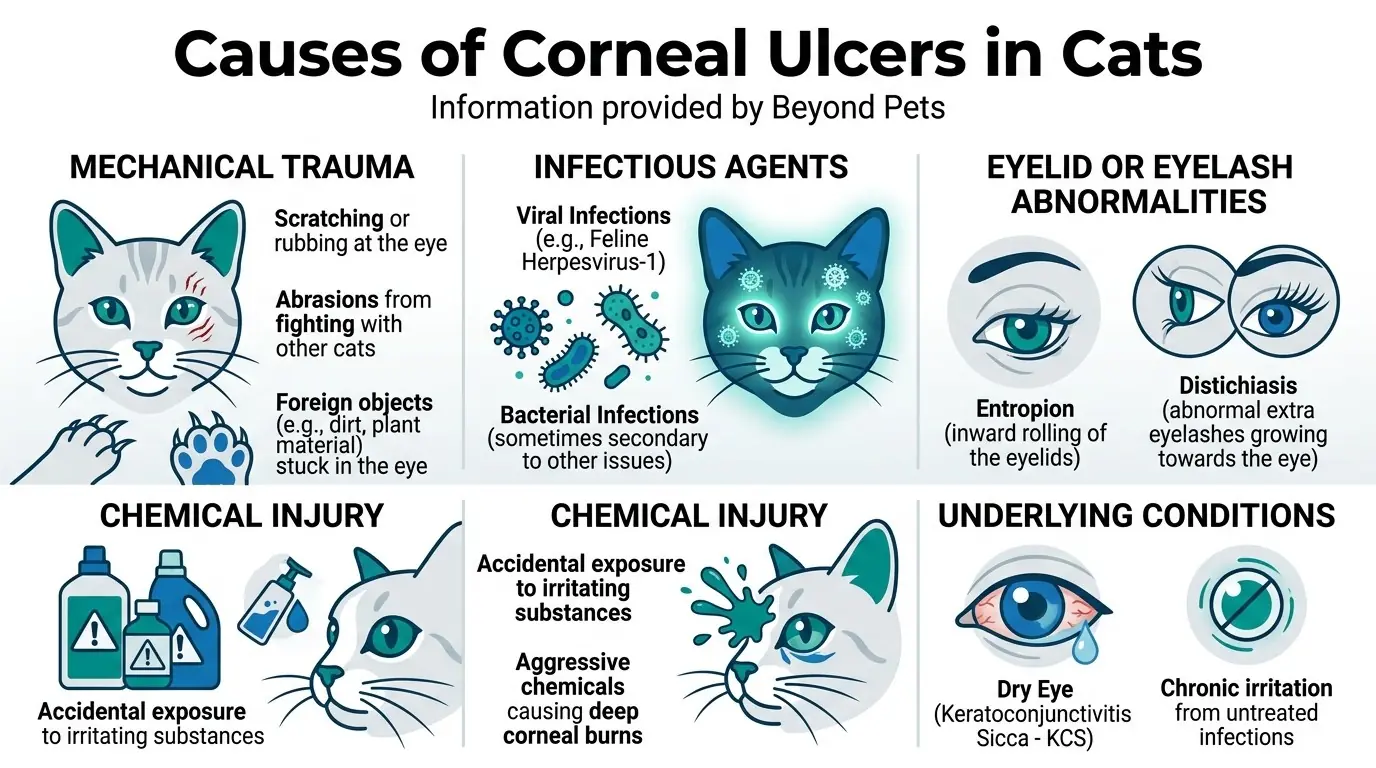
Corneal ulcers in felines, which can rapidly progress and result in permanent, vision-obscuring corneal scarring, arise from a vast array of environmental, infectious, and anatomical factors. Grasping the precise underlying etiology of these defects is absolutely fundamental for a veterinarian to formulate a successful, targeted diagnosis and an effective therapeutic treatment plan. If the root cause is ignored, the ulcer will likely fail to heal, or it will recurrently break down, leading to chronic suffering and the potential loss of the eye. Here is an extensive, in-depth exploration of the prevalent and nuanced origins of corneal ulcers in cats.
Injury
Mechanical trauma is a highly frequent instigator of acute corneal ulceration. Various environmental and behavioral sources can inflict a traumatic injury directly on the delicate surface of the eye. Incidents involving lacerations from sharp objects are incredibly common, particularly those experienced during aggressive cat fights where an opponent’s claw can easily slice through the epithelial barrier. Similarly, outdoor cats are frequently exposed to contact with prickly plants, thorns, rough brush, or hidden environmental hazards while hunting or exploring, all of which can severely harm the cornea. Even subtle indoor traumas, such as a playful swipe from a housemate or accidental contact with a sharp piece of furniture, can cause significant damage.[8]
Moreover, self-inflicted trauma plays a massive role in the exacerbation of these injuries. A minor initial irritation can result from excessive rubbing, pawing, or vigorous scratching of the eye due to underlying allergies, insect bites, or the presence of a foreign body trapped beneath the eyelid. This desperate attempt to relieve the sensation of a foreign object acts like sandpaper against the cornea, rapidly stripping away the protective epithelium and instigating painful, expanding corneal ulcers. This is precisely why protecting your cat’s eyes from potential trauma following an initial injury—often via the strict use of an Elizabethan collar—is a non-negotiable aspect of veterinary ocular care. Failure to prevent self-trauma often transforms a mild, easily treatable superficial abrasion into a deep, vision-threatening stromal disaster.[9]
Contaminations
Infectious pathogens represent one of the most complex and common causes of feline ocular disease. Corneal ulcers frequently form due to aggressive bacterial, viral, or, more rarely, fungal contaminations. The most notorious and widely recognized viral source of corneal ulcers in cats is the Feline Herpesvirus-1 (FHV-1). This ubiquitous virus is estimated to infect a massive percentage of the global cat population. Following an initial infection, FHV-1 establishes a lifelong latency within the trigeminal nerve ganglion. During periods of physiological or psychological stress, the virus can travel back down the sensory nerves directly to the eye, triggering severe inflammation, active viral replication within the corneal cells, and recurring, pathognomonic “dendritic” (branching) ulcers that are highly specific to this disease.[10]
Bacterial contaminations, involving opportunistic pathogens such as Staphylococcus, Streptococcus, or the highly destructive Pseudomonas aeruginosa, frequently arise as severe secondary complications. These bacteria are normally kept at bay by an intact epithelium, but once a scratch or viral lesion breaches the surface, they rapidly invade the underlying stroma. Pseudomonas is particularly devastating because it produces powerful collagenase enzymes that literally melt the corneal collagen fibers, leading to a condition known as keratomalacia. This rapid tissue liquefaction can perforate the globe within 24 to 48 hours. Furthermore, these bacterial invaders often complicate an underlying case of severe conjunctivitis, highlighting the interconnected nature of the eye’s supporting structures. Although considerably rarer in domestic cats, fungal keratitis (caused by Aspergillus or Fusarium) can also lead to intractable corneal ulcers, primarily occurring under specific, humid environmental conditions or following the prolonged, inappropriate use of topical corticosteroid medications.[11]
Dry Eye (Keratoconjunctivitis Sicca)
A severely dry eye, scientifically known as Keratoconjunctivitis Sicca (KCS), is a pathological condition characterized by a critical deficiency in either the overall volume of tear production or a drastic abnormality in tear film quality. The continuous, healthy flow of tears is required to lubricate the blinking eyelids, provide dissolved oxygen to the avascular cornea, and flush away microscopic, abrasive debris. When the lacrimal glands fail to produce an adequate aqueous layer, the cornea suffers from profound desiccation and chronic hypoxia. This unremitting friction and lack of nutritional support escalate the susceptibility of the cornea to cellular death and subsequent ulceration due to extreme, prolonged corneal dryness.[12]
The etiology of a dry eye in cats is multifaceted. It can result from complex immune-mediated conditions where the cat’s own immune system erroneously targets and destroys the tear-producing glandular tissue. Additionally, KCS may stem from congenital abnormalities present from birth, severe neurological deficits affecting the parasympathetic nerve pathways that control tear secretion, or as an unfortunate, temporary side effect of certain systemic medications (such as sulfonamide antibiotics) which directly inhibit tear production. Chronic FHV-1 infections can also lead to scarring of the lacrimal gland ducts, severely diminishing tear output over time. Regardless of the origin, the resulting friction creates micro-abrasions that frequently coalesce into massive, poorly healing corneal ulcers.[13]
Eyelid Irregularities
The anatomical conformation of the eyelids plays a massive role in protecting the ocular surface. Eyelid irregularities, either inherited or acquired, represent a constant, mechanical threat that can readily induce chronic corneal ulcers. Entropion is a particularly painful anatomical condition where the eyelid margin involuntarily rolls inward toward the globe. This pathological inward rolling causes the coarse, abrasive exterior eyelashes or facial hair to relentlessly scrape directly against the delicate corneal epithelium with every single blink. Over time, this constant mechanical friction strips away the protective layers, leading to deep ulceration, intense pain, and often the development of a dark, necrotic plaque known as a feline corneal sequestrum—a unique healing response specific to cats.[14]
On the contrary, ectropion is a condition where the eyelid margin is overly loose and droops outward, rolling away from the surface of the eye. While it does not cause direct abrasive friction like entropion, ectropion creates an unnatural “pocket” or trough in the lower conjunctiva that easily collects environmental debris, dust, and bacterial contaminants. More importantly, this outward drooping severely compromises the eyelid’s ability to properly spread the tear film across the entire surface of the globe during a blink. This results in wide bands of corneal exposure, making the tissues drastically more prone to severe drying, chronic irritation, desiccation damage, and eventual ulcer formation. Both structural abnormalities typically require precise surgical correction by a skilled veterinarian to permanently resolve the underlying mechanical threat.[15]
Brachycephalic Syndrome
Certain pedigreed felines present with dramatic anatomical deviations that put their ocular health at tremendous risk. Brachycephalic cat breeds, notably including Persians, Exotics, and Himalayans, possess selectively bred, drastically shortened facial structures and are highly predisposed to corneal ulcers. The skeletal modifications that create their distinctive, flat faces result in exceptionally shallow, poorly developed bony eye sockets (orbits). Because the orbital cavity is too shallow to properly house the globe, these breeds suffer from varying degrees of exophthalmos, a condition where the eyes prominently bulge outward. This anatomical protrusion drastically increases the surface area of the cornea exposed to the environment and makes the eyes an easy, prominent target for physical trauma.[16]
Furthermore, this prominent exophthalmos is frequently accompanied by a condition known as lagophthalmos, which is the physical inability to completely close the eyelids, even while sleeping. This leads to chronic, insufficient eye protection and exceptionally poor, incomplete tear film distribution across the central cornea. Adding to these challenges, brachycephalic cats have been scientifically documented to possess decreased corneal sensitivity compared to their mesocephalic counterparts. This means they are less likely to reflexively blink or pull away when a foreign object contacts their eye, leading to prolonged exposure to irritants. The combination of bulging eyes, incomplete blinking, and reduced sensation creates a perfect anatomical storm, making their corneas vastly more susceptible to catastrophic injury, rapid desiccation, and chronic, non-healing ulcers.[17]
Chemical or Thermal Burns
Beyond mechanical and biological threats, the cornea is incredibly vulnerable to rapid cellular death and ulceration following severe environmental accidents, such as burns from accidental exposure to noxious irritants, caustic chemicals, or extreme high temperatures. This type of traumatic event can easily transpire if a curious cat interacts with potent household cleaning agents, spilled laundry detergents, harsh agricultural chemicals, or acidic battery fluids. Alkaline substances, such as lye or certain drain cleaners, are particularly devastating; they cause a rapid process called saponification of the cellular fatty acids, allowing the chemical to penetrate deeply and relentlessly through the corneal stroma, often resulting in complete blindness or globe rupture.[18]
Thermal injuries, though slightly less common, are equally destructive. Direct contact with hot substances, such as splashing cooking oil, boiling water, or direct exposure to open flames, will instantly scorch the corneal epithelium and denature the underlying stromal collagen proteins. Furthermore, cats caught in residential or wildfires frequently suffer from severe smoke inhalation and intense thermal radiation, which immediately desiccates the tear film and causes massive, bilateral corneal sloughing. It is absolutely crucial to note that all of these diverse causes can sometimes interconnect or occur simultaneously—such as a viral infection complicating an initial thermal burn—leading to significantly more severe, complex, or complicated corneal ulcers, such as non-healing indolent ulcers or rapidly melting deep stromal defects. Therefore, immediate, aggressive veterinary care is strictly essential for an accurate diagnosis, ocular flushing, and suitable, life-saving treatment.[19]
Symptoms of Feline Corneal Ulceration
The clinical signs and overt behavioral symptoms of corneal ulcers in cats can drastically fluctuate depending on the precise anatomical depth of the lesion, the specific severity of the condition, and its exact root cause. Because the cornea is densely packed with sensitive nerve endings originating from the ophthalmic branch of the trigeminal nerve, any defect on its surface registers as severe, burning pain. Here are the deeply physiological and typical clinical signs to observe when evaluating your feline companion’s ocular health.
- Frequent squinting or keeping the eye closed (Blepharospasm): This is a powerful, involuntary protective reflex mediated by the facial nerve in direct response to the intense pain signals sent by the damaged trigeminal corneal nerves. The cat tightly spasms its eyelids shut to prevent any further light or mechanical friction from reaching the injured surface.
- Excessive production of tears (Epiphora): To attempt to wash away the perceived irritant and soothe the exposed nerve endings, the lacrimal glands are stimulated to produce massive volumes of aqueous tears, which frequently overflow the eyelid margins, soaking the fur of the face.
- Redness and inflammation in the eye (Conjunctival Hyperemia): The normally pale pink conjunctival tissues surrounding the globe become violently engorged with blood. This vascular response is the body’s attempt to deliver immune cells and systemic inflammatory mediators to the site of the injury.
- A cloudy or opaque appearance of the eye (Corneal Edema): When the waterproof epithelial barrier is broken, the hydrophilic stroma acts like a sponge, drawing in fluid from the tear film. This fluid disrupts the microscopic alignment of the collagen fibers, instantly turning the normally clear cornea a hazy, opaque blue or milky white.
- Increased sensitivity to light (Photophobia): Pain pathways in the eye are intimately connected. The severe surface pain of an ulcer frequently triggers secondary anterior uveitis—an inflammation of the iris and ciliary body inside the eye. The ciliary body severely spasms in response to bright light, causing excruciating, deep-seated throbbing pain, forcing the cat to hide in dark, quiet spaces.
- A tendency to rub or paw at the affected eye: Driven by the sensation of a foreign body or severe irritation, the cat will frequently use its front paws or drag its face along furniture and carpets to scratch the eye. This behavior is incredibly dangerous as it introduces environmental bacteria and exponentially worsens the size and depth of the existing ulcer.
- Behavioral changes: The chronic, unrelenting pain of a severe ocular lesion profoundly alters a cat’s behavior. Formerly affectionate cats may become highly reclusive, aggressively defensive when their face is approached, lethargic, or exhibit a severe decrease in appetite due to the systemic stress of the injury.
It is crucially vital to remember that these dramatic symptoms can also be directly linked to several other devastating eye diseases, such as acute glaucoma, anterior uveitis, or a severe cat’s eye infection. Consequently, it is of the absolute utmost importance to have your cat comprehensively evaluated by a licensed veterinarian at a fully equipped animal hospital for a precise, scientifically backed diagnosis. Early detection, microscopic evaluation, and immediate treatment of corneal ulcers are absolutely critical to preventing blinding complications, such as the destructive accumulation of melting dead cells, corneal perforation, and preserving the cat’s long-term vision.[20]
Diagnosis of Corneal Ulceration in Cats
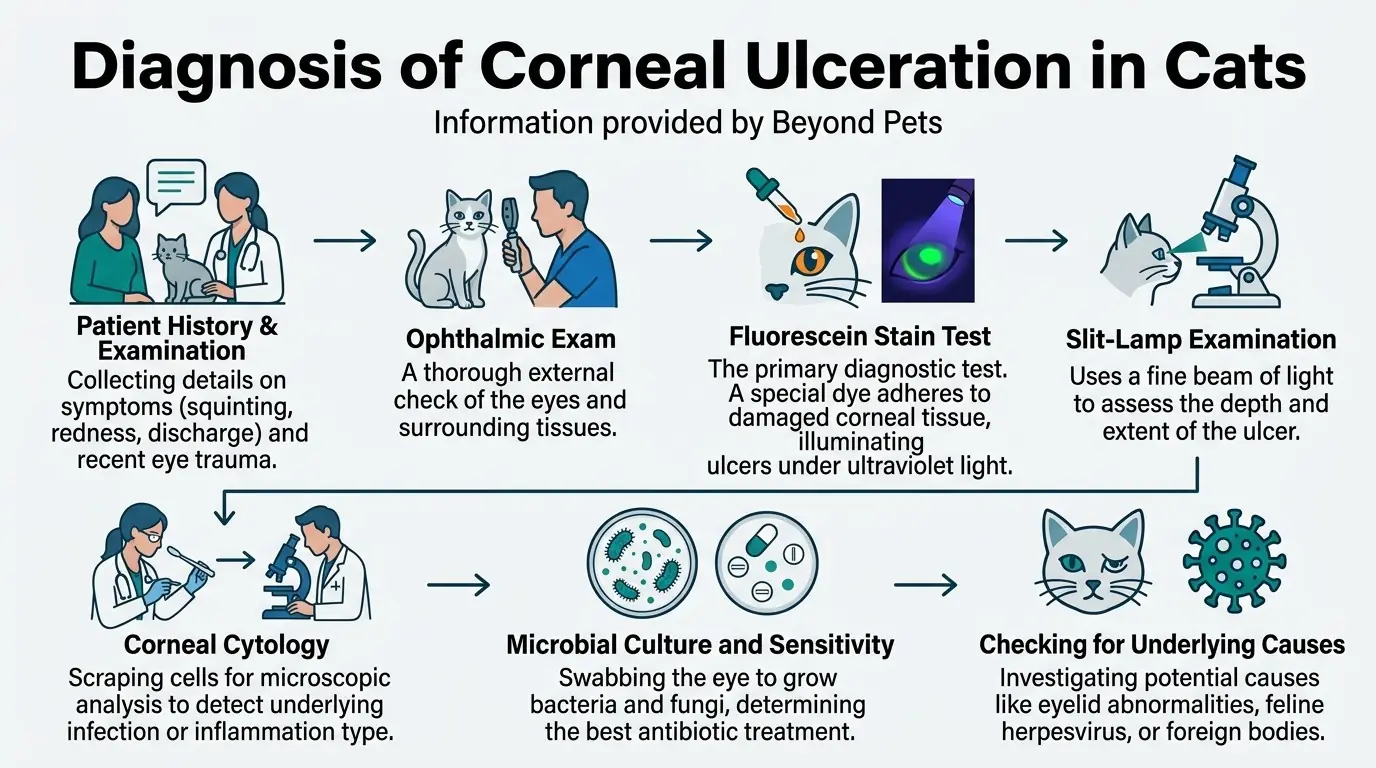
When a feline patient presents with signs of severe ocular distress, veterinarians must systematically employ a wide variety of advanced diagnostic techniques to accurately diagnose and grade the severity of corneal ulcers, which are also sometimes initially referred to as superficial corneal abrasions, in cats. These techniques go far beyond simple visual inspection, utilizing specialized pharmacological agents and calibrated instrumentation to evaluate the microscopic integrity of the eye. These essential procedures include:
Comprehensive Eye Examination
The veterinarian will begin by conducting a highly detailed neuro-ophthalmic and physical eye examination. Using a specialized, handheld instrument known as a slit lamp biomicroscope, the practitioner is capable of directing a highly focused, brilliant beam of light through magnifying lenses, facilitating the in-depth, microscopic visualization of the cornea’s individual layers. This advanced procedure allows the clinician to critically evaluate the precise location, exact geometric size, and, most importantly, the cellular depth of the ulcer within the complex corneal stroma. They will meticulously examine the anterior chamber for any signs of secondary internal inflammation (uveitis), looking for floating proteins (aqueous flare), inflammatory cells, or overt infection associated with the external ulcer.[21]
Fluorescein Stain Application
The application of fluorescein sodium dye is the absolute gold standard in the definitive diagnosis of corneal ulcers. This specialized, water-soluble orange dye is carefully applied to the eye’s pre-corneal tear film. Because the healthy, intact corneal epithelium is highly lipophilic, it completely repels the water-based dye. However, the dye readily adheres to and penetrates the hydrophilic stromal tissues in areas of the cornea where the protective epithelium has been mechanically or virally compromised, such as in the case of active ulcers or superficial corneal abrasions. When subsequently examined in a dark room under a specialized cobalt blue light, these damaged regions instantly fluoresce and glow a brilliant, neon bright green, unequivocally enabling the veterinarian to pinpoint the lesion and meticulously assess the corneal ulcer’s exact size, irregular shape, and structural depth.[22]
Tonometry Test
This critical diagnostic test employs a highly calibrated, digital instrument called a tonometer (such as an applanation Tono-Pen or a rebound TonoVet) to accurately measure the intraocular pressure (IOP)—the internal fluid pressure of the globe. If the pressure is dangerously elevated, it might strongly indicate the presence of secondary glaucoma, an incredibly painful and rapidly blinding condition possibly triggered by severe, chronic corneal ulceration or severe internal inflammation blocking the eye’s drainage angle. Conversely, a significantly low IOP reading is a hallmark sign of anterior uveitis, an internal inflammatory response almost universally present alongside deep, painful corneal ulcers. Regularly checking and trending the intraocular pressure helps the veterinarian deeply assess the overall condition’s severity and strictly directs the required pharmacological course of treatment.[23]
Assessment of Tear Production
The total physiological quantity and baseline rate of tear production are rigorously assessed using standardized, specific medical protocols like the Schirmer Tear Test (STT). This procedure utilizes a small, specialized strip of sterile, graded filter paper placed carefully inside the lower eyelid margin. This strip physically measures the exact volume of aqueous tears produced by the cat’s lacrimal glands over a precise one-minute period. Insufficient tear production (indicated by incredibly low millimeter readings on the test strip) leads directly to severe corneal desiccation and subsequent ulcers; thus, objectively evaluating tear production definitively assists the veterinarian in recognizing underlying, chronic autoimmune conditions such as dry eye syndrome (keratoconjunctivitis sicca), which requires specific, lifelong immunomodulatory management.[24]
Corneal Culture and Sensitivity Test
If a severe, rapidly progressing, or “melting” bacterial infection is clinically suspected during the initial slit-lamp examination, the veterinarian will halt further chemical testing to acquire a pristine biological sample. Using a sterile, specialized microscopic swab, a cellular sample from the exact margins of the active ulcer might be carefully collected and sent to an outside diagnostic lab for comprehensive aerobic culture and sensitivity testing. This highly specific microbiological assay helps definitively identify the specific strains of destructive bacteria or fungi involved in the deep infection. More importantly, the sensitivity portion of the test provides the clinician with the Minimum Inhibitory Concentration (MIC) data, dictating precisely which specific, targeted topical antimicrobial or antibiotic formulation will yield the most effective, life-saving treatment.[25]
Ocular Ultrasound
A B-scan ocular ultrasound may be utilized and performed in highly complex clinical cases or specifically when there is strong suspicion of deeper structural involvement, but direct visualization of the inner eye is impossible. If the cornea has become completely opaque due to massive edema, severe scarring, or the presence of pooling blood (hyphema) within the anterior chamber, the slit lamp cannot penetrate the haze. This advanced, non-invasive acoustic imaging technique utilizes high-frequency sound waves to offer detailed, cross-sectional insights into the cornea’s inner layers, the lens, and the posterior retina. It allows for the critical detection of any hidden internal abnormalities, retinal detachments, intraocular tumors, or radiolucent foreign bodies (like plant thorns) trapped within the globe that might be silently contributing to the chronic ulceration.[26]
Treatment for Corneal Ulcers in Cats

The definitive treatment of corneal ulcers in cats is a highly dynamic and logically structured process, entirely dependent on the specific clinical findings uncovered during the rigorous diagnostic phase. Rather than applying a generic, one-size-fits-all therapy, veterinary professionals must tailor their medical and surgical approach based directly on the precise physiological deficits identified. Here is a deeply expanded, logical outline of how the diagnostic evaluations directly dictate the advanced treatment protocols implemented to save the feline eye.
Complete Medical History
The veterinarian will start the entire therapeutic journey by taking a full, exhaustive medical history of your cat. They will ask probing questions regarding the exact timeline and onset of symptoms, whether the cat has had any recent outdoor accidents, violent injuries, or interactions with aggressive housemates, and if there have been any noticeable, sudden changes in behavior or appetite. This historical context directly guides the initial empirical drug choices. Furthermore, reviewing the cat’s past medical records can help the vet identify recurrent issues that heavily suggest the presence of a chronic viral infection like FHV-1, or the frustrating, cat-specific condition known as a corneal sequestrum, a necrotic disorder uniquely seen in felines where a dense, dark brown or black plaque of dead tissue forms deep within the irritated cornea, dictating a highly specific surgical approach.[27]
Physical Examination
The vet will then perform a meticulous physical and neuro-ophthalmic examination, focusing primarily on the macroscopic structure of the eye and the surrounding adnexa. They will look for obvious, gross signs of an ulcer or generalized corneal erosion, evaluating the precise degree of cloudiness, inflammatory redness, volume of tearing, or overt signs of extreme pain, such as relentless squinting (blepharospasm). The physical discovery of anatomical abnormalities—such as inward-rolling eyelids (entropion) or aberrant, misdirected eyelashes rubbing against the globe—immediately alters the treatment plan. Medical eye drops alone will never cure an ulcer caused by a physical hair continually scraping the eye; thus, the physical exam dictates that definitive surgical correction of the eyelid margin is the mandatory first step in the treatment protocol.[28]
Fluorescein Stain Test
The results of the main diagnostic tool for corneal ulcers, the fluorescein stain test, dictate the exact pharmacological aggressiveness required. This is where the vet places a small amount of this water-soluble orange dye on the eye’s pre-corneal surface. Because the dye adheres exclusively to any damaged, hydrophilic areas of the stroma, and brilliantly glows green under cobalt blue light, the vet can categorize the severity of the lesion. If the stain reveals a superficial, dendritic (branching) pattern pathognomonic for feline herpesvirus, the treatment plan strictly requires the immediate implementation of targeted topical antiviral agents (such as cidofovir or idoxuridine) rather than simple antibiotics. If the stain pools deeply in a crater, and the vet observes signs of rapid collagenase activity (corneal melting), the treatment protocol escalates to an emergency status, requiring the frequent application of autologous serum drops—created from the cat’s own spun-down blood—to halt the enzymatic dissolution of the cornea before the eye bursts.[29]
Tear Production Test
The physiological data gathered from the Schirmer tear test fundamentally alters long-term therapeutic management. The vet relies on this measurement especially if they clinically suspect the chronic ulcer may have been indirectly caused by a severely dry eye, scientifically known as keratoconjunctivitis sicca (KCS). This highly specific test measures the precise baseline amount of aqueous tear production. If the test unequivocally determines that inadequate tear production is the primary factor contributing to the ongoing desiccation and ulceration problem, the treatment plan must immediately incorporate powerful, localized immunosuppressive ointments (like topical cyclosporine or tacrolimus) to stop the immune destruction of the tear glands, alongside the frequent, daily application of high-viscosity artificial tear lubricants to manually protect the exposed ocular surface.[30]
Intraocular Pressure Measurement
The precise tonometric measurement of intraocular pressure (the internal fluid pressure inside the eye) dictates the safe use of specific pain-relieving medications. To rule out dangerous secondary conditions like acute glaucoma, the vet may measure the pressure using a highly calibrated tonometer tool. This step is absolutely crucial, as severely high and remarkably low intraocular pressures fundamentally change the pharmacological approach. If the pressure is extremely low, indicating severe, painful reflex anterior uveitis, the veterinarian may prescribe topical Atropine 1% drops. Atropine effectively paralyzes the violently spasming ciliary muscles inside the eye, providing profound pain relief. However, if the tonometer reveals the pressure is dangerously high (glaucoma), administering Atropine is strictly contraindicated, as it could further restrict internal fluid drainage and cause irreversible, rapid blindness.[31]
Additional Diagnostic Tests
In highly complex, refractory, or rapidly deteriorating clinical cases, additional tests and advanced surgical interventions may become absolutely necessary. These critical next steps could heavily include aggressive bacterial or fungal cultures if an atypical, drug-resistant infection is suspected. Should a superficial, non-healing (indolent) ulcer completely fail to respond to standard initial medical treatment, specialized surgical procedures may be required. While grid keratotomies are common in dogs, they are strictly contraindicated in felines due to the high risk of triggering a corneal sequestrum. Instead, a superficial keratectomy—a delicate, microsurgical procedure where the veterinary surgeon physically excises the diseased, necrotic, or non-adherent superficial layer of the cornea under general anesthesia—may be necessary to expose healthy underlying stroma and promote robust healing. A board-certified veterinary ophthalmologist usually performs this highly precise, sight-saving procedure.[32]
In the severe clinical case of incredibly deep, imminent perforations, persistent, melting corneal ulcers, or the surgical excision of a dense feline corneal sequestration, the surgeon may need to perform a conjunctival pedicle graft. This involves harvesting a thin, highly vascular flap of the cat’s own pink conjunctival tissue and meticulously suturing it directly over the deep corneal defect using microscopic, hair-thin sutures. This graft acts as a permanent biological bandage, delivering a direct, life-saving blood supply, immune cells, and crucial growth factors directly to the avascular ulcer bed. Furthermore, the cat may require the placement of a temporary tarsorrhaphy—where the eyelids are partially sutured closed—to physically protect the fragile globe between rigorous, around-the-clock treatments with targeted topical eye medications.[33]
By seamlessly combining these logical diagnostic methods with appropriately scaled, aggressive medical and surgical interventions, the veterinarian can not only treat the immediate, painful presence of a corneal ulcer but also proactively address the complex underlying physiological causes that will dictate the grueling days of intensive treatment ahead. If the ulcer proves to be significantly more profound than 50% of the total thickness of the cornea, or if the initial empirical treatment protocol doesn’t show rapid, objective improvement within 24 to 48 hours, it is imperative to immediately seek the advanced surgical expertise of a board-certified veterinary eye doctor (ophthalmologist). Please consult your veterinarian before making any changes to your pet’s care.[34]
Recovery After Treating Corneal Ulcers in Cats

After receiving an accurate diagnosis and the initiation of a targeted medical or surgical treatment protocol for corneal ulcers, feline patients enter the highly critical recovery phase, where the complex biological healing process finally begins. The overall duration of the recovery period can drastically vary, heavily depending on the precise cellular depth and severity of the original ulcer, the presence of virulent bacterial collagenases, and other unique individual factors such as the cat’s age and immune status. Minor, highly superficial epithelial ulcers may completely re-epithelialize and heal within a rapid week or two of diligent care, while significantly more severe, melting stromal or surgically grafted complex ulcers may require several grueling weeks or even months of intensive therapy to heal fully. Strictly following your primary veterinarian’s exhaustive medical instructions and unfailingly attending any scheduled, frequent follow-up examinations is absolutely crucial to preventing a sudden, catastrophic relapse.[35]
These mandatory follow-up examinations are crucial in microscopically monitoring the objective progress of the active ulcer healing process and comprehensively assessing your cat’s overall, long-term eye health. Using the slit lamp and repeat fluorescein staining, your veterinarian will carefully, scientifically evaluate the cellular healing status of the ulcer bed and make any necessary, dynamic adjustments to the pharmacological treatment plan. It is vitally important to flawlessly continue administering any and all prescribed medications, such as broad-spectrum topical antibiotic ointments, specialized antiviral solutions, or cycloplegic pain-relieving eye drops, exactly as directed by your veterinarian. These potent medications work synergistically to help aggressively prevent secondary bacterial infection, significantly reduce blinding internal inflammation, and physiologically support the migration of new epithelial cells. Additionally, it is absolutely essential to take strict, uncompromising physical measures to prevent any further mechanical injury or self-inflicted irritation to the fragile, healing cornea. This predominantly includes strictly protecting your cat’s eyes from potential trauma by enforcing the continuous, 24/7 use of a rigid Elizabethan collar (E-collar) to absolutely prevent the cat from rubbing the eye, and carefully avoiding any environmental exposure to airborne irritants like dusty cat litter, aerosol sprays, or household cleaning chemicals.[36]
Throughout the entirety of the delicate recovery period, pet owners must intimately and closely monitor their cat’s subtle behavioral changes and physiological progress. Astutely look for any recurring clinical signs of breakthrough pain, squinting discomfort, increased mucoid discharge, or suddenly worsening, cloudy symptoms. If you observe any concerning, rapid changes—such as the eye suddenly looking “melting” or the pupil changing shape—contact your emergency veterinarian immediately for further, urgent clinical guidance. Based on the healing trajectory, they may provide additional, nuanced care instructions specifically tailored to your cat’s evolving medical needs, heavily including continued, tapered medication schedules, regular sterile eye rinsing protocols, or specific, immune-supporting dietary modifications. Unwaveringly following these strict medical instructions and providing a dark, quiet, safe, and highly supportive indoor environment can profoundly help facilitate a highly successful, vision-saving recovery for your cat’s severe corneal ulcer.[37]
Prevention of Corneal Ulcers in Cats
While some anatomical predispositions cannot be altered, dedicated pet owners can proactively take several highly effective, scientifically backed measures to significantly prevent the initial onset or painful recurrence of corneal ulcers in their felines. First and foremost, it is critically important to maintain a strictly safe, hazard-free indoor environment for your cat by meticulously removing any potential environmental hazards that could cause accidental, blunt, or sharp eye injuries. This comprehensive safety protocol includes securing loose, sharp objects, hiding exposed electrical cords, trimming low-hanging, prickly house plants, and removing any other dangerous items that could accidentally physically harm the delicate tissues of the eyes during a bout of frantic play or climbing.[38]
- Good, consistent feline hygiene practices are also fundamentally crucial. Regularly and gently clean your cat’s face and the sensitive area immediately around the eyes to physically remove dried crusts, environmental debris, and naturally prevent the irritating buildup of potentially pathogenic bacterial irritants. Always use a highly sterile, clean, soft damp cloth or specialized, pH-balanced ophthalmic eye wipes specifically recommended and approved by your veterinarian.
- Preventing any accidental exposure to airborne chemical irritants is absolutely essential. Strictly avoid exposing your cat to harsh agricultural chemicals, cigarette or wildfire smoke, fine particulate dust, or any other abrasive airborne particles that can severely irritate the conjunctiva and the eyes. Always ensure you keep your cat safely sequestered in another well-ventilated room away from strong, volatile household cleaning agents, bleach fumes, or any caustic chemical substances that may be profoundly harmful to the ocular surface.
- If your cat is permitted to spend unsupervised time outdoors, you must heavily supervise their roaming activities to proactively prevent severe penetrating eye injuries from sharp yard plants, low branches, or aggressive altercations with feral neighborhood felines. Consider strictly utilizing a protective, well-fitted collar or limiting outdoor time to enclosed, safe “catio” structures to strongly discourage the aggressive rubbing or accidental scratching of the eyes in dangerous brush.
- Regular, comprehensive bi-annual veterinary check-ups are critically important for professionally monitoring your cat’s long-term eye health and detecting subtle changes early. Your skilled veterinarian can utilize magnification to accurately identify any hidden, underlying anatomical conditions (such as mild entropion) or physiological risks (such as dropping tear production) for corneal ulcers and subsequently provide highly appropriate, preemptive preventive medical measures or minor corrective surgical treatments before a catastrophic ulcer develops.
- Lastly, aggressively diagnosing and successfully addressing any underlying, systemic feline health issues, such as chronic immune-mediated dry eye syndrome (KCS) or latent, recurring feline herpesvirus-1 (FHV-1) flare-ups, is absolutely crucial. Work closely and collaboratively with your veterinarian to medically manage and pharmacologically treat these highly complex viral and autoimmune conditions effectively—potentially utilizing daily L-lysine supplementation or systemic famciclovir—as uncontrolled disease processes can massively increase the physiological risk and frequency of debilitating corneal ulcers.
Meticulously following these rigorous, proactive preventive measures can profoundly help physically protect your beloved cat’s delicate eyes and significantly reduce the statistical risk of highly painful, vision-threatening corneal ulcers. As always, you must consistently consult your primary care veterinarian for highly personalized, medically sound advice and specific pharmacological guidance strictly tailored to your individual cat’s unique physiological needs and genetic predispositions.[39]
Frequently Asked Questions
What is a descemetocele?
A descemetocele is an incredibly severe, late-stage, and imminently sight-threatening ocular condition in which a rapidly melting or highly neglected corneal ulcer progresses and physically erodes through the entire, thick stromal layer of the cornea. The ulcer deepens until it reaches the final, incredibly thin, elastic basement layer known as Descemet’s membrane. Because Descemet’s membrane repels the fluorescein dye, a descemetocele often appears as a terrifyingly clear, dark, bulging “bubble” at the very bottom of a deep, green-stained ulcer crater. Descemetoceles represent an extreme, true ophthalmologic emergency requiring immediate, aggressive veterinary surgical intervention—often involving conjunctival pedicle grafting—as the sheer physical pressure of the internal eye fluids can cause this final, fragile membrane to spontaneously rupture at any moment, leading to total collapse and permanent, catastrophic loss of the eye.
Can a cat’s cornea heal itself?
The highly specialized cornea of a cat does possess a remarkable, built-in biological capacity for rapid self-healing, but strictly only in uncomplicated cases of extremely mild, superficial epithelial injuries or very minor abrasions. In these highly fortunate instances, surrounding healthy epithelial cells rapidly divide and slide over the microscopic defect, often resealing the protective barrier within 48 to 72 hours. However, deeper, virally infected, or bacteria-contaminated severe corneal ulcers completely overwhelm this natural, physiological healing mechanism. These complex lesions unequivocally require targeted, aggressive medical intervention—such as potent anti-collagenase serum drops, topical broad-spectrum antibiotics, and specific antiviral therapies—for proper, safe healing. It is absolutely crucial to seek immediate veterinary attention if your cat is exhibiting any clinical signs of a painful corneal ulcer to ensure highly appropriate, sight-saving treatment and definitively prevent blinding complications.
Are eye ulcers contagious in cats?
The physical presence of a corneal eye ulcer itself is absolutely not a contagious entity; an ulcer is merely a structural, anatomical wound resulting from trauma, desiccation, or underlying pathology. However, the specific, underlying infectious biological causes that frequently trigger these devastating eye ulcers, such as highly virulent viral strains like Feline Herpesvirus-1 (FHV-1) or specific pathogenic bacterial infections like Chlamydia felis or Mycoplasma, can be incredibly contagious and rapidly transmissible to other susceptible felines within the household. Because these infectious agents are shed in massive quantities through ocular and nasal secretions, it is critically important to strictly, physically isolate the affected cat from its housemates. Furthermore, owners must practice impeccable, rigorous environmental hygiene, such as washing their hands thoroughly with antibacterial soap and utilizing separate bedding and food bowls after handling or medicating a cat with an active, infectious eye ulcer, to successfully prevent the rapid, uncontrolled spread of these highly dangerous infectious agents.
References
- VCA Hospitals. Corneal Ulcers in Cats. VCA Animal Hospitals, 2022.
- Merck Veterinary Manual. Disorders of the Cornea in Cats. Merck & Co., Inc., 2023.
- Maggs, D. J. Update on pathogenesis, diagnosis, and treatment of feline herpesvirus type 1. Clinical Techniques in Small Animal Practice, 2005.
- American Veterinary Medical Association (AVMA). Eye Problems in Dogs and Cats. AVMA.org, 2021.
- Cornell University College of Veterinary Medicine. Feline Vision Problems: A Host of Possible Causes. Cornell Feline Health Center, 2019.
- Gould, D. Feline herpesvirus-1: ocular manifestations, diagnosis and treatment. Journal of Feline Medicine and Surgery, 2011.
- American College of Veterinary Ophthalmologists (ACVO). Corneal Ulcers in Cats. ACVO.org, 2020.
- Veterinary Information Network (VIN). Feline Corneal Sequestrum. VIN.com, 2018.
- Thomasy, S. M., et al. Oral famciclovir efficacy in cats infected with feline herpesvirus type-1. American Journal of Veterinary Research, 2011.
- VCA Hospitals. Conjunctivitis in Cats. VCA Animal Hospitals, 2022.
- Merck Veterinary Manual. The Cornea: Veterinary Ophthalmology. Merck & Co., Inc., 2023.
- Brooks, D. E. Corneal emergencies in cats. Veterinary Clinics of North America: Small Animal Practice, 2004.
- ASPCA. Common Cat Diseases and Eye Health. ASPCA.org, 2022.
- Ledbetter, E. C. Feline Herpesvirus-1 ocular disease. Veterinary Clinics of North America: Small Animal Practice, 2013.
- Lim, C. C., et al. Brachycephalic ocular syndrome in dogs and cats. Veterinary Record, 2014.
- American Animal Hospital Association (AAHA). Recognizing Eye Infections and Ulcers. AAHA.org, 2021.
- Glaze, M. B. Congenital and hereditary ocular abnormalities in cats. Clinical Techniques in Small Animal Practice, 2005.
- Veterinary Information Network (VIN). Management of Indolent Corneal Ulcers. VIN.com, 2011.
- Stiles, J. Ocular manifestations of systemic viral diseases in cats. Veterinary Clinics of North America: Small Animal Practice, 2011.
- VCA Hospitals. Keratoconjunctivitis Sicca (KCS) or Dry Eye in Cats. VCA Animal Hospitals, 2022.
- Williams, D. L. Feline keratoconjunctivitis sicca: A retrospective analysis. Journal of Feline Medicine and Surgery, 2008.
- Merck Veterinary Manual. Anterior Uveitis in Animals. Merck & Co., Inc., 2023.
- Hartley, C. Diagnosis and treatment of corneal ulcers. In Practice, 2010.
- American Veterinary Medical Association (AVMA). Senior Pet Care and Ocular Health. AVMA.org, 2022.
- Michau, T. M. Surgery of the feline cornea and conjunctiva. Veterinary Clinics of North America: Small Animal Practice, 2012.
- VCA Hospitals. Glaucoma in Cats. VCA Animal Hospitals, 2022.
- Sebbag, L., et al. Schirmer tear test and intraocular pressure values in healthy cats. Veterinary Ophthalmology, 2018.
- Merck Veterinary Manual. Disorders of the Eyelids in Cats. Merck & Co., Inc., 2023.
- Maggs, D. J. The use of antivirals in feline ophthalmology. Veterinary Clinics of North America: Small Animal Practice, 2000.
- Allgoewer, I. Eyelid agenesis in the cat: A review. Veterinary Ophthalmology, 2010.
- Veterinary Information Network (VIN). Corneal Melting and Collagenases. VIN.com, 2016.
- Thomasy, S. M., et al. Systemic famciclovir for treatment of feline herpesvirus keratitis. Veterinary Ophthalmology, 2012.
- American College of Veterinary Ophthalmologists (ACVO). Feline Herpes Virus. ACVO.org, 2020.
- Nasisse, M. P. Manifestations, diagnosis, and treatment of feline herpesvirus-1 infection. Veterinary Medicine, 1998.
- VCA Hospitals. Feline Corneal Sequestrum. VCA Animal Hospitals, 2022.
- Andrew, S. E. Immune-mediated ocular diseases of the cat. Veterinary Clinics of North America: Small Animal Practice, 2004.
- Maggs, D. J., et al. Evaluation of a point-of-care test for feline herpesvirus-1. American Journal of Veterinary Research, 2009.
- Merck Veterinary Manual. Eye Emergencies in Cats. Merck & Co., Inc., 2023.
- Brooks, D. E., et al. Corneal pedicle grafting and surgical management of deep stromal ulcers. Veterinary Ophthalmology, 2005.