




 March 9, 2023
 Phil Good, DVM
What is External Parasite in Cats
This content was prepared with AI assistance and reviewed by a licensed professional for accuracy.
Introduction
When discussing the clinical management of external parasites in cats, it is imperative to recognize how profoundly these organisms can compromise feline health. Unlike intestinal worms or cardiovascular pests that operate hidden within the body, external parasites—or ectoparasites—inhabit the outer surfaces of the host. They typically reside on the fur, attach directly to the epidermis, nestle deep within the ear canals, or, in the case of certain microscopic species, these parasites live inside the cat’s skin by burrowing into the epidermal layers. Dealing with parasites in cats requires a comprehensive, year-round approach tailored by your veterinary team to ensure systemic well-being and dermatological health[1].
Ectoparasites are not merely a cosmetic nuisance or a minor cause of itching; they are highly evolved biological vectors capable of transmitting severe, sometimes life-threatening infectious agents. Nuisances such as fleas, ticks, lice, and mites feed voraciously on the cat’s blood, skin debris, or sebaceous secretions. When they bite, they inject salivary proteins that can trigger profound hypersensitivity reactions, leading to chronic skin disease and secondary bacterial infections[2]. Furthermore, a heavy infestation of blood-sucking parasites can rapidly exsanguinate a vulnerable animal, leading to profound iron-deficiency anemia, which can be fatal in kittens or immunocompromised adults.
Understanding the diverse lifecycles and environmental resilience of these pests is the foundation of effective veterinary dermatology and parasitology. Each species has a unique method of transmission, often relying on complex interactions between the cat, other domestic or wild animals, and the external environment[3]. Because certain feline ectoparasites hold significant zoonotic potential—meaning they can be transmitted to human family members—aggressive monitoring, precise clinical diagnosis, and evidence-based preventive strategies are non-negotiable components of responsible pet ownership.
Types of External Parasites in Cats
The feline epidermis can serve as an ecosystem for a diverse array of parasitic organisms. While some are common across multiple geographic regions, others are highly localized. Understanding the specific biology of each type is crucial for proper eradication.
- Fleas: The cat flea (Ctenocephalides felis) is overwhelmingly the most common external parasite encountered in feline medicine[4]. These small, agile, wingless insects are obligate blood-feeders. Their lifecycle consists of four stages: egg, larva, pupa, and adult. While the adult flea lives entirely on the cat, the eggs shed into the environment, hatching into larvae that feed on organic debris. Fleas are notorious for causing intense pruritus (itching) and serve as primary vectors for several dangerous pathogens, including Bartonella henselae (the causative agent of Cat Scratch Disease) and the feline tapeworm.
- Ticks: Unlike fleas, ticks are arachnids that latch onto the cat’s skin to consume a prolonged blood meal. Common species affecting felines include the Black-legged tick (Ixodes scapularis), the American dog tick (Dermacentor variabilis), and the Lone Star tick (Amblyomma americanum)[5]. Ticks are typically acquired when a cat brushes against tall grass or underbrush where the tick is “questing” (waiting with outstretched legs). They are significant vectors for severe systemic diseases, most notably Cytauxzoonosis—a rapidly fatal feline tick-borne disease—as well as Anaplasmosis and Lyme disease.
- Ear Mites: Ear Mites are tiny parasites that live in the ear canals of cats, specifically the species Otodectes cynotis. These microscopic arthropods feed on epidermal debris and ear wax, triggering severe inflammation (otitis externa). The classical clinical presentation is intense head shaking, scratching at the ears, and the presence of a dark, crumbly exudate that resembles dry coffee grounds[6]. They are highly contagious between pets.
- Mange Mites: Mange in cats is caused by several specific mites. Notoedres cati causes feline scabies, a highly contagious and intensely itchy condition that typically begins on the ear margins and spreads to the face and neck. Another category is Demodicosis, caused by Demodex cati (which lives harmlessly in hair follicles until the cat becomes immunosuppressed) or Demodex gatoi (a contagious surface-dwelling mite). Additionally, Cheyletiella mites cause a condition colloquially known as “walking dandruff,” characterized by severe scaling along the cat’s back[7].
- Lice: Feline pediculosis is caused by the biting louse Felicola subrostratus. Unlike fleas or ticks, lice are entirely host-specific and spend their entire lifecycle on the cat. They attach their eggs, known as nits, firmly to individual hair shafts. Lice infestations are relatively uncommon in modern veterinary practice and are generally observed only in severely neglected, malnourished, or feral felines living in heavily overcrowded, unsanitary conditions[8].
What Causes Feline External Parasites
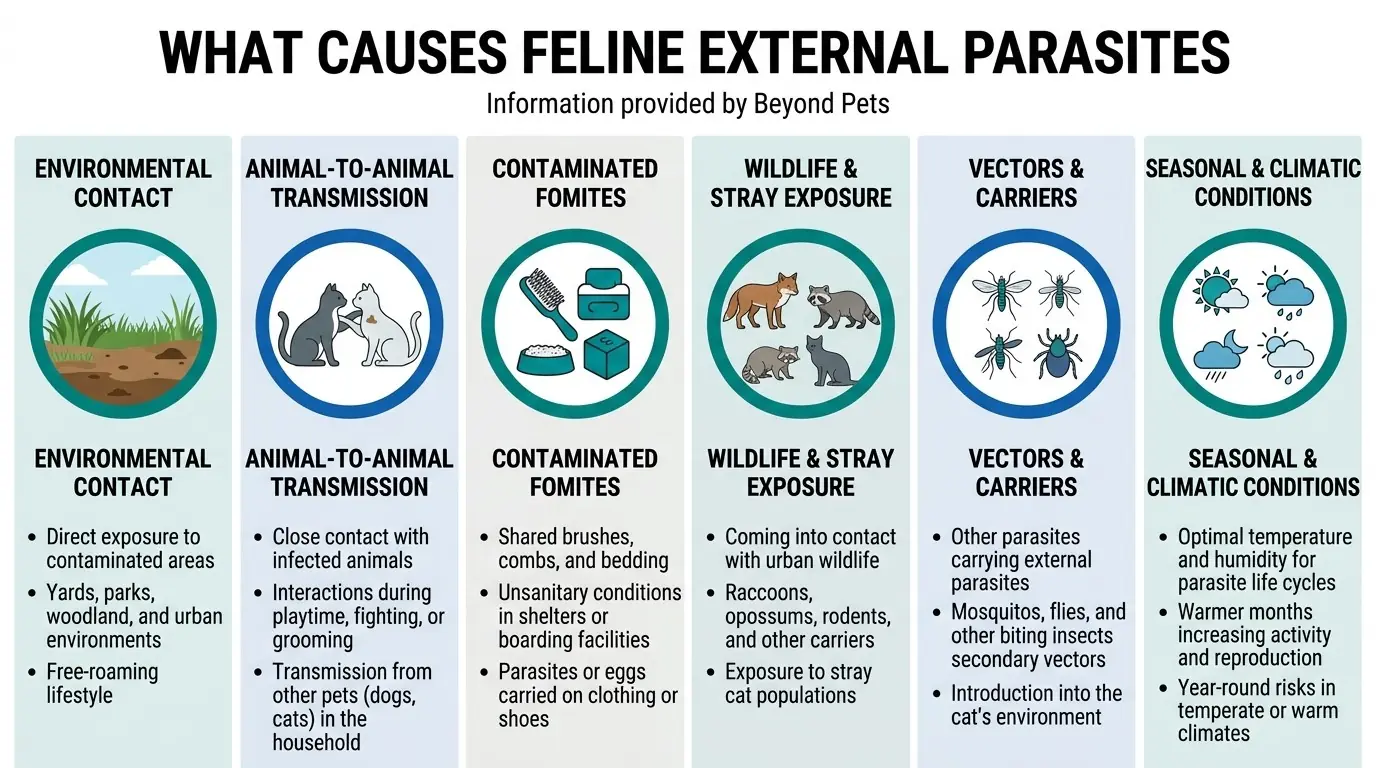
The sudden appearance of an external parasite infestation is rarely spontaneous; it is the result of a complex interplay of environmental, behavioral, and immunological factors. Understanding the specific pathways of transmission helps clinicians and pet owners sever the lifecycle and prevent recurrence.
Interaction with Infested Animals
Cats that roam outdoors or interact with stray populations are at exceptionally high risk for acquiring external parasites. Free-roaming animals, including feral felines, opossums, and raccoons, often harbor massive populations of fleas, ticks, and contagious mites. Direct physical contact is not always necessary; merely sharing a resting area, a porch, or a garden bed with an infested animal allows highly mobile pests to find a new host[9]. Furthermore, socialization between household pets is a primary vector for parasites like Otodectes cynotis (ear mites) and Cheyletiella, which can easily jump from an infested dog or rabbit onto an unprotected feline companion during grooming or play.
Exposure to External Environments
Even without direct animal-to-animal contact, the natural environment serves as a massive reservoir for ectoparasites. Flea eggs shed by infested wildlife fall into shaded soil, under deck structures, or deep within tall grass. There, they hatch into larvae and eventually spin highly protective pupal cocoons. A flea pupa can remain dormant in the environment for many months, waiting for the vibration, heat, or carbon dioxide signature of a passing cat to trigger emergence[4]. Similarly, ticks utilize a survival behavior called ‘questing,’ where they climb to the apex of a grass blade or shrub and extend their specialized front legs, waiting to latch onto the fur of any passing host. Even indoor cats can be exposed if parasites are brought inside on human clothing, shoes, or other household pets.
Poor Hygiene and Grooming Practices
Healthy felines are meticulous groomers. Their barbed tongues act as fine-toothed combs, highly effective at physically removing and destroying adult fleas, ticks, and mites from their coats. However, cats suffering from underlying health issues—such as advanced dental disease, severe osteoarthritis, cognitive dysfunction, or marked obesity—may be physically incapable of reaching certain areas of their bodies to groom properly. In these immunocompromised or mobility-restricted patients, the natural defense mechanism fails. What might be a minor, passing exposure in a healthy, active cat can rapidly escalate into a severe, localized infestation on the lower back or tail base of a compromised feline[10].
Communal Living Spaces
Felines residing in high-density environments—such as animal shelters, breeding catteries, hoarding situations, or densely populated multi-pet households—face an exponentially increased risk of parasite transmission. In these settings, the shared use of bedding, scratching posts, and communal grooming tools provides an uninterrupted highway for parasitic spread. If a single animal in the facility contracts a contagious parasite like feline scabies (Notoedres cati) or biting lice, the pathogen can quickly sweep through the entire population. Managing outbreaks in communal spaces requires aggressive, synchronized treatment protocols for every animal on the premises simultaneously, alongside intense environmental decontamination[7].
Lack of Preventive Strategies
The single most common cause of clinical ectoparasite infestations is the absence of consistent, year-round preventive medication. Many pet owners mistakenly believe that parasite prevention is only necessary during the warm summer months. However, fleas thrive indoors year-round within the climate-controlled environments of our homes, and certain tick species remain active at temperatures just above freezing. Gaps in the administration of topical or oral preventatives leave the cat entirely unprotected. The Companion Animal Parasite Council (CAPC) strictly advises that allowing preventive treatments to lapse creates a dangerous window of susceptibility, allowing parasites not only to feed on the cat but also to aggressively seed the home environment with thousands of eggs[11].
Symptoms of External Parasites Felines
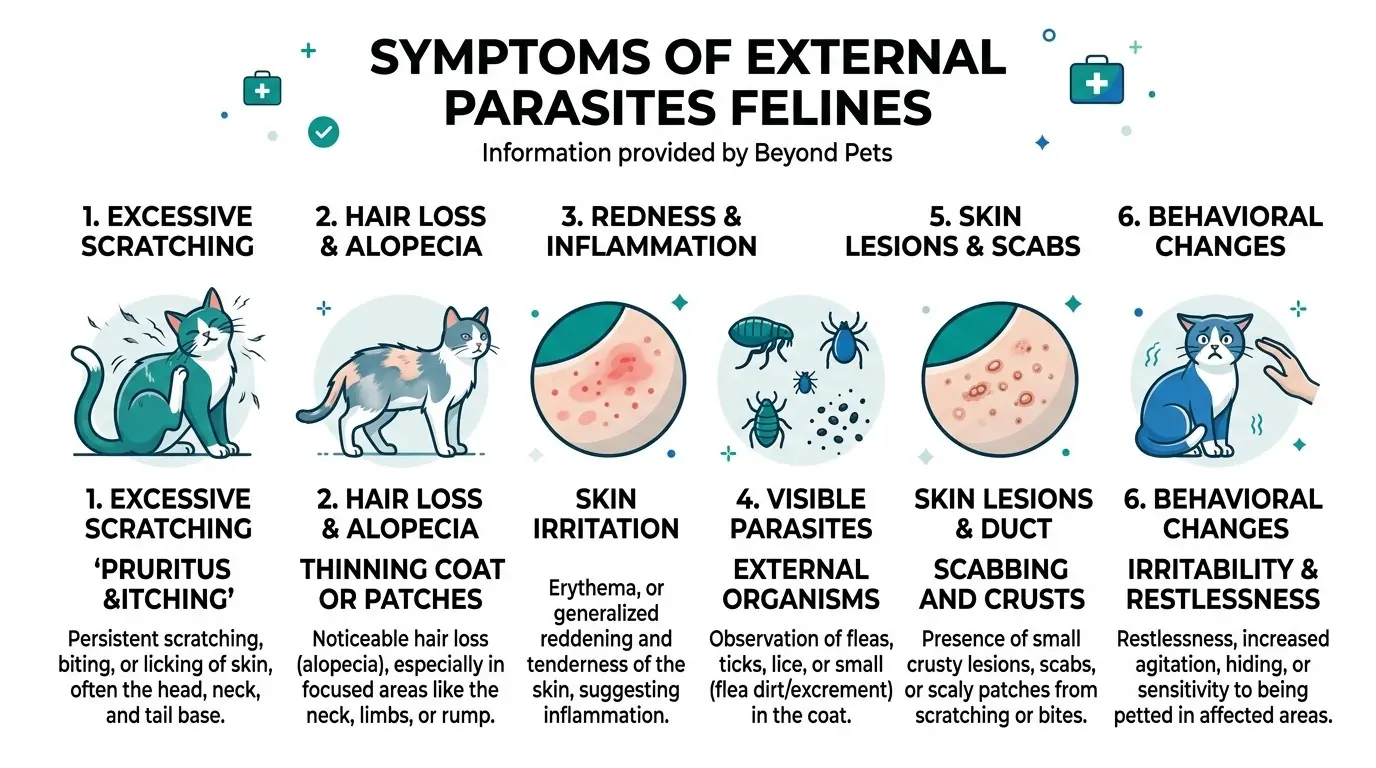
The clinical manifestations of an external parasite infestation can range from subtle behavioral changes to severe, life-threatening systemic illness, depending largely on the specific parasite, the parasite burden, and the individual cat’s immunological response.
The hallmark symptom of most ectoparasite infestations is intense pruritus (severe itching). Cats will scratch, bite, and chew at their skin, often causing profound self-inflicted trauma known as excoriations. Cats can develop an allergy to flea bites, a condition clinically diagnosed as Flea Allergy Dermatitis (FAD). In FAD, the cat’s immune system hyper-reacts to the proteins in flea saliva. Even a single flea bite can trigger widespread miliary dermatitis—a condition where the skin breaks out in hundreds of tiny, crusted scabs, particularly along the neck, lower back, and base of the tail[2].
Other visible dermatological signs include symmetrical alopecia (hair loss from over-grooming), severe erythema (redness of the skin), and seborrhea (flaky or greasy skin). When dealing with ear mites, owners will frequently observe a dark, foul-smelling aural discharge accompanied by head shaking, which can sometimes lead to an aural hematoma (a painful blood blister inside the ear flap) requiring surgical correction.
Systemic symptoms must not be ignored. A heavy burden of blood-feeding parasites like fleas or ticks can extract significant volumes of blood, leading to clinical anemia. Symptoms of anemia include profoundly pale mucous membranes (white gums), profound lethargy, weakness, and an elevated respiratory rate. Furthermore, if the parasites transmit secondary vector-borne diseases, the cat may exhibit high fevers, jaundice, joint pain, or neurological abnormalities[5].
Diagnosis of Cat’s External Parasite
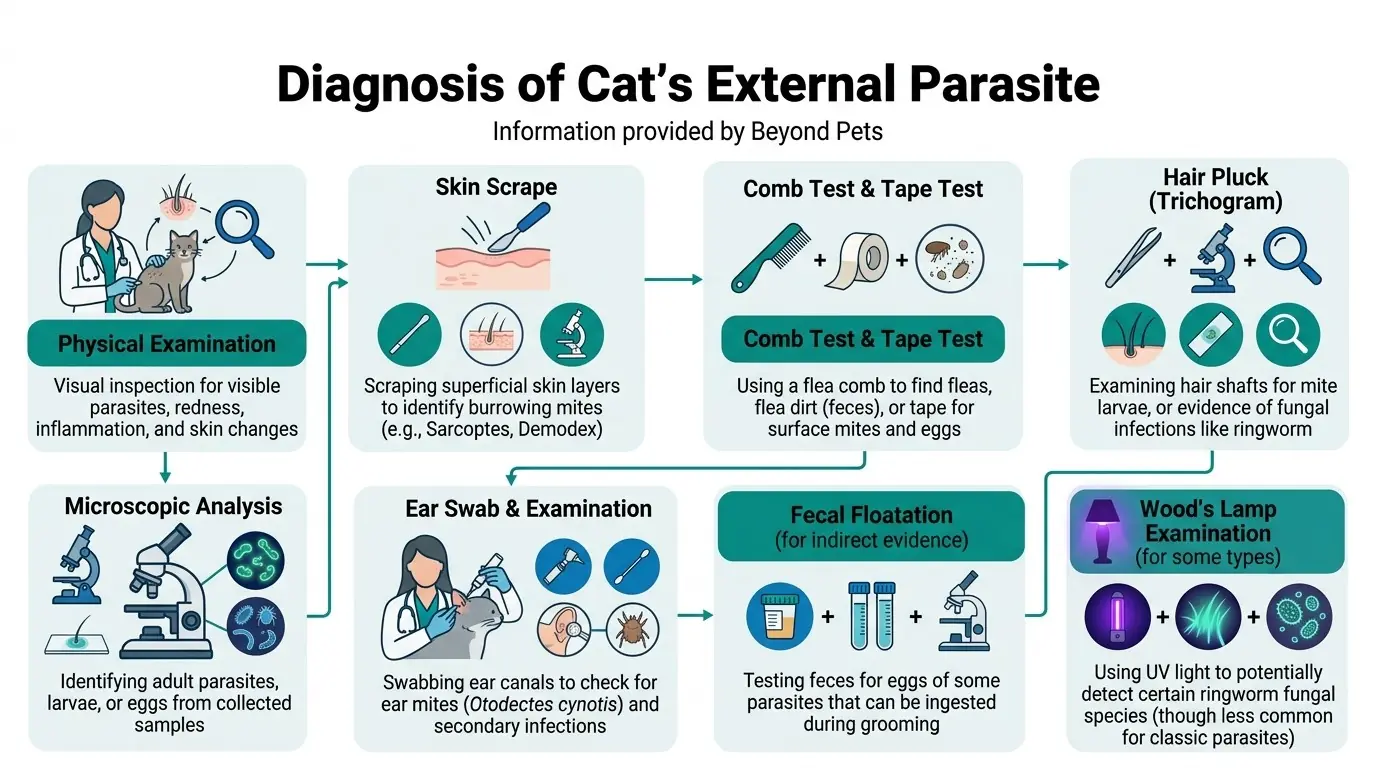
Accurate identification of the specific offending parasite is the cornerstone of effective dermatological treatment. Veterinary professionals utilize a multi-modal diagnostic approach, combining clinical history with advanced microscopic techniques to pinpoint the exact organism.
Thorough Physical Inspection
The diagnostic process always begins with a meticulous physical examination. The veterinarian will part the fur to visualize the skin surface, searching for live parasites, bite reactions, or localized areas of alopecia. A specialized fine-toothed flea comb is run through the coat, particularly around the neck and tail base. This comb traps live fleas and, more commonly, flea feces (known as flea dirt). When placed on a wet white paper towel, flea dirt dissolves into a distinct reddish-brown rust color, confirming the presence of digested blood[12]. The clinician will also use an otoscope to look deep into the ear canals, illuminating any active Otodectes cynotis mites.
Skin Scraping Test
For microscopic parasites that burrow into or live tightly adhered to the epidermis, a skin scraping is the gold standard diagnostic tool. The veterinarian uses a sterile scalpel blade, often lubricated with mineral oil, to gently scrape the surface of the skin until light capillary oozing occurs. The collected cellular debris is placed on a glass slide and examined under a microscope. Superficial skin scrapings are excellent for identifying Notoedres cati or Cheyletiella, while deep skin scrapings are necessary to extract Demodex cati mites from within the hair follicles[7].
Adhesive Tape Examination
The adhesive tape test, or acetate tape preparation, is a rapid, non-invasive dermatological tool used frequently in the clinic. The veterinarian presses a strip of clear adhesive tape directly against the cat’s fur and skin, particularly in areas with visible scaling or dandruff. The tape collects surface debris, eggs, and live organisms. The tape is then adhered to a slide, stained, and examined under high magnification. This method is highly effective for identifying surface-dwelling pests such as biting lice, Cheyletiella, and the elusive Demodex gatoi.
Stool Analysis
While it may seem counterintuitive to evaluate feces when diagnosing a skin condition, a stool analysis is a vital part of the diagnostic puzzle. Because cats groom themselves obsessively, they frequently ingest live adult fleas from their coat. These ingested fleas act as the primary intermediate host for the tapeworm Dipylidium caninum. If the veterinary laboratory identifies tapeworm segments (proglottids) or eggs during a routine fecal centrifugal flotation, it serves as definitive proof that the cat has been exposed to a flea infestation. These secondary parasites can affect the cat’s gastrointestinal tract, causing nutrient malabsorption, perianal irritation, and chronic diarrhea alongside the external dermatological issues[4].
Blood Screening
Comprehensive blood screenings, including a Complete Blood Count (CBC) and specialized Polymerase Chain Reaction (PCR) panels, are critical for patients presenting with severe infestations or systemic illness. A massive flea or tick burden can cause profound blood loss, which the CBC will reveal as a non-regenerative or regenerative anemia. Furthermore, advanced PCR tests help identify tick-borne or flea-borne diseases that could contribute to the cat’s deteriorating clinical condition. Identifying pathogens like Mycoplasma haemofelis (feline infectious anemia), Bartonella henselae, or Cytauxzoon felis allows the veterinary team to administer targeted antibiotic or antiprotozoal therapies in tandem with parasite eradication[5].
External Parasite Treatment in Cats
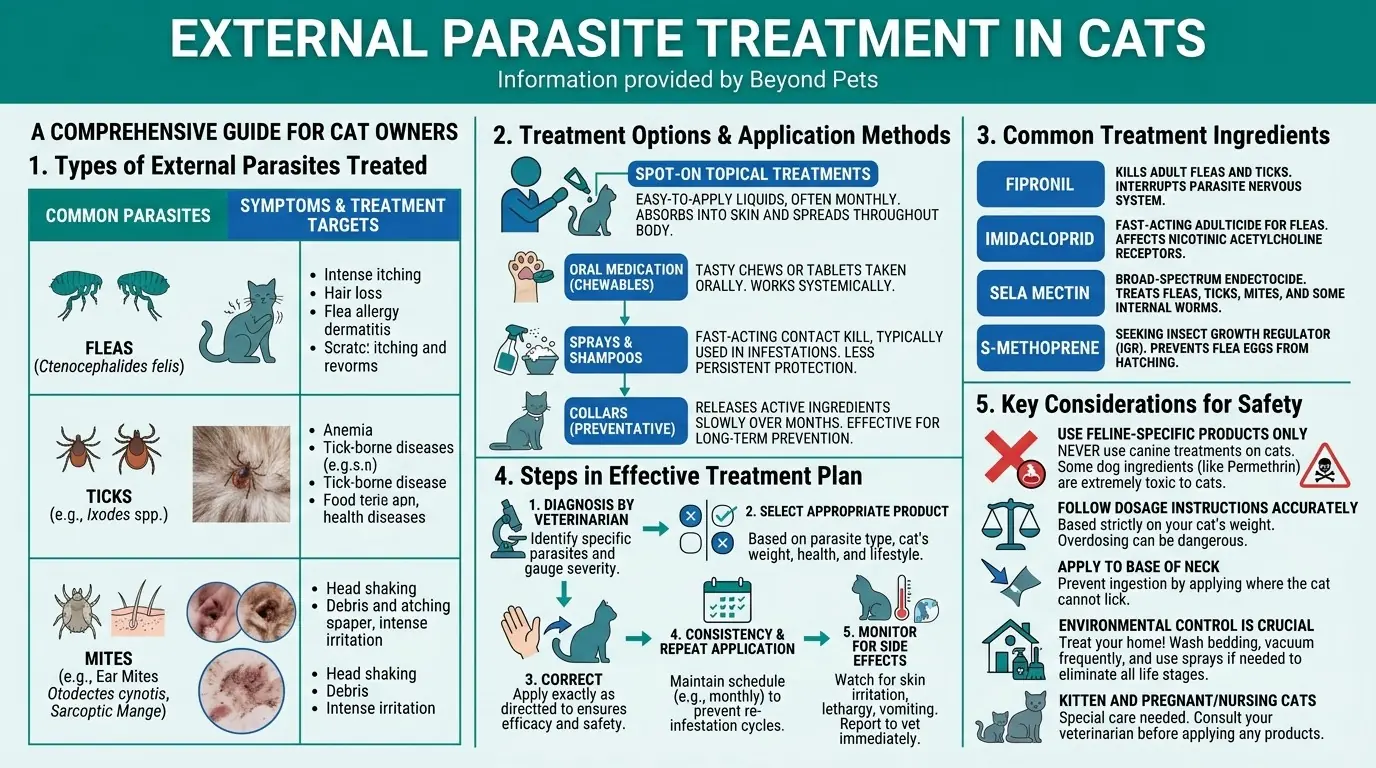
Modern veterinary pharmacology has revolutionized our ability to rapidly, safely, and effectively eliminate external parasites. The therapeutic strategy depends entirely on the specific organism diagnosed, the cat’s age and health status, and the severity of the infestation.
Topical Applications
Topical “spot-on” solutions remain a highly effective and popular method for treating and preventing fleas, ticks, and mites. These medications are applied directly to the skin at the base of the cat’s neck, where they cannot be licked off. Many modern topicals contain macrocyclic lactones (such as selamectin or moxidectin) which are absorbed systemically and provide broad-spectrum efficacy against fleas, ear mites, and certain intestinal nematodes. Other topicals utilize isoxazoline compounds (like topical fluralaner) that spread rapidly across the lipid layer of the skin, offering up to 12 weeks of continuous protection against both fleas and ticks with a single application[1].
Oral Treatments
Oral medications have become a cornerstone in the rapid eradication of heavy flea and tick burdens. Fast-acting oral adulticides, such as nitenpyram, begin killing adult fleas on the cat within 30 minutes, though they offer no lasting residual protection. For sustained systemic control, the veterinary field now heavily relies on oral isoxazolines (such as lotilaner). These chewable tablets are absorbed into the cat’s bloodstream; when a flea or tick takes a blood meal, it ingests the compound and suffers rapid paralysis and death before it has the opportunity to lay viable eggs, thus breaking the parasite lifecycle effectively[12].
Parasite Collars
While traditional, older-generation flea collars were often ineffective and sometimes toxic, modern veterinary-grade parasite collars represent a significant technological advancement. Products containing a sustained-release matrix of flumethrin and imidacloprid offer excellent, continuous protection against fleas and ticks for up to eight months. These collars work by slowly dispersing low doses of the active ingredients across the cat’s skin and coat. It is crucial, however, that cat owners only use breakaway collars featuring a safety release mechanism to prevent accidental strangulation if the cat becomes caught on furniture or branches.
Medicated Shampoos and Dips
While routine flea baths are largely obsolete due to the efficacy of systemic preventatives, medicated dips still play a vital role in treating specific, severe mite infestations. Lime sulfur dips, for instance, are highly effective against Demodex gatoi and ringworm. A critical clinical warning must be noted here: Cat owners must never, under any circumstances, apply canine flea shampoos or dips to a feline. Many over-the-counter dog products contain permethrin. Cats lack the specific hepatic glucuronidase enzymes required to metabolize permethrin, making it profoundly neurotoxic. Exposure causes severe tremors, seizures, and frequently results in death[3].
Environmental Interventions
Treating the animal is only half the battle; eradicating the environmental reservoir is equally critical to prevent reinfestation. Products containing Insect Growth Regulators (IGRs), such as methoprene or pyriproxyfen, are used to prevent flea eggs and larvae from maturing into adults. Environmental intervention requires aggressive daily vacuuming of all carpets, rugs, and upholstery to stimulate the emergence of dormant flea pupae, which are highly resistant to chemical sprays. The vacuum bag or canister must be emptied outside immediately. All pet bedding must be laundered in hot water, and in severe infestations, hiring a licensed professional exterminator may be necessary to treat the home and yard[11].
Prevention for Feline External Parasite
The most medically sound and cost-effective approach to external parasites is unwavering prevention. Because several feline ectoparasites, including fleas and certain ticks, possess significant zoonotic potential—meaning they can easily transmit diseases to humans, such as Lyme disease, cat scratch fever, and tapeworms—strict prevention is a matter of both animal welfare and public health.
The core philosophy of excellent veterinary care for cats aligns with the guidelines set forth by the Companion Animal Parasite Council (CAPC). The CAPC mandates that every cat, regardless of whether they are strictly indoor or allowed outdoor access, must receive year-round, broad-spectrum parasite prevention[11]. As climates shift and indoor environments remain heavily climate-controlled, there is no longer a distinct “flea season”—these parasites are a twelve-month threat.
Beyond pharmacological prevention, lifestyle management plays a crucial role. Keeping cats indoors dramatically reduces their exposure to questing ticks, stray animals carrying mites, and wildlife reservoirs of fleas. Routine grooming not only keeps the coat healthy but allows owners to perform weekly skin inspections, catching the earliest signs of flea dirt or tick attachment before an infestation takes hold. If you notice persistent scratching, unusual skin lesions, or changes in your cat’s behavior, do not wait for the problem to resolve itself. Always consult your veterinarian before making any changes to your pet’s care, ensuring that any prescribed preventive or treatment protocol is safe, accurately dosed, and tailored specifically to your cat’s unique physiological needs.
Frequently Asked Questions
Can strictly indoor cats get external parasites?
Yes, indoor cats are entirely susceptible to external parasites. Fleas and ticks can be easily brought into the home on the clothing or shoes of human family members, or by other pets (like dogs) that go outside. Furthermore, pests can enter through window screens, or infest the home if the cat spends time on a screened-in porch or balcony. Year-round prevention is required for indoor cats.
What do flea eggs and larvae actually look like?
Flea eggs are microscopic, smooth, white ovals that resemble tiny grains of salt or pearls, easily slipping off the cat’s fur and disappearing into carpets. Flea larvae, which hatch from these eggs, are small, legless, off-white worms measuring about 2 to 5 millimeters in length. They are photophobic (they hide from light) and burrow deep into carpet fibers or floorboards to feed on organic debris and flea dirt.
How long does it take to completely eliminate a flea infestation?
While adult fleas on the cat can be killed within hours using modern veterinary medications, eradicating a home infestation typically takes three to four consecutive months. This extended timeline is due to the “pupal window.” Flea pupae in the environment are highly resistant to insecticides and can remain dormant for months. It takes continuous treatment of all pets in the household to kill newly emerging fleas before they can lay new eggs.
References
- Companion Animal Parasite Council (CAPC). The Case for Year-Round Flea and Tick Control. CAPC, 2017.
- Rust, Michael K. “Recent Advancements in the Control of Cat Fleas.” Insects, 2020.
- Merck Veterinary Manual. Mite Infestation (Mange, Acariasis, Scabies) of Cats. Merck & Co., 2024.
- Companion Animal Parasite Council (CAPC). Fleas. CAPC, 2017.
- Companion Animal Parasite Council (CAPC). Ticks. CAPC, 2023.
- VCA Animal Hospitals. Ear Mites in Cats and Dogs. VCA, 2023.
- Merck Veterinary Manual. Mite Infestations in Animals. Merck & Co., 2024.
- Companion Animal Parasite Council (CAPC). Lice. CAPC, 2021.
- Companion Animal Parasite Council (CAPC). Flea-borne Rickettsiosis. CAPC, 2020.
- Cornell University College of Veterinary Medicine. Feline Health Topics. Cornell Feline Health Center, 2023.
- Companion Animal Parasite Council (CAPC). General Guidelines for Dogs and Cats. CAPC, 2025.
- Cavalleri, D., et al. “A randomized, controlled field study to assess the efficacy and safety of lotilaner in controlling fleas in client-owned cats in Europe.” Parasites & Vectors, 2018.