



 March 10, 2023
 Phil Good, DVM
What are Nasal Foreign Bodies in Cats?
This content was prepared with AI assistance and reviewed by a licensed professional for accuracy.
Introduction
When discussing nasal foreign bodies in cats, veterinary professionals are referring to an alarming condition where external materials inadvertently lodge in the nose of a feline, causing acute or chronic upper respiratory distress. It is a highly stressful and terrifying experience for any pet owner to witness their beloved companion pawing frantically at their face because an object is stuck in their nose. The feline nasal cavity is a highly complex, labyrinth-like anatomical structure designed to filter, warm, and humidify inspired air. Due to its intricate network of delicate bones known as turbinates, any unwanted material that enters this space can easily become deeply embedded. Once trapped, these objects trigger an intense local inflammatory response, immense discomfort, and potentially severe secondary infections.[1]
Unlike dogs, who often inhale foreign materials while enthusiastically sniffing the ground, cats are generally more cautious. However, their predatory nature and tendency to explore dense brush still put them at significant risk. The mucosal lining of the feline respiratory tract is extremely sensitive. When an object breaches this barrier, it disrupts the mucociliary clearance—the microscopic hair-like structures (cilia) that normally sweep mucus and debris out of the airway. This disruption leads to an immediate cascade of swelling, excessive mucus production, and pain. In veterinary literature, it has been widely documented that the majority of these obstructive materials are organic. Clinical studies indicate that approximately 81% of such foreign bodies consist of vegetable matter, primarily grass awns and seeds, while roughly 14% are mineral matter, and less than 5% are artificial or synthetic materials like plastics.[2]
If left untreated, a foreign body will completely disrupt normal physiological nasal functions. The sustained presence of the object causes chronic rhinitis (inflammation of the nasal mucous membranes) and can even lead to turbinate necrosis, where the delicate bones inside the snout begin to decay. Furthermore, the disruption may not remain isolated to the rostral (front) portion of the nasal cavity. The irritation can extend deep into the nasopharyngeal area—the space where the back of the nasal passages meets the throat. If the foreign body becomes lodged in the nasopharynx, it can trigger severe gagging, swallowing difficulties, and generalized upper airway obstruction. In extraordinarily rare and severe instances, microscopic fragments of the foreign body could potentially migrate further down the respiratory tree into a bronchus, or migrate dorsally into the frontal sinus, leading to life-threatening complications.[3]
Recognizing the presence of a foreign body in a cat’s nasal passage early is critical for securing prompt, conservative, and appropriate veterinary care. The primary objective for any veterinary clinician involves safely extricating the foreign material to alleviate the physical blockage, halt the inflammatory cascade, and restore regular, unobstructed nasal functionality. Prompt medical intervention is the absolute key to averting devastating secondary complications, such as chronic bacterial osteomyelitis (bone infection) or irreversible damage to the cat’s highly developed olfactory system. Because a cat’s appetite is intrinsically linked to its sense of smell, preserving their respiratory and olfactory health is fundamentally tied to their overall survival and well-being.[4]
How Do Cats Get Foreign Bodies Stuck in Their Nose?
Felines are naturally curious, agile, and explorative beings that rely heavily on their acute senses to navigate and probe their environment. A cat uses its nose not just for breathing, but for critical behavioral assessments, such as the flehmen response, hunting, and territorial investigation. This intense olfactory curiosity, while a core part of their endearing charm, can sometimes cause them to aggressively sniff or inhale physical objects that subsequently become lodged in their nasal passages or deeply wedged within the intricate folds of the nasal turbinates. When this occurs, it results in a clinical condition known generally as a respiratory foreign body obstruction. Understanding the environmental and behavioral risk factors is essential for pet owners. Let us examine some of the most common scenarios and pathways that lead to this veterinary urgency.[5]
Outdoor Explorations and Vegetation Hazards: Cats that are free to roam outdoors, or even those allowed supervised time in a garden, regularly come into contact with a vast array of potential foreign bodies. Small sticks, rigid blades of grass, seeds, burrs, and other plant debris are common culprits. The most notorious offender in veterinary medicine is the grass awn, commonly known as a foxtail. Foxtails possess microscopic, backward-pointing barbs designed by nature to burrow into soil. When a cat inadvertently inhales a foxtail while sniffing around tall grass, these barbs prevent the plant material from being sneezed out. Instead, every time the cat inhales, the foxtail is forced deeper into the nasal cavity, causing extreme lacerations to the mucosal lining.[6]
Play Time Mishaps and Indoor Risks: Even exclusively indoor cats are not immune to this condition. Felines fondly engage in predatory play with small household objects, including tiny craft supplies, strings, sewing beads, loose carpet fibers, or even hard-bodied insects. During a vigorous play session, a cat may bat a small item around and then aggressively sniff it to investigate. Occasionally, these lightweight items can be unintentionally inhaled through the external nares, becoming firmly stuck in the anterior nasal passages and causing an immediate mechanical obstruction. Additionally, extremely dusty or clumping clay litters can sometimes aggregate inside a cat’s nostrils if the feline digs aggressively, forming a hardened mineral blockage over time.[7]
Retrograde Aspiration and Gastrointestinal Links: Not all nasal foreign bodies enter through the front of the nose. A significant number of obstructions occur via a retrograde pathway—meaning they come from the back of the throat. Foreign bodies can sometimes be propelled into the nasopharynx while the cat is eating or drinking, particularly if they are eating hastily and experience a sudden choking episode. More commonly, if a cat ingests a linear foreign material or suffers a severe GI obstruction, the subsequent violent vomiting or regurgitation can force stomach contents upwards. During a powerful emetic reflex, pieces of undigested food, plant matter, or hairballs can be forcefully ejected past the soft palate and become solidly lodged in the posterior nasal cavity.[8]
Unintended Inhalation During Sudden Startle Responses: Cats possess lightning-fast reflexes. They can accidentally inhale objects when they are suddenly startled or during an involuntary, rapid intake of breath—such as the sharp inhalation phase just before a sneeze, a deep yawn, or a sudden gasp caused by a loud noise. If a cat happens to be sniffing a dusty corner or a pile of debris when startled, the sudden negative pressure can draw particulates deep into the airway. Depending on the size of the object and the force of the inhalation, this accidental intake could result in an obstruction not only in the nasal passages but potentially further down into the esophagus or even the trachea, presenting an immediate, life-threatening emergency.[9]
It is absolutely essential to highlight that foreign bodies trapped in the nasal passages result in extreme, unremitting discomfort and pose considerable, escalating health risks for your cat. These localized risks can rapidly trigger systemic issues. For instance, severe inflammation can lead to anorexia, dehydration, and secondary bacterial pneumonia if infected secretions are aspirated into the lungs. During certain times of the year, seasonal items like holiday tinsel or shedding pine needles can become an unexpected source of traumatic nasal disease. The longer an object remains in the respiratory tract, the more tissue damage occurs. Therefore, if you suspect your feline companion has inhaled a foreign object, seeking immediate, professional veterinary attention is not just recommended; it is medically necessary.[10]
Signs of Nasal Foreign Body in Cats
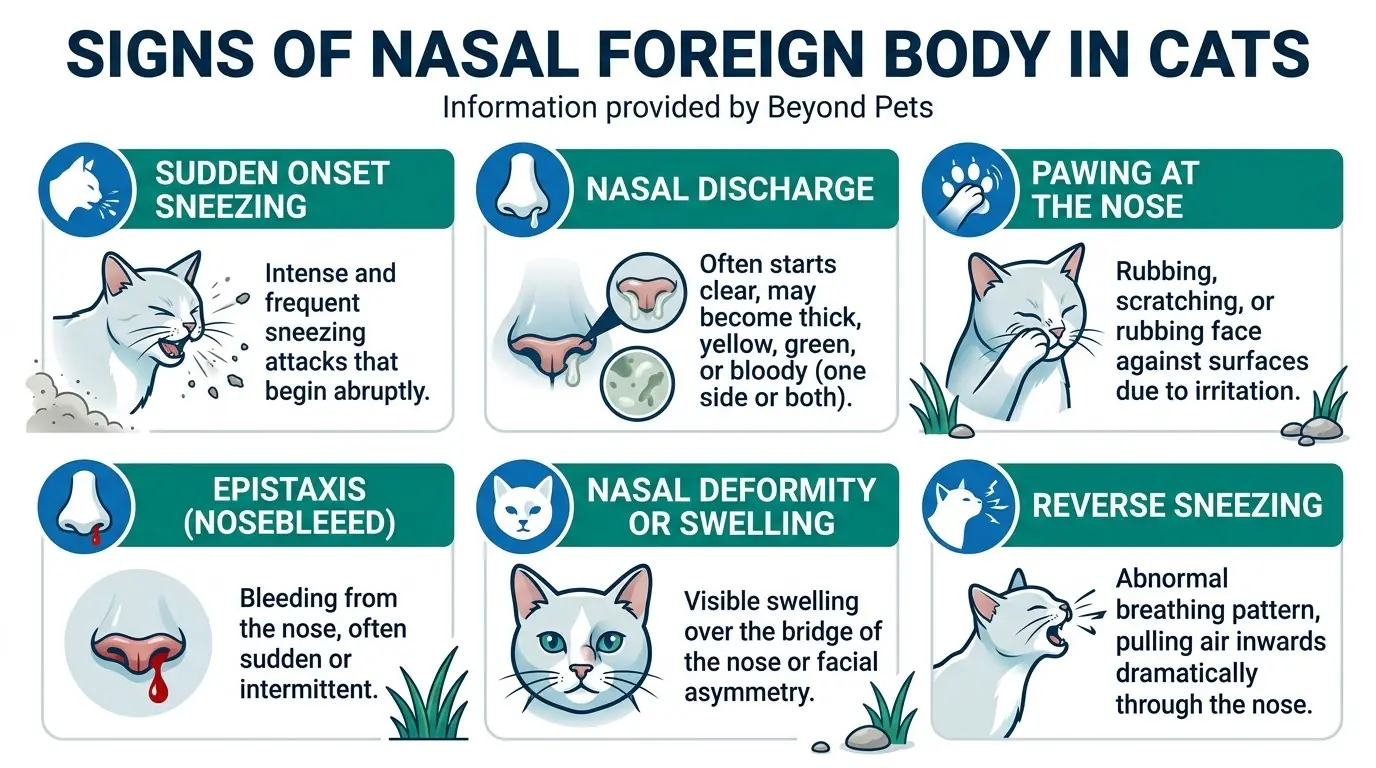
When a foreign body forcefully breaches the natural defenses and finds its way into a cat’s nose, the body’s immune and nervous systems react instantly. This violent disruption leads to a specific set of clinical signs that strongly suggest your feline companion is experiencing acute localized distress and requires immediate veterinary intervention. Because cats are masters at hiding pain, an owner must be highly observant of sudden respiratory changes. The clinical presentation often depends on whether the obstruction is acute (just happened) or chronic (has been lodged for weeks undetected). Some of the most prominent and consistent symptoms include the following:[11]
Violent, Persistent Sneezing: The most immediate and classic sign of a nasal invasion is paroxysmal sneezing. This refers to sudden, violent, and uncontrollable fits of sneezing that occur in rapid succession. The trigeminal nerve, which supplies sensation to the nasal cavity, is highly stimulated by the physical presence of the object. In response, the cat’s body attempts to forcefully expel the invader. Additionally, you may notice abnormal respiratory sounds; for example, a cat might sneeze in a rapid inward motion—a phenomenon known as a reverse sneeze. Reverse sneezing sounds like a sudden, loud snorting or honking and is typically indicative of an irritant lodged further back in the nasopharynx or the soft palate area, rather than the front of the nose.[12]
Unilateral or Bilateral Nasal Discharge: The nature of the mucus expelled from the nose provides vital clues to the clinician. In the acute phase, the discharge is usually serous (clear and watery) as the body attempts to simply flush the irritant away. However, within a few days, secondary bacterial colonization inevitably occurs due to the disruption of normal drainage. This turns the discharge mucopurulent (thick, opaque, yellow, or green). Crucially, cats with nasal discharge caused by a foreign body almost always present with unilateral (one-sided) discharge corresponding to the affected nostril. If an infection has been chronic, the discharge may eventually become bilateral, but unilateral purulent discharge is a hallmark clinical indicator of a localized foreign body or a localized tumor.[13]
Epistaxis (Nosebleeds) and Facial Pawing: A foreign object, particularly something sharp like a grass awn or a broken piece of plastic, will inevitably lacerate the highly vascular mucous membranes lining the nasal cavity. This physical trauma directly causes epistaxis, or bleeding from the nose. You may see drops of fresh red blood on the floor or mixed within the sneezing discharge. Accompanying this bleeding is intense pruritus (itchiness) and localized pain. Your cat might desperately attempt to physically dislodge the foreign object by aggressively pawing at its nose, rubbing its face along carpets or furniture, and exhibiting clear signs of facial distress.[14]
Anorexia and Systemic Behavioral Changes: One of the most dangerous secondary effects of a nasal obstruction in a feline is the loss of appetite (anorexia). Cats rely almost entirely on their highly evolved sense of smell to identify and desire food. When the nasal passages are blocked or filled with purulent discharge, the cat experiences anosmia (loss of smell). Consequently, they will often refuse to eat entirely, leading to rapid weight loss and the risk of hepatic lipidosis (fatty liver disease). Alongside anorexia, cats will typically show marked changes in behavior due to chronic pain and sleep deprivation. They may hide, avoid interaction, appear severely lethargic, or exhibit signs of heightened aggression and stress when their head or face is touched.[15]
In highly complex cases, the foreign body, such as a long blade of grass, may migrate significantly backwards and become lodged deep in the cat’s throat, or even impact the Eustachian tube, leading to middle ear infections, gagging, retching, or other severe respiratory distress. If your cat displays any combination of these symptoms—especially violent, persistent sneezing or unilateral nasal bleeding—prompt consultation with a qualified veterinarian is critically vital. Successful medical removal of the foreign body almost always halts the inflammatory process and rapidly resolves the clinical signs, restoring the cat’s comfort, appetite, and respiratory health.[16]
How Do Vets Diagnose Nasal Foreign Bodies in Cats?
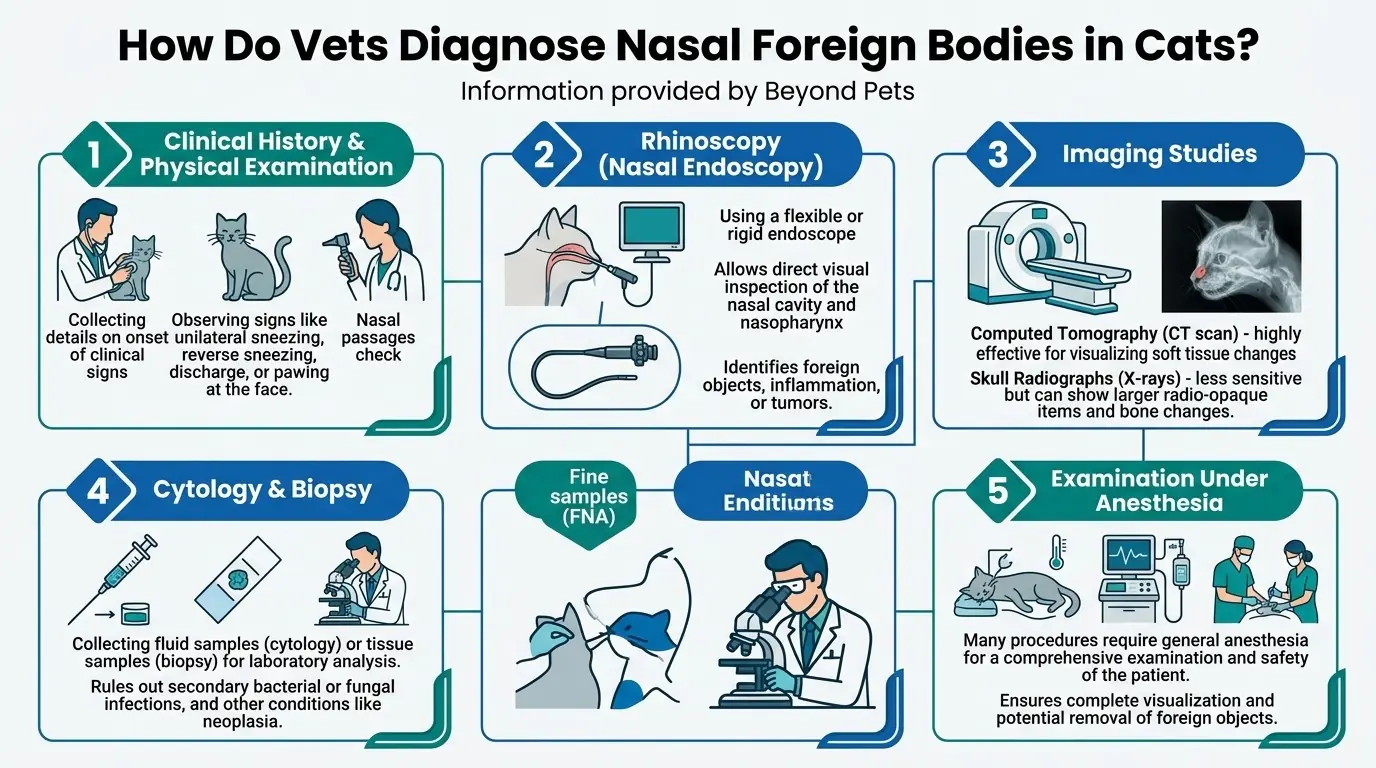
Determining the exact presence, nature, and precise anatomical location of a foreign body lodged in a feline’s microscopic nasal passage is a highly complex clinical challenge. The symptoms of a foreign body seamlessly mimic many other upper respiratory pathologies. Therefore, making an accurate diagnosis requires an integrative, step-by-step veterinary approach, combining a detailed hands-on physical examination with advanced, high-resolution diagnostic imaging. The primary goal is to safely visualize the object while definitively ruling out any other disease affecting the cat, such as severe viral upper respiratory infections (like feline herpesvirus or calicivirus), fungal granulomas, severe dental root abscesses, or aggressive nasal neoplasia (cancer). The main steps involved in this diagnostic workup are as follows:[1]
Thorough Physical Examination
The diagnostic process always commences with a meticulous, comprehensive physical examination. While the cat is awake, the veterinarian will closely inspect the facial symmetry, looking for localized swelling over the bridge of the nose or around the eyes. They will assess the airflow through each individual nostril by holding a chilled glass microscope slide or a thin wisp of cotton directly in front of the nares; a lack of condensation or movement indicates a complete blockage on that side. The veterinarian will also gently palpate the regional submandibular lymph nodes to check for reactive swelling, and visually inspect the oral cavity and the roof of the mouth (hard palate) searching for dental disease or fistulas. Because examining a painful face causes intense stress, full visualization of the deep oral cavity and throat often requires heavy sedation.[2]
Rhinoscopy Procedure
Should a nasal foreign body be highly suspected based on the history and initial exam, a rhinoscopy is often the immediate next step. This advanced diagnostic procedure involves the careful insertion of an endoscope—a thin, specialized tube equipped with a high-definition camera and fiber-optic lighting—into the cat’s airway. Rhinoscopy can be performed via two approaches: antegrade (inserting a rigid rhinoscope through the front of the nostrils) or retrograde (using a flexible scope passed through the mouth and curved up behind the soft palate to view the nasopharynx). The rhinoscope allows for direct, magnified visualization of the mucosal lining, turbinates, and any trapped debris. Because the feline nasal passage is exceptionally small and sensitive, this procedure mandates absolute stillness and requires full general anesthesia with an endotracheal tube in place to ensure the cat’s safety, protect the lower airway from fluids, and minimize all stress.[5]
Radiographic Examination (X-rays)
In almost all cases presenting with chronic nasal discharge or facial pain, the veterinarian will recommend a radiographic examination of the cat’s skull. Skull X-rays require general anesthesia to achieve the perfect, motionless positioning needed for specialized views, such as the open-mouth ventrodorsal view or the frontal “skyline” view. These angles help the clinician visualize the complex architecture of the nasal passages, the frontal sinuses, and the roots of the upper teeth. It is crucial to understand that many common foreign bodies—specifically radiolucent materials like plant matter, grass awns, or plastic fragments—are completely invisible on a standard X-ray. However, this step remains invaluable in ruling out other severe potential causes of the cat’s symptoms, such as the bone destruction (osteolysis) typically caused by an invasive tumor or a severe sinus infection. Additionally, radiographic inspection of the abdomen might be necessary to identify a concurrent intestinal obstruction if the veterinarian suspects the nasal foreign body was retrograde—meaning the cat ingested material, vomited, lodged a piece in the nose, and the remainder is currently trapped in the intestinal loops.[8]
Computed Tomography (CT) Scan
When financial resources permit, or if the foreign body is not easily detectable via rhinoscopy or traditional radiographs, a Computed Tomography (CT) scan is universally considered the gold standard of nasal diagnostics. Unlike a flat, two-dimensional X-ray where complex skull bones superimpose over one another, a CT scan uses advanced computer processing to generate highly detailed, cross-sectional, 3D slices of the cat’s entire head. This advanced imaging technique offers an unparalleled, comprehensive view of the delicate nasal turbinates, the frontal sinuses, and the vital cribriform plate (the thin bone separating the nasal cavity from the brain). A CT scan can precisely identify the subtle tissue reactions surrounding a radiolucent foreign body, clearly demarcating its exact size, orientation, and depth, which is indispensable for planning a safe extraction.[11]
Nasal Flushing Technique
Occasionally, a diagnostic nasal flush may be executed to gather more information or to clear out thick mucus that is obscuring the camera’s view during rhinoscopy. This procedure involves gently but firmly pushing sterile saline fluid through the nasal passages to dislodge debris, flush out purulent material, and potentially wash a small, loose foreign object backward into the throat where it can be caught. The fluid recovered from this flush is often collected and sent to a veterinary pathology laboratory for cytological analysis. The pathologist examines the cells under a microscope to identify specific types of inflammation, bacterial colonies, or fungal hyphae. Much like rhinoscopy and CT scanning, the nasal flush technique carries a risk of aspiration and therefore strictly requires general anesthesia with a properly inflated breathing tube securing the trachea.[13]
Pet owners must keep in mind that diagnosing chronic respiratory issues can be highly complex and frustrating, as the nasal cavity is a difficult area to access. Thus, it is absolutely crucial to seek professional, specialized veterinary advice if a nasal foreign body is suspected in any cat, regardless of age, breed, or lifestyle.
How Do Vets Treat Nasal Foreign Bodies in Cats?
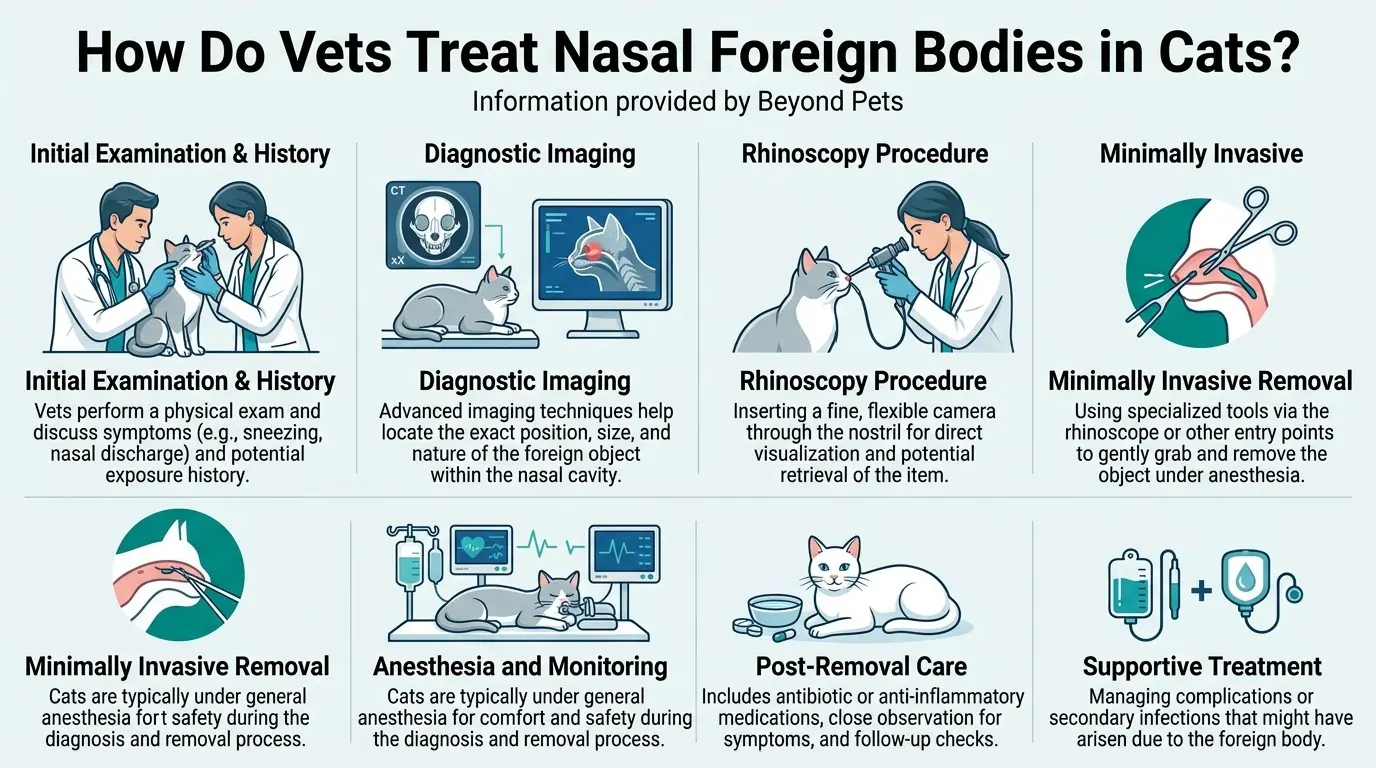
Treating this condition by removing a stubborn foreign material lodged deep within a cat’s tiny nasal passage is a painstaking, delicate task. The nasal mucosa is highly vascularized, meaning it bleeds profusely at the slightest touch, which can rapidly obscure the veterinarian’s field of vision. Because of the intense pain and the need for absolute immobility, attempting to remove these objects while the cat is awake is impossible and highly dangerous. Therefore, the treatment invariably necessitates heavy sedation or full general anesthesia, alongside advanced airway management, to curtail discomfort and prevent the cat from aspirating blood or dislodged debris into their lungs. Veterinarians commonly implement the following specialized techniques based on the object’s location:[4]
Manual Extraction
In fortunate instances where the foreign material is located superficially, visible to the naked eye, and readily accessible just inside the external nostril (the rostral nares), the veterinary surgeon might perform a direct manual extraction. Using specialized, long-reaching instruments such as alligator forceps, hemostats, or delicate surgical tweezers, the vet will carefully grasp the object and gently pull it free. General anesthesia or profound sedation is strictly employed to ensure the cat’s total calmness and cardiovascular stability during the procedure. The clinician must exercise extreme caution during manual extraction; if the grip slips, the instrument can easily inadvertently push the foreign body deeper into the nasal cavity, turning a simple extraction into a complex surgical case.[7]
Rhinoscopy Usage
Rhinoscopy is overwhelmingly the modern method of choice when the foreign body is positioned further up in the mid-to-deep nasal passage and is completely invisible from the outside. This sophisticated procedure requires the cat to be fully anesthetized. The veterinarian utilizes the rhinoscope’s high-definition camera to navigate the narrow, bleeding corridors of the nasal turbinates. Modern veterinary endoscopes are equipped with microscopic “working channels.” Once the object is visually located on the surgical monitor, the veterinarian passes miniature, wire-guided grasping forceps, retrieval baskets, or snares through the scope’s channel.[10]
This minimally invasive technology enables the veterinarian to visualize the exact interior topography of the nasal passage on a large screen and meticulously, gently extract the foreign body without having to cut into the animal’s face. If the object is fragile, like a dry leaf, it may break into pieces, requiring the clinician to go back in multiple times to ensure every microscopic fragment is cleared.[12]
Nasal Lavage
In certain scenarios—especially when the object is small, smooth, or surrounded by thick, infected mucus—a vigorous nasal lavage, or forced nasal flush, can be conducted. During this technique, the veterinarian typically packs the back of the cat’s throat (the pharynx) with sterile surgical gauze and ensures the endotracheal tube cuff is fully inflated. Then, they use a syringe to forcefully inject a sterile, warm saline solution into the front of the cat’s nasal passage. The sheer hydraulic pressure of the fluid is designed to dislodge the trapped material, forcing it backward out of the choanae (the posterior nasal openings) and into the gauze packing at the back of the throat, where it can be safely retrieved. Like the other advanced methods, this potentially messy procedure typically necessitates strict anesthesia to prevent drowning or aspiration pneumonia.[14]
Surgical Intervention
In severe, refractory cases, surgical intervention might be the only viable option. Surgery is required if the foreign body is deeply embedded in the bone, has migrated into the frontal sinus, has caused severe tissue necrosis, or is entirely unresponsive to endoscopic retrieval techniques. This highly invasive approach is known as a rhinotomy. Depending on the exact location mapped out by the CT scan, the surgeon may perform a dorsal rhinotomy (making a surgical incision directly through the bone on the top of the cat’s snout) or a ventral rhinotomy (accessing the nasal cavity by cutting upward through the roof of the mouth, or hard palate). The surgical procedure allows for the physical debridement of dead bone and the direct surgical removal of the offending foreign body. It should be noted that in incredibly rare, systemic scenarios, surgical intervention may simultaneously extend to an intestinal resection if a swallowed portion of the foreign body has traveled down and caused an acute intestinal blockage. Rhinotomy is typically viewed as an absolute last resort due to its highly invasive nature, extreme postoperative pain, significant bleeding, and higher risk of long-term complications.[15]
After successfully removing the foreign object via any of these methods, the recovery phase begins. The vet may administer intravenous (IV) fluids to maintain hydration and will routinely prescribe a course of broad-spectrum antibiotics (such as doxycycline or Clavamox) to thwart any potential secondary bacterial infection. Anti-inflammatory drugs (NSAIDs) or corticosteroids are also prescribed to mitigate the severe internal swelling and provide essential pain relief. If inflammatory polyps are discovered during the procedure—often formed as a chronic reaction to the foreign material—these can be carefully grasped and removed via traction. The cat will require close, dedicated monitoring in a quiet environment in the days following the procedure to ensure there is no uncontrolled bleeding, that breathing remains unobstructed, and that they are recuperating their vital sense of smell and appetite well. Always consult your veterinarian before making any changes to your pet’s care or administering any over-the-counter medications during the healing process.[16]
How to Prevent Nasal Foreign Bodies in Felines?
While veterinary medicine has advanced tools to treat obstructions, preventing nasal foreign bodies in cats is vastly preferable. Prevention primarily involves actively managing their daily environment to drastically reduce the statistical chances of them inhaling, sniffing up, or ingesting small, dangerous objects. A proactive pet owner can implement several highly effective environmental modifications. Here are some critical prevention tips to safeguard your feline’s respiratory health:[17]
- Keep Small Objects Out of Reach: Felines are intensely curious. Small household items such as craft beads, sewing needles, loose strings, yarn, rubber bands, and tiny plastic toy parts can pose an immediate, severe risk if your cat inhales or swallows them. Cultivate a habit of keeping these items securely stored in closed drawers or latched containers safely away from your cat’s access when not in active use.
- Supervise Playtime: Interactive play is crucial for a cat’s mental health, but if your cat likes to play with small, easily destructible toys, make sure you are physically present to supervise. Monitor the toys for signs of wear and tear, and immediately discard any toy that is breaking into smaller, inhalable fragments to ensure they don’t accidentally inhale or swallow anything dangerous.
- Safe Outdoor Environment: If your cat has access to the outdoors, or lives in an outdoor enclosure (catio), you must ensure the surrounding environment is meticulously safe. Regularly landscape the yard to aggressively weed out dangerous plants, specifically tall grasses that produce seeds, burrs, and foxtails. Remove any small, loose objects or toxic plant debris that your cat could potentially inhale while exploring.
- Regular Dental Care: It may seem unrelated, but poor oral health can directly contribute to severe respiratory issues. If advanced dental disease causes a tooth root abscess, it can erode the thin bone separating the mouth from the nose, creating an oronasal fistula. This abnormal hole allows food and water to pass directly from the mouth into the nasal passages, acting as a recurring foreign body. Regular veterinary dental care and cleanings can entirely prevent this.
- Adequate Hydration and Nutrition: Keeping your cat optimally hydrated can help keep their internal respiratory mucus membranes moist, healthy, and fully functional. A healthy, well-hydrated mucociliary elevator is much more capable of trapping microscopic dust and efficiently removing potential micro-foreign bodies before they can get permanently lodged deeply in the nose.
- Slow Down Eating: To prevent the risk of retrograde aspiration, monitor how your cat consumes their meals. If your cat tends to eat frantically or gulp their dry kibble rapidly, they are significantly more likely to choke, vomit, and inadvertently inhale foreign food objects into their nasopharynx. Feeding smaller, more frequent meals, utilizing interactive puzzle feeders, or using specialized slow-feed bowls can effectively help slow their eating pace and reduce vomiting episodes.
Remember, despite the most vigilant household management, unpredictable accidents can still happen, and absolutely no prevention method is one hundred percent foolproof. If your cat suddenly exhibits frightening respiratory signs of a foreign body, such as violent and frequent sneezing fits, unilateral nasal discharge, noisy breathing, or frantic pawing at their nose, it is of the utmost importance to remain calm but act quickly, seeking emergency veterinary care promptly to ensure a positive outcome.[18]
Frequently Asked Questions
Is a nasal foreign body in a cat considered a true medical emergency?
Yes, a nasal foreign body is classified as a veterinary medical emergency, particularly if the obstruction is acute and causing severe respiratory distress. Cats are obligate nasal breathers, meaning they strongly prefer to breathe through their noses rather than their mouths. If a foreign object causes significant airway obstruction, bleeding, or triggers an extreme panic response preventing the cat from breathing properly, the situation can become life-threatening. Prompt, professional veterinary intervention is necessary to secure the airway, administer oxygen if needed, remove the painful irritant, and prevent long-term tissue necrosis or fatal secondary pneumonia.
Can a cat eventually sneeze out a foreign object on its own without going to the vet?
While it is biologically possible for a cat to successfully expel a very tiny, non-adherent irritant—like a spec of dust or a small piece of loose lint—through a powerful sneeze, you should never rely on this. Objects like grass awns (foxtails) have backward-pointing microscopic barbs specifically designed to resist backward movement; sneezing actually drives these deeper into the tissue. Waiting to see if the cat will resolve the issue on its own allows time for severe inflammation, tissue death, and bacterial infection to set in. If violent sneezing persists for more than a few hours, or is accompanied by blood or discharge, veterinary removal under anesthesia is absolutely mandatory.
What is the typical recovery time after a vet removes an item from my cat’s nose?
The recovery timeline heavily depends on how long the object was trapped and the amount of internal trauma it caused. If an acute foreign body is removed endoscopically within 24 to 48 hours of inhalation, the cat’s recovery is usually remarkably rapid. Most cats will return to normal eating and breathing behaviors within a day or two as the localized swelling subsides. However, if the object was lodged chronically for weeks, causing severe bacterial osteomyelitis or requiring invasive surgical rhinotomy, recovery can take several weeks. These complex cases require extensive nursing care, prolonged courses of systemic antibiotics, and potent pain management to heal properly.
References
- Merck Veterinary Manual. Rhinitis and Sinusitis in Dogs and Cats. Merck & Co., Inc., 2023.
- Journal of Feline Medicine and Surgery. Feline nasal disease: presentation and diagnosis. SAGE Publications, 2011.
- VCA Animal Hospitals. Sneezing and Nasal Discharge in Cats. VCA Inc., 2022.
- American Veterinary Medical Association (AVMA). Upper Respiratory Issues in Pets. AVMA, 2023.
- Journal of Veterinary Internal Medicine. Computed Tomographic Evaluation of the Feline Nasal Cavity. Wiley, 2015.
- ASPCA. Poisonous Plants and Outdoor Hazards for Pets. ASPCA, 2023.
- Veterinary Surgery. Endoscopic extraction of nasal foreign bodies in dogs and cats. Wiley, 2004.
- Journal of the American Veterinary Medical Association. Nasal foreign bodies: clinical and imaging findings. AVMA, 2006.
- Veterinary Information Network (VIN). Diagnosis of Chronic Nasal Disease in Cats. VIN, 2021.
- VCA Animal Hospitals. Endoscopy in Cats. VCA Inc., 2022.
- Veterinary Radiology & Ultrasound. Radiographic vs CT features of feline nasal disease. Wiley, 2013.
- Clinician’s Brief. Feline Chronic Rhinosinusitis Diagnosis & Management. Brief Media, 2020.
- Merck Veterinary Manual. Routine Respiratory Testing in Cats. Merck & Co., Inc., 2023.
- Journal of Feline Medicine and Surgery. Retrograde rhinoscopy in dogs and cats. SAGE Publications, 2010.
- Veterinary Surgery. Surgical management of intractable feline rhinitis. Wiley, 2001.
- The Ohio State University College of Veterinary Medicine. Feline Upper Respiratory Disease Complex. OSU, 2023.
- Indoor Pet Initiative. Environmental Enrichment and Safety for Cats. The Ohio State University, 2023.
- American Veterinary Medical Association (AVMA). Pet First Aid and Emergency Procedures. AVMA, 2023.